Pfitzer's juniper Care (Juniperus × pfitzeriana)

Pfitzer's juniper

About Pfitzer's juniper

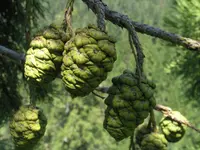
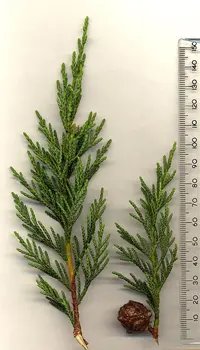
Pfitzer's juniper, Juniperus × pfitzeriana, is a hybrid evergreen conifer commonly used as a low, spreading shrub in gardens and landscapes. It forms dense, arching branches with scale-like foliage that ranges from gray-green to bright green, holding its color year-round.

This shrub originated from crosses between Chinese and savin junipers and does not occur naturally in the wild. It is valued for toughness, wind and pollution tolerance, and low maintenance needs once established.

Gardeners who care for Pfitzer's juniper appreciate its adaptability to many soils, preference for full sun, and good drought resistance, which makes it suitable for beginners and busy owners.

Main Plant Requirements

Care Difficulty

Easy Care

Light Preference

Full Sun

Water Requirements

Low Water

Temperature Preference

Cold Hardy

Hardiness Zone

4–9

Soil Texture

Sandy, Loamy, Clay

Soil pH

Acidic (5.5–6.5), Slightly acidic (6.5–7.0)

Soil Drainage

Well-drained

Fertilization

Minimal (feed rarely)

Get Personalized Care Plan

Scan your plant to receive care tips personalized for your specific plant

Available on iOS and Android

How to Care for the Pfitzer's juniper

This shrub thrives in open, bright conditions and needs consistent direct sun to stay dense and healthy.

  • Provide 6–8 hours of direct sun daily; full sun is best for compact growth, abundant foliage, and good color in Pfitzer's juniper.
  • Accepts light partial shade, especially with morning sun and light afternoon shade, but dense shade leads to weak, sparse, and more disease-prone shoots.
  • In hot southern climates, protect from intense late-afternoon sun with very light shade; avoid sites shaded by buildings or trees in winter to prevent thinning on the shaded side.

This conifer prefers slightly dry conditions and is highly drought-tolerant once established.

  • After planting, water deeply when the top 5–8 cm of soil are dry; focus on soaking the root zone rather than frequent light sprinkling.
  • Ensure sharply drained soil; pooling water or heavy clay that stays wet causes root rot, foliage yellowing, and dieback in Juniperus × pfitzeriana.
  • In the first 1–2 growing seasons, increase watering during prolonged heat or drought; established plants can usually rely on rainfall but may need a deep soak after several weeks of no rain.

This hardy landscape shrub tolerates a wide temperature range and is suited to outdoor growing in most temperate climates.

  • Grows best in 60–80°F (16–27°C) during the main growing season, with stable root-zone conditions from mulch helping buffer rapid swings.
  • Typically hardy to about -20°F (-29°C) or lower, depending on cultivar, and withstands normal frost and snow without protection.
  • Handles summer heat up to about 95°F (35°C) if soil is well drained and not waterlogged; in extreme heat, mulch and occasional deep watering reduce stress and browning.

Juniperus × pfitzeriana handles low humidity well and rarely needs special humidity management outdoors.

This shrub prefers mineral, well-drained soil and tolerates relatively poor conditions once established.

  • Use sandy or loamy soil with a gritty structure that prevents compaction and allows air to reach the roots.
  • Aim for slightly acidic to neutral pH, roughly 6.0–7.5, which supports nutrient uptake and root health.
  • Blend mineral topsoil with coarse sand or fine gravel; add only light compost to avoid waterlogged, overly rich substrates.
  • Avoid heavy clay, peat-heavy mixes, and any soil that stays wet for more than 24 hours after rainfall or irrigation.

This species can be grown in containers, especially in patios or roof gardens, if stability and drainage are managed carefully.

  • Choose a wide, heavy container that resists tipping as the shrub develops a broad, spreading crown.
  • Fill the pot with a sandy, sharply draining mix and raise it on pot feet or bricks so water can exit quickly.
  • Select frost-resistant, rigid materials such as thick ceramic or concrete to protect roots from temperature swings and wind movement.

This shrub grows well in average soil and needs only light, targeted feeding to stay healthy.

  • Apply a balanced slow-release granular fertilizer (around 10-10-10) once in early spring for established Pfitzer's juniper.
  • Use 1/2–3/4 of the label rate, especially on sandy or low-organic soils, to avoid excess vigor and salt stress.
  • Supplement with a thin layer of compost over the root zone if soil is poor, keeping it off the stems.
  • Skip feeding in late fall and winter to prevent tender growth that may be damaged by cold.

Juniperus × pfitzeriana benefits from modest, well-timed pruning to maintain structure and health.

  • Prune in late winter to early spring before new growth, avoiding heavy cuts in late fall.
  • Remove dead, diseased, or broken branches first, then thin crowded interior shoots to improve light and airflow.
  • Trim only current-season tips with sharp hand pruners; avoid cutting back into older bare wood that does not reshoot.
  • Use pruning to preserve the plant’s natural arching form, not to create tight geometric shapes.

This juniper is usually grown in-ground and is moved only when necessary due to its mature size and root system.

  • Plan transplanting for early spring or early fall, when temperatures are mild and soil moisture is steady.
  • Identify candidates by poor vigor, waterlogging, or site problems, rather than by routine transplant schedules.
  • Dig a wide root ball, keep soil around roots intact, and move the plant quickly to reduce moisture loss and shock.
  • Replant at the same depth in a well-drained site, water thoroughly, then mulch 5–8 cm deep, keeping mulch away from the trunk.

Juniperus × pfitzeriana is commonly propagated vegetatively, since seeds are slow and do not grow true to type.

  • Use semi-ripe cuttings in late summer or early fall, 8–12 cm long, taken from healthy, non-flowering shoots.
  • Strip lower foliage, lightly wound the base, and dip in rooting hormone to increase rooting success.
  • Insert cuttings in a free-draining mix, such as 50% coarse sand and 50% peat or fine bark, kept just moist.
  • Maintain bright, indirect light and high humidity; expect rooting to take several months under cool, stable conditions.

This juniper is generally cold hardy and needs minimal winter care in most temperate climates.

  • Apply 5–8 cm of mulch over the root zone in late fall to moderate soil temperature and moisture swings.
  • Water deeply before ground freeze during dry autumns, especially for newly planted shrubs.
  • For container specimens, move pots to a sheltered unheated area, or insulate containers to prevent root freeze-thaw damage.

Care Tips

Salt exposure check

Before planting or along streets and driveways, test or observe for de-icing salt runoff and, if needed, build a low edging or swale to divert salty meltwater away from the root zone.

Airflow for disease

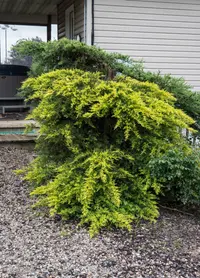
Space plants so mature branches do not interlock tightly, which keeps good airflow through the canopy and significantly reduces the risk of tip blight and other fungal issues when caring for Pfitzer's juniper.

Snow load management

In snowy climates, gently shake or brush off heavy wet snow after storms to prevent low, spreading branches from splaying, cracking, or permanently distorting.

Branch training early

During the first 2–3 years after planting, lightly stake or tie selected branches to encourage a balanced, layered outline and keep walkways or driveways clear as the plant matures.

Weed and grass exclusion

Maintain a clean, mulched ring 30–60 cm beyond the drip line so turf and weeds do not compete with the shallow feeder roots, and renew mulch in a thin layer when it breaks down.

Common Pests and Diseases

Phomopsis tip blight

This disease causes browning and death of young shoot tips, usually starting at the base of the plant and moving upward, with older interior foliage often staying green at first.

Solution

Prune out and discard blighted tips during dry weather, cutting 7–10 cm back into healthy wood, then improve air circulation by thinning crowded branches and avoiding overhead watering; in landscapes with a history of this disease, apply a labeled fungicide to new growth in spring during extended wet periods as part of broader Juniperus × pfitzeriana care instructions.

Kabatina tip blight

This disease affects 1-year-old shoots, causing scattered dead tips with a sharp line between healthy and brown tissue, often showing in late winter or early spring.

Solution

Remove and destroy affected shoot tips and fallen debris, then reduce plant stress by avoiding late-season fertilization and by watering deeply but infrequently; in sites with recurring problems, use resistant juniper cultivars nearby and space plants to promote faster drying after rain.

cedar apple rust

This disease produces orange to rust-colored leaf spots on nearby apple and crabapple trees and can cause small galls on juniper twigs that develop gelatinous, orange tendrils in wet spring weather.

Solution

Prune out and discard infected juniper galls before spring, remove heavily infected juniper branches, and avoid planting junipers directly beside apples and crabapples; in high-risk areas, protect susceptible apple trees with labeled fungicide sprays timed to bud break and early leaf expansion.

juniper scale

This pest appears as tiny white or gray bumps on needles and twigs, leading to dull, yellowing foliage and branch thinning as it feeds on plant sap.

Solution

Inspect branches closely and prune out heavily infested sections, then wash foliage with a strong but controlled stream of water; if populations remain high, target the crawler stage with a labeled horticultural oil or insecticidal soap, applied thoroughly to all branch surfaces.

spider mites

These insects are tiny sap-feeding arachnids that cause fine stippling, bronzing, and eventual browning of foliage, often with delicate webbing in dry, hot conditions.

Solution

Regularly hose down foliage, especially during hot, dry weather, to knock mites off and raise local humidity, then, if damage continues, use horticultural oil or insecticidal soap directed to the inner branches and undersides where mites concentrate, repeating as the label allows.

Interesting Facts

Hybrid origin history

Juniperus × pfitzeriana is a natural hybrid between Juniperus chinensis and Juniperus sabina, first recognized in European plantings in the late 19th century and later widely propagated in nurseries for its stable intermediate traits.

Distinct arching habit

This shrub forms broad, strongly arching to fountain-like branches that stay relatively low, creating a characteristic layered, spreading silhouette that differs from the more upright habit of many other landscape junipers.

High cultivar diversity

Horticulturists have selected numerous cultivars of this hybrid for different garden uses, offering a wide range of forms from compact mounds to broad ground-hugging types, with foliage colors that can shift from gray-green to gold depending on the clone and light exposure.

Botan icon

Did you know?

In many temperate urban landscapes, long-lived plantings of this hybrid from mid-20th-century housing and commercial developments are still in place, making mature specimens useful reference points in evaluating Juniperus × pfitzeriana care instructions for modern cultivar selections.

FAQs about Pfitzer's juniper

This species is best grown outdoors in full sun with good air circulation. It dislikes low light and stagnant indoor air. Pfitzer's juniper indoor care is generally short term only, for containers kept on bright balconies or patios.

Grow Healthy Plants with Botan Care

Keep your plants happy and healthy with plant identification, disease detection, and easy care guidance.

Botan plant care app — identify plants on mobile

Explore More Plants