Root zone protection
Spread a 5–7 cm ring of coarse gravel or light-colored stones around the base to keep the root zone cool, reduce soil compaction, and reflect heat away from young plants in hot climates.

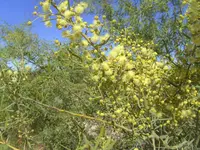
Bramble acacia (Acacia victoriae) is a tough, multi-stemmed shrub or small tree from arid and semi-arid regions of Australia. It often forms dense, thorny thickets with fine, grey-green foliage. Small, pale yellow, ball-shaped flowers appear in clusters, followed by narrow seed pods that are important in its native ecology. This species is valued for erosion control, habitat planting, and as a hardy landscape plant in dry climates. Acacia victoriae tolerates heat, drought, and poor soils, which makes it relatively easy to establish once rooted. It prefers full sun, well-drained soil, and low to moderate moisture. Understanding these traits helps plan how to care for bramble acacia in gardens or larger plantings.

Care Difficulty
Easy Care

Light Preference
Full Sun

Water Requirements
Low Water

Temperature Preference
Warm Climate

Hardiness Zone
8–11

Soil Texture
Sandy, Loamy, Rocky

Soil pH
Slightly acidic (6.5–7.0), Slightly alkaline (7.0–7.5)

Soil Drainage
Well-drained

Fertilization
Minimal (feed rarely)
Scan your plant to receive care tips personalized for your specific plant
Available on iOS and Android
Acacia victoriae thrives in strong light typical of open, arid landscapes.
Acacia victoriae is highly drought-tolerant and prefers infrequent, deep watering once established.
This species is adapted to hot, dry climates but has useful cold tolerance once established.
This drought-adapted shrub tolerates low humidity, so air moisture is rarely a limiting factor.
This species prefers lean, fast-draining, sandy soils that do not stay wet.
This shrub can be grown in containers for a limited time if the pot is managed carefully for root space and stability.
This drought-adapted tree needs only light feeding, as bramble acacia naturally grows in poor soils.
Pruning Acacia victoriae is mainly used to maintain structure, remove hazards, and encourage healthy branching.
This species is usually grown in the ground, so focus on careful transplanting of young plants.
Acacia victoriae is most often propagated from seed, which responds well to simple pretreatment.
This tree is fairly cold tolerant when established and often needs only minimal winter attention in mild climates.

Plant Health Check
Not sure what's wrong with your plant? Check your plant's health inside the app.
Acacia victoriae forms root nodules with nitrogen-fixing bacteria, allowing it to thrive in very poor, arid soils and gradually enrich the surrounding ground for other plants.
The small, hard seeds have been used by Aboriginal Australians for thousands of years, roasted and ground into a nutritious flour that can be baked into traditional seed cakes.
This shrub develops a deep, extensive root system and tough, narrow phyllodes (leaf-like structures) that reduce water loss, making it highly adapted to inland Australian semi-arid landscapes.

In large-scale land rehabilitation projects in Australia, Acacia victoriae is often planted as a pioneer species because it tolerates high salinity and severe drought, stabilizes eroding soils, and helps initiate the recovery of degraded ecosystems.
This species is generally fast-growing, often adding 30–90 cm per year in suitable conditions. Growth is quicker in the first 5–7 years, especially with full sun, deep but infrequent watering, and well-drained soil.
Keep your plants happy and healthy with plant identification, disease detection, and easy care guidance.