dyers busy lizzie Care (Impatiens tinctoria)

dyers busy lizzie

About dyers busy lizzie

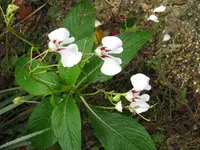
Dyers busy lizzie (Impatiens tinctoria) is a tuberous perennial from tropical East Africa, valued for its large, creamy white flowers marked with red and its sweet fragrance. It typically grows as a bushy plant with fleshy stems and lush, green leaves, dying back to its tubers in cooler seasons.

In its native habitat it occupies moist, partly shaded forest margins and stream edges. Under cultivation it prefers bright, filtered light, evenly moist soil, and good drainage, which makes it moderately easy to manage if watering is consistent. Understanding how to care for dyers busy lizzie mainly involves maintaining stable moisture and avoiding prolonged cold or strong, direct sun.

Main Plant Requirements

Care Difficulty

Moderate Care

Light Preference

Partial Shade

Water Requirements

Keep Soil Moist

Temperature Preference

Tropical / Frost Sensitive

Hardiness Zone

9–11

Soil Texture

Loamy, Peaty, Organic-rich

Soil pH

Acidic (5.5–6.5), Slightly acidic (6.5–7.0)

Soil Drainage

Moist but well-drained

Fertilization

Moderate (every 2–4 weeks)

Get Personalized Care Plan

Scan your plant to receive care tips personalized for your specific plant

Available on iOS and Android

How to Care for the dyers busy lizzie

Impatiens tinctoria prefers bright, gentle light that avoids harsh midday sun.

  • Provide 3–5 hours of soft morning sun with bright dappled or filtered light for the rest of the day to support strong growth and flowering.
  • Site dyers busy lizzie in partial shade, especially in hot summers, since strong afternoon sun can scorch leaves and cause wilting or leaf bleaching.
  • In cooler seasons, allow a bit more direct light, but in summer use shade from trees or structures to reduce stress and prevent rapid soil drying.

This species needs consistently moist but not waterlogged soil to perform well.

  • Water when the top 2–3 cm of soil feels dry, aiming for evenly moist soil around the root zone rather than alternating between very dry and saturated.
  • Ensure free-draining soil or a bed with added organic matter so excess water can move away, as Impatiens tinctoria is prone to root rot in standing water.
  • In hot, dry weather increase watering frequency and watch for drooping or dull leaves as early signs of thirst; yellowing, mushy stems often point to overwatering.

This plant thrives in mild, frost-free conditions with stable, moderate warmth.

  • Aim for 60–75°F (16–24°C) for active growth, as these temperatures support steady foliage and flowering without stress.
  • Protect from cold; growth slows below about 50°F (10°C) and the plant is usually damaged or killed by frost at 32°F (0°C) or lower.
  • In hot spells above 86°F (30°C), give extra shade and moisture, since prolonged heat combined with full sun can cause leaf scorch and reduced flowering.

This species benefits from consistently moderate to high humidity to keep foliage turgid and flowering well.

  • Aim for 50–70% humidity, as very dry air slows growth and can reduce flower production.
  • Dry indoor air can cause leaf edges to brown and buds to drop before opening, especially during heating season.
  • Increase humidity with grouped plants, a pebble tray under the pot, or a room humidifier rather than misting heavily.

Impatiens tinctoria performs best in loose, moist, well-drained, organic-rich soil.

  • Use a loamy mix with 40–50% compost, 30–40% standard potting soil, and 10–20% perlite or coarse sand for structure and drainage.
  • Aim for slightly acidic to neutral pH around 6.0–7.0 to support nutrient availability and root health.
  • In heavy clay, incorporate coarse sand, fine bark, and compost to improve aeration and prevent waterlogging around the tuber-like roots.
  • Avoid compacted, soggy, or very sandy soils that dry out rapidly, as both extremes can cause wilting and root or stem rot.

This species is well suited to container growing when moisture and support are managed carefully.

  • Choose a deep, stable pot to anchor the tall stems and allow vertical root development without tipping in wind.
  • Select a slightly heavier material, such as ceramic or thick plastic, to balance vigorous top growth and reduce pot movement.
  • Ensure drainage holes stay clear and set the container on feet or bricks so excess water leaves the root zone quickly.

Impatiens tinctoria responds well to moderate feeding during its active growing season.

  • Apply a balanced liquid fertilizer (around 10-10-10) at half strength every 2–3 weeks from late spring to early fall.
  • Use compost or a light top-dressing of organic matter to support soil structure and slow nutrient release.
  • Skip feeding in winter dormancy when stems die back and tubers rest.
  • Avoid high-salt synthetic products and always water before and after feeding to reduce root burn, especially for dyers busy lizzie in containers.

Pruning helps Impatiens tinctoria stay compact, bushy, and flowering well.

  • In late spring and mid-summer, pinch or trim soft tips to encourage branching and more flower stems.
  • Remove dead, damaged, or diseased shoots promptly using clean, sharp scissors or hand pruners.
  • Thin crowded stems near the base to improve air flow and reduce fungal problems.
  • Cut back spent, leggy growth after flowering to tidy the plant and direct energy to the tuber.

This species is usually grown from tubers in beds or large containers and dislikes frequent disturbance.

  • Transplant or shift containers in early spring when new shoots appear and roots just start to fill the pot.
  • Look for roots circling the drainage holes, slow growth despite good care, or very fast drying soil as signs to move up 1 pot size.
  • Use a loose, well-drained mix and handle tubers gently, keeping them at the same depth to reduce transplant shock.
  • Water thoroughly after planting, then keep evenly moist and shaded for 3–5 days to help roots re-establish.

Impatiens tinctoria is commonly propagated from tubers, softwood cuttings, and sometimes seed.

  • Divide healthy tubers in early spring, ensuring each piece carries at least 1–2 buds, then plant into moist, free-draining soil.
  • Take 8–10 cm soft stem cuttings in late spring, remove lower leaves, and root in warm (68–75°F), bright, indirect light.
  • Keep cuttings in high humidity (covered tray or tent) and just-moist substrate such as perlite and peat or coir mix.
  • Sow fresh seed in late winter under gentle bottom heat, barely covering it, and maintain consistent moisture until germination.

This plant is frost-tender and needs protection in regions with freezing winters.

  • In mild climates, apply a 5–8 cm mulch over the root zone after foliage dies back to insulate tubers.
  • In colder areas, lift tubers after the first light frost, dry briefly, and store in barely moist peat or coir at 40–50°F.
  • For container plants, move pots indoors to a cool, frost-free, bright spot before night temperatures drop near freezing.

Care Tips

Sturdy stake support

Install a slim bamboo stake or similar support when new shoots reach 20–30 cm, then tie stems loosely with soft garden tie so the tall, brittle growth does not snap in wind or heavy rain.

Cool root mulch

Apply a 3–5 cm layer of fine bark or leaf mold around the base in late spring to keep roots cool, conserve moisture, and reduce weed competition without covering the crown itself.

Lift and store tubers

In cold climates, lift the fleshy tubers after the first light frost, dry them slightly, then store in just-damp peat-free substrate at 45–50°F to replant the following spring.

Pinch for branching

Pinch out the soft growing tips on young plants once or twice early in the season to encourage bushier growth and more flowering stems instead of one tall, weak shoot.

Monitor for stem rot

Check lower stems and the crown regularly in warm, wet periods, remove any mushy or blackened tissue promptly, and improve air movement around the plant as a key part of caring for dyers busy lizzie.

Common Pests and Diseases

Downy mildew

This disease causes yellowing, curling, and distortion of leaves, often with a grey-white to purplish downy growth on the underside in cool, humid conditions.

Solution

Remove and discard affected leaves, avoid overhead watering, and increase air circulation around plants; in very wet climates, grow Impatiens tinctoria with wider spacing and apply a phosphonate or copper-based fungicide labeled for downy mildew at the first signs of infection, following label directions carefully.

Botrytis blight

This disease produces soft, water-soaked spots on leaves, stems, and flowers that quickly develop a fuzzy grey mold, especially in cool, damp, shaded conditions.

Solution

Promptly remove and dispose of all infected tissue, thin surrounding vegetation to improve airflow, keep foliage as dry as possible, and if the problem persists, use a labeled botrytis fungicide and reduce high-density planting under poorly ventilated covers or greenhouses.

Spider mites

These pests cause fine speckling and pale, dull foliage, often with thin webbing on the undersides of leaves during hot, dry weather.

Solution

Rinse foliage thoroughly with a strong but gentle stream of water, focusing on leaf undersides, increase humidity around the plant, and if needed apply insecticidal soap or horticultural oil at 5–7 day intervals until new growth appears clean.

Aphids

These insects cluster on tender shoots and buds, sucking plant sap and causing curling, distortion, and sticky honeydew that can lead to sooty mold.

Solution

Squash or hose off colonies on young growth, then use insecticidal soap or neem oil to treat remaining populations, repeating as needed and monitoring regularly during periods of soft, rapid growth when aphids are most active.

Leaf spot

This disease leads to small, round to irregular brown or black lesions on leaves that may merge and cause yellowing and premature drop, especially in warm, moist weather.

Solution

Remove and bin affected leaves, avoid wetting foliage, water at soil level, and improve spacing and airflow; in recurring cases, apply a broad-spectrum fungicide labeled for ornamental leaf spot early in the season to protect new growth.

Interesting Facts

Traditional red dye source

The thick, fleshy roots have been traditionally used in parts of East Africa to produce a red dye for skin and textiles, which is the origin of the common name dyers busy lizzie.

Fragrant night flowers

Its large white flowers open in the evening, releasing a strong, sweet fragrance at night that attracts nocturnal pollinators such as moths.

Explosive seed dispersal

Like other balsams, it has seed capsules that burst open when touched, an adaptation called ballistic dispersal that helps spread seeds away from the parent plant.

Botan icon

Did you know?

This species can form tuber-like root structures that allow it to survive a dry or cool resting period underground, then resprout when moisture and temperature conditions improve.

FAQs about dyers busy lizzie

Lack of flowers usually comes from insufficient light, poor nutrition, or stress from cold or waterlogging. Provide steady warmth, avoid extremes in moisture, and feed lightly during the growing season to support bud formation.

Grow Healthy Plants with Botan Care

Keep your plants happy and healthy with plant identification, disease detection, and easy care guidance.


Botan plant care app — identify plants on mobile

Explore More Plants