Rocky root protection
Plant in crevices between stable rocks or add fist-sized stones around the crown to shade roots, buffer temperature swings, and reduce heaving in freeze–thaw cycles.

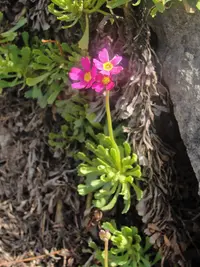
Sierra primrose, Primula suffrutescens, is a compact perennial native to rocky slopes and granite outcrops in the high mountains of California. It forms low clumps or mats with short woody stems and spoon-shaped leaves.
In bloom, it produces clusters of bright magenta to pink flowers with yellow centers, standing above the foliage on short stalks. This species is adapted to cool summers, snow cover in winter, and excellent drainage.
It can be challenging outside its native climate because it dislikes heat, stagnant moisture, and heavy soils. Gardeners who learn how to care for Sierra primrose focus on cool conditions, constant but gentle moisture, and sharply draining, gritty soil.

Care Difficulty
Hard Care

Light Preference
Partial Shade

Water Requirements
Keep Soil Moist

Temperature Preference
Cold Hardy

Hardiness Zone
4–8

Soil Texture
Loamy, Rocky, Organic-rich

Soil pH
Acidic (5.5–6.5)

Soil Drainage
Moist but well-drained

Fertilization
Minimal (feed rarely)
Scan your plant to receive care tips personalized for your specific plant
Available on iOS and Android
This alpine perennial prefers bright, cool conditions with protection from harsh midday sun.
This species needs consistently moist but not waterlogged soil, especially during active growth and flowering.
This high-elevation primrose prefers cool, stable temperatures and dislikes strong heat or severe drying winds.
This alpine primrose prefers consistently cool, moist air rather than dry indoor conditions.
This species needs cool, moist, sharply drained soil that never becomes waterlogged.
This species adapts very well to container growing when drainage and cool roots are prioritized.
This alpine perennial benefits from modest feeding during active growth but does not need heavy fertilization.
Primula suffrutescens benefits from light, precise pruning to sustain flowering and plant health.
This species is usually grown in rock gardens or troughs and needs infrequent repotting or transplanting.
This plant is most practically multiplied by careful division, with seed used mainly by specialists.
This alpine primrose is fairly cold hardy but benefits from simple winter precautions, especially in containers.

Plant Health Check
Not sure what's wrong with your plant? Check your plant's health inside the app.
This species is native to granitic ledges and rock crevices in the central Sierra Nevada of California, often growing at elevations above 2,400 m where few other primroses can survive.
Unlike many herbaceous primroses, this plant develops a somewhat woody, shrubby base, which helps it persist in exposed, rocky alpine sites that experience snow, wind, and intense sun.
Flowering typically peaks in mid to late summer, timed with receding snow and sustained moisture from snowmelt rather than heavy rainfall.

This species is considered a narrow endemic of the Sierra Nevada, meaning its natural distribution is restricted to a small geographic region, which makes conserving its alpine habitat especially important for long-term population survival.
This alpine species usually blooms in late spring to mid-summer, depending on snowmelt and temperature. In suitable cool, bright conditions, the main display often lasts 4–6 weeks, with individual flower clusters lasting about 1–2 weeks.
Keep your plants happy and healthy with plant identification, disease detection, and easy care guidance.