Bulbophyllum japonicum Care

Bulbophyllum japonicum

About Bulbophyllum japonicum

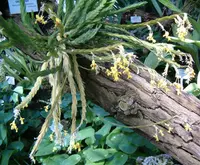
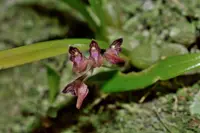
Bulbophyllum japonicum is a small epiphytic orchid that usually grows on tree trunks or rocks in humid forests of Japan and neighboring regions of East Asia. It forms creeping rhizomes with tiny, rounded pseudobulbs and narrow leaves, creating a delicate, mat-like clump over time.

Its flowers are small but intricate, often appearing in clusters that attract close-up viewing rather than making a big visual impact from a distance. This species prefers cool to intermediate temperatures, steady moisture, and good air movement, which can make how to care for Bulbophyllum japonicum moderately challenging for beginners.

It suits growers who can provide stable humidity and soft, filtered light, similar to a shaded forest canopy environment.

Main Plant Requirements

Care Difficulty

Hard Care

Light Preference

Partial Shade

Water Requirements

Keep Soil Moist

Temperature Preference

Tropical / Frost Sensitive

Hardiness Zone

Unknown

Soil Texture

Peaty, Organic-rich

Soil pH

Acidic (5.5–6.5)

Soil Drainage

Moist but well-drained

Fertilization

Light (every 4–6 weeks)

Get Personalized Care Plan

Scan your plant to receive care tips personalized for your specific plant

Available on iOS and Android

How to Care for the Bulbophyllum japonicum

This species prefers bright, soft light that mimics a shaded forest canopy.

  • Provide 8–12 hours of bright, filtered light each day, such as dappled shade under trees or shade cloth that blocks direct midday sun.
  • Allow gentle early morning sun but protect from strong sun from 11 a.m. to 4 p.m. to prevent leaf scorch and yellowing.
  • In summer, shift Bulbophyllum japonicum to deeper shade if leaves bleach, and in winter move it to a slightly brighter position to compensate for shorter days.

This orchid prefers consistently moist but airy conditions around its roots.

  • Water when the surface roots and mounting material feel just starting to dry, avoiding fully dry or soggy conditions for long periods.
  • In active growth and warm weather, expect to water more often, while in cooler months slightly extend the interval, always guided by root and medium feel.
  • Reduce watering if roots look brown, mushy, or smell sour, and increase it if pseudobulbs wrinkle or leaves become limp, adjusting for good drainage.

This species grows best in cool to intermediate, stable temperatures.

  • Aim for 60–75°F (16–24°C) during the day and 50–60°F (10–16°C) at night for steady growth and flowering.
  • Avoid letting temperatures drop below about 40°F (4°C), as Bulbophyllum japonicum is not frost tolerant and can suffer tissue damage.
  • In heat above 80–85°F (27–29°C), increase air movement and humidity, and shade more deeply to reduce stress and prevent leaf scorch.

This orchid needs consistently high humidity to maintain healthy growth and flowering.

  • Aim for 70–90% humidity, using a humidifier or enclosed growing space in dry homes.
  • Tolerates brief dips to 50–60%, but prolonged dry air leads to wrinkled pseudobulbs and dull, pleated leaves.
  • Increase humidity with trays of wet gravel beneath pots, clustered plants, or a greenhouse cabinet while ensuring constant air movement.

Bulbophyllum japonicum prefers a loose, airy, moisture-retentive but fast-draining epiphytic substrate rather than dense potting soil.

  • Use a mix of medium orchid bark, fine bark, and sphagnum moss, with optional perlite or pumice for extra aeration.
  • Target a slightly acidic pH around 5.5–6.5, which supports nutrient uptake and root health in this species.
  • Keep the structure open and chunky so roots receive constant oxygen and water drains freely within seconds after watering.
  • Avoid regular garden soil, peat-heavy mixes, or compacted media that stay wet, as these quickly cause root rot.

This species is well suited to container growing, especially in shallow orchid pots or baskets.

  • Choose a shallow, wide container to accommodate creeping rhizomes and prevent crowded growth in the center.
  • Use slotted or mesh-sided orchid pots to increase side ventilation and speed up drying of the outer root zone.
  • Select heavier clay or ceramic containers when mounting a support or basket insert to prevent tipping from uneven, spreading growth.

This orchid benefits from light, consistent feeding rather than heavy fertilizer applications.

  • Use a balanced orchid fertilizer (around 20-20-20) diluted to 1/4–1/2 strength for Bulbophyllum japonicum during active growth.
  • Feed every 2–3 weeks in spring and summer, applying to pre-watered roots to avoid burn.
  • Reduce feeding to monthly or stop entirely in late fall and winter, depending on growth activity.
  • Flush the pot or mount with plain water every 3–4 feedings to prevent salt buildup in the medium.

Pruning needs are minimal and focus on hygiene and maintaining flowering performance.

  • Inspect plants after flowering cycles and at the start of the growing season.
  • Remove dead, yellowing, or damaged leaves and spent flower spikes at the base with sterilized scissors.
  • Trim dried or rotting pseudobulbs, keeping only firm, green structures to support new growth.
  • Light thinning of crowded growths improves air movement and can reduce fungal and bacterial problems around the rhizome.

Repotting Bulbophyllum japonicum is done infrequently and should be timed to limit disturbance.

  • Plan to repot every 2–3 years or when roots spill over the pot, medium breaks down, or growth slows.
  • Choose late winter to early spring, just before new root tips emerge, to support quick recovery.
  • Use a shallow pot or basket with fresh, airy orchid mix such as fine bark with sphagnum and perlite.
  • Handle roots gently, keep healthy roots intact, and keep humidity high for 1–2 weeks after repotting to reduce stress.

Division is the standard method for multiplying this orchid while keeping plants true to type.

  • Divide established clumps in late winter or early spring when new growths start to swell.
  • Use a sterile blade to cut the rhizome, keeping 3–5 healthy pseudobulbs and active roots per division.
  • Plant divisions in fresh, fine orchid mix and secure them so new roots are not disturbed.
  • Maintain high humidity, gentle air movement, and bright, filtered light to support rooting and new shoots.

This species is not frost hardy and needs cool, frost-free conditions in winter.

  • Keep temperatures around 50–60°F in winter, avoiding exposure near 40°F or below.
  • Move container plants indoors or into a greenhouse before the first frost is forecast.
  • Provide bright, filtered light and good air movement while slightly reducing watering and stopping most feeding.
  • Avoid cold drafts and ensure the medium dries lightly between waterings to prevent root rot in cool conditions.

Care Tips

Mounting strategy

Use a cork slab or hardwood mount wrapped with long-fiber sphagnum so roots can attach firmly, and position the rhizome near the edge of the mount to allow new growths to creep outward without crowding older pseudobulbs.

Moisture management

If mounted, add a thin outer layer of coarse material such as Chilean sphagnum or fine-grade bark over the main moss pad to slow evaporation and extend the interval between daily misting, especially in heated homes.

Airflow planning

Set up a small oscillating fan on a low setting to create gentle, constant air movement across the plant, which helps dry leaf and root surfaces after watering and reduces fungal spotting on the thin leaves.

Seasonal rest shift

In late fall, gradually lengthen the interval between waterings and give slightly brighter, cooler conditions for 6–8 weeks to mimic its natural seasonal rest, then resume higher moisture when new root tips or growths appear.

Bloom protection

When spikes form, avoid moving or rotating the plant and keep water off developing buds, since mechanical disturbance and repeated wetting of the inflorescences can cause bud blast and reduced flower longevity when growing Bulbophyllum japonicum.

Common Pests and Diseases

Spider mites

This pest is attracted to the fine, thin leaves and can thrive in warm, dry indoor air, especially on mounted plants. Symptoms include tiny pale speckling on leaves, fine webbing, and a dull, stressed appearance.

Solution

Rinse foliage and mounts thoroughly with lukewarm water, repeating every few days, and increase humidity while improving air movement. For heavier infestations, use an insecticidal soap or horticultural oil labeled for orchids, applied to both leaf surfaces and pseudobulbs, then monitor closely as part of ongoing Bulbophyllum japonicum care instructions.

Scale insects

These insects form small, rounded or oval bumps on pseudobulbs, leaf bases, and under leaves, feeding on sap and weakening the plant. Sticky honeydew and sooty mold may appear on and around the plant.

Solution

Manually remove visible scale with a cotton swab dipped in isopropyl alcohol, then wash the plant and mount or pot surfaces. Follow up with several applications of insecticidal soap or a light horticultural oil, ensuring good coverage in leaf axils and crevices, and isolate the plant until no new scale appears.

Aphids

These insects often attack new growth and flower spikes, feeding on tender tissue and causing distortion, yellowing, and sticky honeydew. Ants may also be attracted to the honeydew around the plant.

Solution

Shower the plant gently with lukewarm water to dislodge aphids, then treat remaining insects with insecticidal soap, repeating as needed. Improve air circulation and avoid excess nitrogen fertilization, which promotes soft, aphid-prone growth.

Bacterial soft rot

This disease causes rapidly spreading, water-soaked, foul-smelling patches on pseudobulbs and leaf bases, which can collapse into mush. Symptoms include sudden tissue collapse, especially in warm, stagnant, high-moisture conditions.

Solution

Immediately cut away all affected tissue with a sterile blade, cutting well into healthy, firm tissue, and discard infected material. Dust or dab cut surfaces with a bactericide or powdered cinnamon, reduce watering, improve air movement around the mount or pot, and avoid water sitting in leaf and pseudobulb crevices.

Fungal leaf spot

This disease appears as small yellowish areas that turn brown or black, sometimes with a purple or dark margin, often starting on older leaves or those that stay wet. High humidity with poor air flow encourages spread across the thin leaves.

Solution

Remove and discard heavily spotted leaves, and ensure the remaining foliage dries quickly after watering by increasing airflow and spacing plants. If spotting continues, apply a fungicide suitable for orchids according to label directions, and avoid overhead watering late in the day so leaves do not remain wet overnight.

Interesting Facts

Spider‑web style roots

This orchid naturally grows as a lithophyte on mossy rock faces in Japan, fixing itself with a dense, spider‑web‑like mat of roots that cling to tiny crevices and retain moisture from fog and rain.

Cool, foggy habitat specialist

In the wild it favors cool, humid, montane forests, often on shaded cliffs near streams or waterfalls where moving air, frequent mists, and high humidity create a very narrow microclimate niche.

Miniature autumn bloomer

Despite its small size, it produces delicate, pale yellow to greenish flowers in loose clusters in late summer to autumn, timed to cooler conditions in its native range.

Botan icon

Did you know?

This species is considered rare and quite localized in parts of its native Japanese range, with many wild populations confined to specific, undisturbed rocky gorges, which makes habitat conservation critical for long‑term Bulbophyllum japonicum plant care in situ.

FAQs about Bulbophyllum japonicum

Lack of flowers often relates to insufficient light intensity, temperature swings, or nutrient imbalance. Cooler, slightly drier rest after growth, stable humidity, and low-dose orchid fertilizer typically improve bud formation and overall Bulbophyllum japonicum care.

Grow Healthy Plants with Botan Care

Keep your plants happy and healthy with plant identification, disease detection, and easy care guidance.

Botan plant care app — identify plants on mobile

Explore More Plants