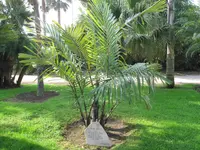
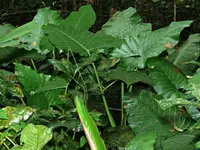
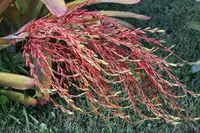
Calathea Care (Goeppertia crocata 'Tassmania')

Also known as: Eternal Flame

About Calathea

Goeppertia crocata 'Tassmania', often sold as a calathea, is a tropical, clump-forming houseplant grown mainly for its patterned foliage and bright orange flower spikes. It stays compact, making it suitable for shelves or tabletops.

This species is native to the understory of Brazilian rainforests, where it grows in warm, shaded, and consistently moist conditions. Leaves fold slightly at night, a movement linked to special joints at the base of the leaf.

It is considered moderately demanding, as it dislikes dry air, cold drafts, and irregular watering. Those learning how to care for Calathea usually find 'Tassmania' easier when humidity is stable and the soil drains well but does not fully dry out.

Main Plant Requirements

Care Difficulty

Hard Care

Light Preference

Bright Indirect Light

Water Requirements

Keep Soil Moist

Temperature Preference

Tropical / Frost Sensitive

Hardiness Zone

11–12

Soil Texture

Loamy, Peaty, Organic-rich

Soil pH

Acidic (5.5–6.5)

Soil Drainage

Moist but well-drained

Fertilization

Light (every 4–6 weeks)

Get Personalized Care Plan

Scan your plant to receive care tips personalized for your specific plant

Available on iOS and Android

How to Care for the Calathea

Goeppertia crocata 'Tassmania' prefers bright, gentle light that mimics shaded tropical forest conditions.

  • Provide bright, filtered light or dappled shade, such as near an east or north window or under light tree cover outdoors, for about 6–8 hours daily.
  • Allow soft early morning sun if weak, but protect from direct midday or afternoon sun, which can scorch leaves and fade color on this Calathea relative.
  • If new leaves emerge small, dull, or with weak flowering, move the plant slightly closer to a brighter spot, especially in winter when natural light drops.

Goeppertia crocata 'Tassmania' prefers evenly moist soil that never stays soggy or dries out completely.

  • Water when the top 2–3 cm of soil feels dry, letting water flow through freely, then discard any excess to avoid waterlogging the roots.
  • In spring and summer, expect more frequent watering as growth and evaporation increase; reduce slightly in autumn and winter while still preventing complete dryness.
  • Watch for yellowing, soft leaves and a sour smell as signs of overwatering, and crisp brown edges or curling leaves as signs the plant is staying too dry.

This species prefers consistently warm, stable temperatures with no sudden chills or hot blasts.

  • Aim for 65–80°F (18–27°C) for best growth, avoiding spots near drafts, exterior doors, or air-conditioning vents that cause rapid temperature swings.
  • Do not expose the plant below 55°F (13°C); brief dips may stunt growth, while near-freezing conditions can kill foliage and rhizomes.
  • In hotter periods above 85°F (29°C), increase humidity, shade from harsh sun, and ensure good air movement to limit heat stress and leaf scorch.

This species needs consistently high humidity to maintain healthy foliage and flower display.

  • Aim for 60–70% humidity; below 50% often leads to curled leaf edges and brown tips typical for Calathea types.
  • Monitor for pale, crispy margins and slowed growth as signs of chronic humidity stress.
  • Increase humidity with a room humidifier, grouped plants, or a pebble tray, rather than misting that wets leaves heavily.

Goeppertia crocata 'Tassmania' prefers a loose, airy, organic-rich substrate that drains quickly but holds steady moisture.

  • Use roughly 50% peat or coco coir, 25% fine bark, and 25% perlite or pumice to balance moisture retention and air spaces.
  • Aim for slightly acidic to neutral pH around 5.8–6.8, which supports nutrient uptake and root health.
  • Avoid dense, clay-based or unamended garden soil that compacts in pots and suffocates roots.
  • Check that water drains through within seconds; if it lingers on the surface, add more perlite or bark to improve aeration.

This species is well suited to container growing when the pot supports even moisture and stable roots.

  • Choose a wide, shallow pot to match its rhizomatous growth, allowing lateral spread without deep, unused substrate that stays wet.
  • Select plastic or glazed ceramic containers if slower drying is needed, or unglazed terracotta where air movement through the pot helps prevent soggy mix.
  • Ensure drainage holes stay fully open and keep the saucer empty so the lowest roots never sit in standing water.

This tropical understory plant benefits from modest, consistent feeding rather than heavy fertilization.

  • Use a balanced liquid fertilizer (around 10-10-10 or 20-20-20) diluted to 1/4–1/2 strength for Calathea indoor care.
  • Feed every 4–6 weeks in spring and summer when Goeppertia crocata 'Tassmania' is actively growing.
  • Skip or greatly reduce feeding in fall and winter when growth slows.
  • Avoid compost-heavy mixes or strong slow-release pellets that can accumulate salts in containers.

Goeppertia crocata 'Tassmania' needs light, maintenance pruning to stay tidy and healthy indoors.

  • Trim yellow, brown, or torn leaves at the base year-round using clean, sharp scissors.
  • Remove spent flower stalks after blooming to redirect energy into foliage and new growth.
  • Cut back only individual damaged leaves, not large sections, to maintain the plant’s natural rosette shape.
  • Wipe blades with alcohol before and after pruning to limit disease spread.

This rhizomatous houseplant prefers slightly snug pots and only occasional repotting.

  • Check for roots circling the pot or growing from drainage holes, dry-out too fast, or slowed growth as signs to repot.
  • Repot every 2–3 years in spring, moving to a container only 2–3 cm wider with good drainage.
  • Gently loosen the root ball, keep rhizomes at the same depth, and backfill with airy peat-free mix to limit stress.
  • Water lightly after repotting, keep humidity high, and shelter from direct sun for 1–2 weeks while roots recover.

Division is the standard method for multiplying Goeppertia crocata 'Tassmania' in home conditions.

  • Plan propagation for spring when growth resumes and recovery is faster.
  • Unpot the clump during repotting and separate it into sections, each with several healthy leaves and its own rhizome and roots.
  • Plant divisions into small, snug pots with moist, well-drained mix, then maintain 70–80% humidity and warm temperatures.
  • Avoid seed or leaf-cutting methods at home, as these are slow and have low success rates.

This warmth-loving species is frost tender and must be treated as a true indoor tropical in cold climates.

  • Keep indoor temperatures around 65–80°F, avoiding drafts, cold windowsills, and sudden temperature drops.
  • Maintain higher humidity in winter with trays or humidifiers when heating systems dry the air.
  • Water less often but do not allow the root ball to fully dry; check moisture before watering.
  • In mild climates, container plants kept outdoors should be moved inside before temperatures fall below 55°F.

Care Tips

Rotate for symmetry

Rotate the pot 90° every 1–2 weeks so the leaves and flower stalks develop evenly and do not lean permanently toward the light source.

Use stable cachepot

Place the nursery pot inside a slightly heavier cachepot to reduce accidental tipping, especially when the foliage becomes top-heavy during active growth and flowering.

Warm tray placement

Set the pot on a waterproof tray above, not in, warm water-filled pebble trays or near a gentle heat source like a radiator shelf (not directly on it) to keep the root zone slightly warmer and encourage steady growth.

Inspect leaf undersides

Check the purple undersides of leaves every 1–2 weeks with a flashlight for early signs of spider mites or mealybugs, and isolate the plant promptly if any pests are found.

Seasonal rest adjustment

In late fall and winter, allow slightly slower growth by avoiding repotting or heavy feeding, and focus instead on stable conditions and cleanliness to support the plant’s natural semi-resting phase common when growing Calathea indoors.

Common Pests and Diseases

Spider mites

This pest thrives on the undersides of the thin, velvety leaves in warm, dry indoor air, causing fine speckling, dulling of leaf color, and webbing between petioles and leaves.

Solution

Rinse foliage thoroughly with lukewarm water, including leaf undersides, then increase humidity to 60–70% and reduce heat stress; for persistent infestations, use repeated applications of insecticidal soap or a horticultural oil labeled for indoor use, ensuring full coverage but avoiding direct sun until leaves are dry.

Fungus gnats

These insects are attracted to the constantly moist, organic-rich potting mixes preferred by this species, and their larvae feed on fine roots, leading to slow, weakened growth.

Solution

Allow the top 2–3 cm of the mix to dry slightly between waterings, use yellow sticky traps for adults, and, if needed, apply a biological control such as Bacillus thuringiensis israelensis (BTI) or beneficial nematodes targeted at the larvae while maintaining only moderate surface moisture.

Mealybugs

This pest hides in leaf axils and along midribs, appearing as white cottony clusters that excrete sticky honeydew and may cause leaf yellowing or distortion over time.

Solution

Isolate the plant, dab visible insects with cotton swabs dipped in 70% isopropyl alcohol, then wash foliage and inspect weekly; for recurring problems, apply insecticidal soap or a light horticultural oil at 7–10 day intervals until no new insects appear.

Leaf spot (fungal/bacterial)

Symptoms include small, water-soaked or tan lesions that may develop dark edges on the decorative leaves, often starting on older or crowded foliage in humid, low-airflow conditions.

Solution

Remove and discard affected leaves, avoid wetting the foliage during watering, and improve air movement around the plant; if spotting continues to spread, reduce humidity slightly, space plants apart, and consider a targeted indoor-safe fungicide according to label directions.

Edema

Symptoms include raised, corky, blister-like patches on the lower leaf surface that can appear when roots take up more water than leaves can transpire in cool, low-light, high-humidity conditions typical of shaded indoor corners.

Solution

Reduce watering frequency so the top layer of the potting mix dries slightly, increase light to bright indirect levels, and maintain stable temperatures around 68–75°F; remove only severely damaged leaves, as new growth should emerge normal once conditions are corrected.

Interesting Facts

Night leaf movement

This plant performs pronounced nyctinasty, folding its leaves upward at night and reopening them in the morning, a movement driven by a specialized joint-like structure at the base of the leaf called the pulvinus.

Contrasting orange blooms

The cultivar 'Tassmania' is selected for its vivid orange inflorescences that rise above the darker foliage, giving a strong contrast that is uncommon among closely related Goeppertia species, which often have more muted flower displays.

Cultivar with stable traits

As a named cultivar, 'Tassmania' is propagated vegetatively, so its compact size, flower color, and leaf patterning remain genetically stable from plant to plant, unlike seed-grown forms of G. crocata that can show more variation.

FAQs about Calathea

This species needs maturity, stable warmth, and high humidity to flower. Inconsistent care, frequent repotting, or low light delays blooms. Prioritize overall health rather than forcing flowers, as ornamental foliage is its main feature indoors.

Grow Healthy Plants with Botan Care

Keep your plants happy and healthy with plant identification, disease detection, and easy care guidance.

Botan plant care app — identify plants on mobile

Explore More Plants