Goeppertia orbifolia Care

Goeppertia orbifolia

About Goeppertia orbifolia

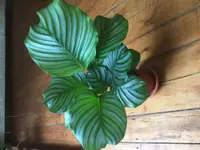
Goeppertia orbifolia, often called orbifolia prayer plant, is a tropical understory species grown mainly for its striking foliage. It forms a clumping, low-growing plant with broad, round leaves patterned with silvery bands on a pale to medium green background.

This species is native to the rainforests of Brazil, where it grows in warm, shaded, and consistently humid conditions on the forest floor. Indoors, it is considered moderately demanding because it reacts quickly to dry air, irregular watering, and poor drainage.

Stable humidity, gentle indirect light, and airy, moisture-retentive soil greatly improve results and make it easier to care for Goeppertia orbifolia.

Main Plant Requirements

Care Difficulty

Hard Care

Light Preference

Bright Indirect Light

Water Requirements

Keep Soil Moist

Temperature Preference

Tropical / Frost Sensitive

Hardiness Zone

11–12

Soil Texture

Loamy, Peaty, Organic-rich

Soil pH

Acidic (5.5–6.5)

Soil Drainage

Moist but well-drained

Fertilization

Light (every 4–6 weeks)

Get Personalized Care Plan

Scan your plant to receive care tips personalized for your specific plant

Available on iOS and Android

How to Care for the Goeppertia orbifolia

This species prefers bright, indirect light that mimics a shaded forest understory.

  • Provide 6–8 hours of filtered light daily, such as near an east or north window or under sheer curtains if grown indoors.
  • Tolerates partial shade, but if leaves lose contrast or new growth is small, increase light by moving slightly closer to the window.
  • Avoid direct midday or strong afternoon sun, which can cause leaf curl and brown patches; in winter, move slightly closer to brighter light sources.

Watering should keep the root zone evenly moist but never saturated.

  • Allow the top 2–3 cm of soil to dry before watering, using a finger test rather than a fixed schedule.
  • Use a pot or bed with very good drainage; yellowing, limp leaves suggest overwatering, while crisp brown edges indicate underwatering or irregular moisture.
  • In active growth (spring–summer), moisture demand increases; in fall–winter, let the top 3–4 cm dry and reduce volume to prevent root rot in Goeppertia orbifolia.

Stable, warm conditions are important for healthy foliage and steady growth.

  • Aim for 65–80°F (18–27°C) for best performance, with strongest growth near the middle of this range.
  • Avoid temperatures below 60°F (16°C); prolonged exposure near 50°F (10°C) can stunt growth and may damage leaves, especially with drafts.
  • This plant tolerates short heat up to about 85°F (29°C) if humidity is high and soil does not dry out completely, but it is not frost tolerant and must be protected from any freeze.

This species needs consistently high humidity to maintain healthy foliage and stable growth.

  • Aim for 60–70% humidity; it tolerates brief dips to 50% but reacts poorly to very dry heated rooms.
  • Crisping edges, brown tips, and leaf rolling indicate low-humidity stress rather than underwatering.
  • Use a room humidifier near Goeppertia orbifolia, group plants closely, and place pots on pebble trays above water.

This plant prefers a loose, airy, organic-rich mix that drains well yet retains even moisture.

  • Use a peat- or coco coir-based mix with added perlite and fine bark to create a light, loamy structure.
  • Target a slightly acidic to neutral pH around 6.0–7.0, which supports nutrient availability for Goeppertia orbifolia.
  • Ensure fast drainage so water flows through in seconds while the mix still feels slightly spongy, not compacted.
  • Avoid heavy garden soil, pure compost, or mixes that stay waterlogged, which promote root rot and anaerobic (oxygen-poor) conditions.

This species is well suited to container growing when the pot supports its moisture-sensitive roots.

  • Choose a pot just 2–4 cm wider than the root mass so the mix dries evenly instead of staying wet in unused zones.
  • Select a sturdy ceramic or plastic pot that slows moisture loss but does not flex, keeping the root ball stable.
  • Place the container in a cachepot or tray that allows instant removal of drained water, preventing reabsorption into the root zone.

During active growth, Goeppertia orbifolia responds well to modest, consistent feeding in controlled doses.

  • Use a balanced liquid fertilizer (around 10-10-10 or 20-20-20) diluted to 1/4–1/2 strength in well-watered soil.
  • Feed every 4–6 weeks in spring and summer, skipping any application if the soil is dry or plant is stressed.
  • Stop feeding in late fall and winter when growth slows, as excess nutrients can cause root and leaf damage.
  • Slow-release granules can be used sparingly at the start of spring, kept away from stems and not mixed into dry soil.

Pruning is light and mainly cosmetic for this species, focused on keeping foliage healthy and clean.

  • Best time for pruning Goeppertia orbifolia is during active growth in spring and summer, when recovery is faster.
  • Remove yellow, brown, or torn leaves at the base with clean, sharp scissors or pruning snips to limit disease entry.
  • Trim only damaged tips by following the natural leaf shape, which maintains appearance without stressing the plant.
  • Thin out very crowded, shaded leaves if air movement is poor, improving light distribution and reducing fungal risk.

Repotting supports steady growth and root health for this container-grown plant.

  • Repot every 2–3 years or when roots circle the pot, push through drainage holes, or growth slows despite good care.
  • Choose early spring for repotting, just before strong growth begins, using a peat-free, airy, moisture-retentive mix.
  • Move to a pot only 2–5 cm wider, gently loosen circling roots, and remove decayed material without aggressive root cutting.
  • Water thoroughly after repotting, keep humidity high, and reduce direct light for 1–2 weeks to limit transplant shock.

Propagation is typically done by division rather than seeds or cuttings for this rhizomatous houseplant.

  • Plan division in spring, when the plant resumes active growth and can rebuild roots more quickly.
  • Remove the plant from its pot, gently shake off soil, and separate clumps so each division has several healthy stems and roots.
  • Plant divisions into small pots with fresh, evenly moist, airy potting mix, avoiding deep planting of the rhizomes.
  • Provide warm temperatures (70–80°F), high humidity, and bright, indirect light to support rooting and reduce leaf stress.

This tropical species is frost-sensitive and needs stable indoor conditions in winter.

  • Keep plants indoors at 65–75°F, avoiding drafts, cold windowsills, and sudden temperature swings.
  • Maintain moderate humidity with trays or humidifiers, but allow the top soil layer to dry slightly more than in summer.
  • Reduce watering and stop feeding, as growth slows and excess moisture can lead to root problems.
  • If grown outside in warm seasons, move containers indoors before temperatures drop near 55°F.

Care Tips

Rotate for symmetry

Turn the pot 90° every 1–2 weeks to keep the foliage rosette even and prevent the petioles from leaning permanently toward the light source.

Use bottom-watering tray

For a plant that sulks after overhead watering, place the pot in a shallow tray of water for 15–20 minutes, then remove and let excess moisture drain fully to rehydrate the root zone without wetting the crown.

Gentle leaf cleaning

Wipe leaves monthly with a soft, barely damp microfiber cloth, supporting each leaf from below, to remove dust that blocks light and to spot early signs of mites or thrips.

Acclimate after purchase

After bringing a plant home, keep it in its nursery pot for 2–4 weeks away from drafts and intense sun so it can adjust before any repotting or major location changes when caring for Goeppertia orbifolia.

Seasonal pest checks

Inspect the undersides of leaves and petiole bases with a hand lens every 2–3 weeks, especially in warm months, so any spider mites or scale insects are found early and can be treated before spreading.

Common Pests and Diseases

Spider mites

This pest thrives in warm, dry indoor air and feeds on leaf undersides, causing pale stippling, dull patches, and fine webbing between the large leaves and stems.

Solution

Rinse both sides of the leaves with a gentle shower of lukewarm water, then wipe undersides thoroughly. Increase humidity, isolate the plant, and apply insecticidal soap or a ready-to-use neem oil spray every 5–7 days until no new damage appears.

Fungus gnats

These insects develop in constantly moist potting mix and their larvae feed on fine roots, leading to slow growth, yellowing, and poor recovery after watering.

Solution

Let the top 2–3 cm of the potting mix dry between waterings, use yellow sticky traps for adults, and top-dress the soil surface with sand or small gravel. For heavier infestations, use a biological control such as Bacillus thuringiensis var. israelensis (BTi) drench according to label directions.

Leaf spot

This disease causes irregular brown or dark purple spots with yellowish halos on the broad leaves, often starting on older foliage where water lingers.

Solution

Remove and discard affected leaves, avoid wetting foliage, and water at the soil level while improving air movement around the plant. If spotting continues to spread, use a copper-based or other houseplant-safe fungicide labeled for leaf spot, following the instructions closely as part of general Goeppertia orbifolia care instructions.

Edema

Symptoms include corky, blister-like raised spots or patches on leaves when roots absorb more water than the leaves can transpire under low light or cool conditions.

Solution

Reduce watering frequency so the top layer of the mix dries slightly, and provide bright, indirect light with stable temperatures around 65–80°F. Ensure the pot drains freely and avoid sudden changes in moisture or temperature.

Salt and fertilizer burn

Symptoms include brown, crispy leaf tips and margins, often with a white crust on the soil surface, due to salt buildup from hard water or frequent fertilizing, to which this species is especially sensitive.

Solution

Flush the pot thoroughly with distilled or rainwater to leach salts, then trim only the dead, brown tissue from leaf edges. Switch to filtered, distilled, or rainwater and use a dilute, balanced fertilizer at 1⁄4–1⁄2 strength only during active growth, reducing frequency if tip burn reappears.

Interesting Facts

Leaf movement behavior

This species shows pronounced nyctinasty, a daily movement where leaves slightly raise and fold along the midrib at night and open flatter during the day, linked to internal circadian rhythms and light levels.

Distinctive banded venation

Its large, rounded leaves have pale silver-green bands that align closely with the primary and secondary veins, creating a characteristic striped pattern that is used by botanists to distinguish it from similar prayer-plant relatives.

Taxonomic reclassification history

Originally described in the genus Calathea, this species was moved to Goeppertia after molecular studies showed that traditional Calathea was genetically diverse and needed splitting into several more natural groups.

Botan icon

Did you know?

In its native Brazilian habitats, this understory species grows on the forest floor in dappled light, where its broad, thin leaves efficiently capture low light while the contrasting silver and green patterning helps manage light absorption and prevents localized overheating of the leaf surface.

FAQs about Goeppertia orbifolia

Crispy brown edges usually come from low humidity, mineral buildup from hard water, or fertilizer burn. Increase humidity, flush the pot with distilled water occasionally, and use a diluted, balanced fertilizer during active growth only.

Grow Healthy Plants with Botan Care

Keep your plants happy and healthy with plant identification, disease detection, and easy care guidance.

Botan plant care app — identify plants on mobile

Explore More Plants