


Mounting strategy
Mount the plant on hardwood or cork with a thin layer of long-fiber sphagnum around the roots, leaving root tips exposed so they can dry quickly and anchor firmly.

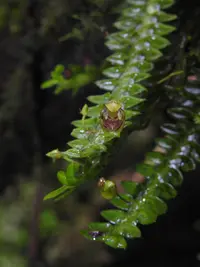
Dichaea neglecta is a small epiphytic orchid that usually grows on tree branches rather than in soil. It forms slender, upright or slightly arching stems with narrow leaves and delicate, often subtly colored flowers.
This species is native to tropical forests of Central and South America, where it experiences warm, humid air and good air movement year-round. Its thin roots and compact growth make it more suitable for experienced growers, as it is sensitive to drying out and to stagnant, soggy conditions.
Those who care for Dichaea neglecta should aim to provide bright filtered light, consistently moist but airy substrate, and stable humidity to mimic its natural canopy habitat.

Care Difficulty
Hard Care

Light Preference
Bright Indirect Light

Water Requirements
Keep Soil Moist

Temperature Preference
Tropical / Frost Sensitive

Hardiness Zone
Unknown

Soil Texture
Peaty, Organic-rich

Soil pH
Acidic (5.5–6.5)

Soil Drainage
Moist but well-drained

Fertilization
Light (every 4–6 weeks)
Scan your plant to receive care tips personalized for your specific plant
Available on iOS and Android
This orchid prefers bright, filtered light that mimics dappled forest canopy conditions.
This species prefers evenly moist conditions with excellent drainage around its roots.
This orchid grows best in intermediate to warm conditions with stable, frost-free temperatures.
This orchid needs consistently high humidity to stay healthy in indoor culture.
This species is best grown in a very airy, fast-draining epiphytic mix rather than dense potting soil.
This orchid can be grown successfully in containers such as small orchid pots, baskets, or mounts with attached pots.
This small epiphytic orchid benefits from light, careful feeding during active growth.
Pruning focuses on hygiene and maintaining a compact, healthy plant structure.
This orchid is usually grown mounted or in very loose bark, and dislikes frequent disturbance.
Propagation is possible but slow and best attempted by growers with some orchid experience.
This warm-growing orchid is frost tender and needs stable, mild conditions over winter.

Plant Health Check
Not sure what's wrong with your plant? Check your plant's health inside the app.
This orchid is a small epiphyte native to humid, mid‑elevation forests of Costa Rica and Panama, where it grows on mossy tree branches constantly bathed in cool, moist air.
It forms thin, erect to arching stems with closely spaced leaves, giving it a reed‑like, almost grass‑like appearance that is unusual compared with many showier, broad‑leaved orchids.
The small flowers are produced singly from the leaf axils and can be easy to overlook in nature, as they are short‑lived and partly concealed among the foliage and surrounding mosses.
Lack of flowers usually comes from insufficient light, overly warm nights, or irregular feeding. Provide bright but filtered light, cooler nights around 55–60°F, and a balanced orchid fertilizer at low strength during active growth to support blooming.
Keep your plants happy and healthy with plant identification, disease detection, and easy care guidance.

Zulu Spurflower
Plectranthus zuluensis
Kohleria tubiflora
Kohleria tubiflora
Ecklon spurflower
Plectranthus ecklonii
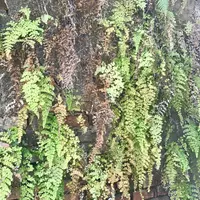
polished maidenhair
Adiantum concinnum
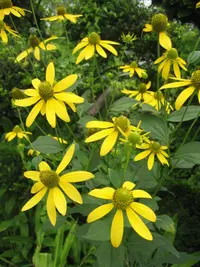
cutleaf coneflower
Rudbeckia laciniata
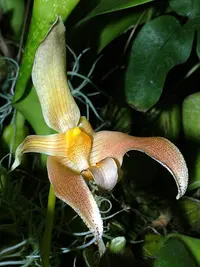
Lobb's bulbophyllum
Bulbophyllum lobbii
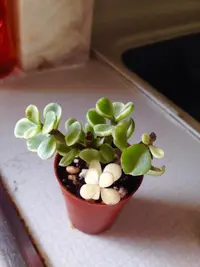
Elephant Bush
Portulacaria afra 'Variegata'
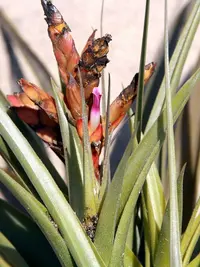
Tillandsia latifolia
Tillandsia latifolia