Stool Thinning
Remove weaker canes at the base during early growth so the remaining 4–6 stems per clump have better light, airflow, and resource use, which leads to thicker, higher-sugar stalks.

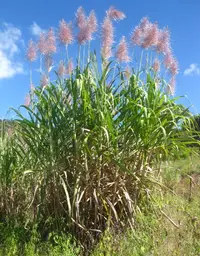
Sugarcane, Saccharum officinarum, is a tall perennial grass grown mainly for its sweet, fibrous stems. It is widely cultivated in tropical and subtropical regions. Stems are jointed, often 2–5 m tall in the ground, with long, arching leaves that form dense clumps. In gardens, it creates a bold, upright accent and can form living screens. This species prefers warm temperatures, full sun, and evenly moist, fertile soil. Once established in a suitable climate, it is relatively robust, which makes it simpler to understand how to care for sugarcane compared with more delicate tropical plants.

Care Difficulty
Moderate Care

Light Preference
Full Sun

Water Requirements
Regular Water

Temperature Preference
Tropical / Frost Sensitive

Hardiness Zone
9–12

Soil Texture
Sandy, Loamy, Organic-rich

Soil pH
Acidic (5.5–6.5), Slightly acidic (6.5–7.0)

Soil Drainage
Moist but well-drained

Fertilization
Heavy (weekly, diluted)
Scan your plant to receive care tips personalized for your specific plant
Available on iOS and Android
This tropical grass needs strong, sustained light to produce vigorous canes and high sugar content.
This species performs best in consistently moist, but not waterlogged, soil throughout the growing season.
This crop is a true warm-season grass and depends on sustained warmth for strong growth and sugar accumulation.
This tall grass prefers moderate to high humidity but adapts if soil moisture is stable.
Saccharum officinarum grows best in deep, loose, fertile soil that drains freely yet retains consistent moisture.
This species can be grown in containers for small-scale or ornamental use if the pot is managed carefully.
Healthy Saccharum officinarum growth benefits from consistent but moderate nutrition during the warm, active season.
Pruning Saccharum officinarum focuses on removing unproductive or unhealthy stalks to maintain stand vigor and access.
Container-grown or young Saccharum officinarum plants handle transplanting best when conditions are warm and soil is moist.
New Saccharum officinarum plants are most commonly produced from stem cuttings called setts rather than from seed.
This tropical grass is frost-sensitive and needs targeted winter care wherever temperatures approach freezing.

Plant Health Check
Not sure what's wrong with your plant? Check your plant's health inside the app.
This species is a fully domesticated tropical grass that no longer exists as a truly wild plant and depends on human cultivation for survival and spread.
Its thick jointed culms store unusually high concentrations of sucrose in the stem juice, which is why it became the primary global source of cane sugar for centuries.
Modern plants of this species are actually complex hybrids, mainly derived from crosses between Saccharum officinarum and related Saccharum species to improve disease resistance, yield, and stress tolerance.

This species played a central role in global economic and social history, with its large-scale plantation cultivation driving major trade routes, shaping colonial economies, and contributing significantly to the so‑called sugar economies of the Caribbean and parts of the Americas.
Browning leaves usually result from underwatering, hot dry winds, or salt buildup from fertilizer. Check soil moisture, flush the pot or bed with clean water, and trim only completely dead leaf tips or blades.
Keep your plants happy and healthy with plant identification, disease detection, and easy care guidance.