purple needlegrass Care (Nassella pulchra)

purple needlegrass

About purple needlegrass

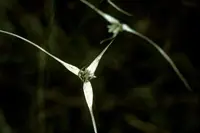
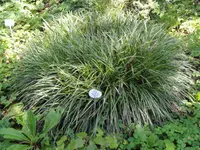
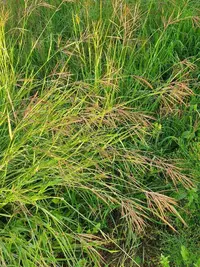
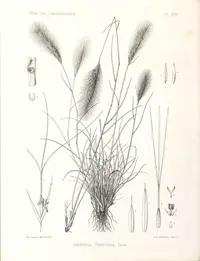
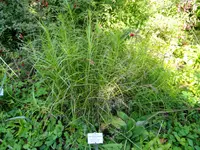
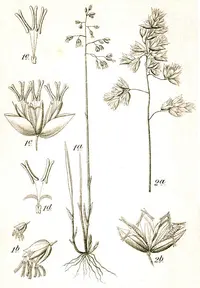
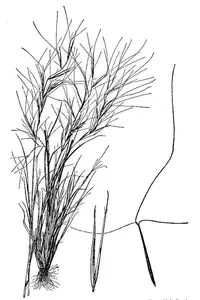
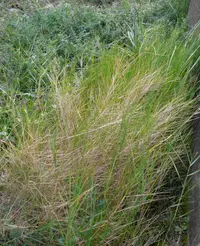
Purple needlegrass, Nassella pulchra, is a perennial bunchgrass native to California and parts of the western United States. It forms upright, fountain-like clumps with fine leaves and airy, purple-tinged flowering stems. This species is adapted to dry, open grasslands and foothills and is highly tolerant of seasonal drought once established. It prefers full sun, lean to moderately fertile soil, and good drainage, which makes it suited to low-water landscapes and restoration plantings. Slow early growth and a deep root system influence how to care for purple needlegrass, since it benefits from minimal disturbance and thoughtful placement.

Main Plant Requirements

Care Difficulty

Easy Care

Light Preference

Full Sun

Water Requirements

Low Water

Temperature Preference

Cold Hardy

Hardiness Zone

6–10

Soil Texture

Sandy, Loamy, Rocky

Soil pH

Slightly acidic (6.5–7.0), Neutral (7.0)

Soil Drainage

Well-drained

Fertilization

Minimal (feed rarely)

Get Personalized Care Plan

Scan your plant to receive care tips personalized for your specific plant

Available on iOS and Android

How to Care for the purple needlegrass

This drought-tolerant bunchgrass prefers open, bright conditions that mimic dry hillsides.

  • Provide 6–8 hours of full sun daily; light afternoon shade is helpful in very hot inland areas.
  • In coastal or cooler climates, purple needlegrass handles all-day sun with minimal leaf scorching risk.
  • In dense shade it grows thin and flops; choose a site with at least half-day direct sun, especially from morning to early afternoon.

Nassella pulchra prefers dry to moderately dry soil and is sensitive to chronic moisture.

  • For in-ground plants, water deeply, then let the top 5–8 cm of soil dry before watering again.
  • Reduce irrigation significantly in summer dormancy; occasional deep watering every 3–4 weeks is usually enough once established.
  • Yellowing, limp foliage and soggy soil indicate overwatering, while crisp leaf tips and shrinking clumps suggest it has been too dry for too long.

This species is adapted to Mediterranean-type climates with mild, wet winters and warm, dry summers.

  • Best growth occurs around 60–80°F (16–27°C), especially in spring and early summer.
  • Established plants tolerate heat up to about 95–100°F (35–38°C) if soil drains well and humidity is low.
  • It survives short dips near 20°F (−6°C), but repeated hard freezes or frozen, waterlogged soil increase crown and root damage.

This species tolerates a wide humidity range and rarely needs special humidity management.

  • Purple needlegrass grows best at 30–50% relative humidity, similar to typical outdoor air in dry-summer climates.
  • Plants tolerate dry air well if soil moisture is appropriate, so do not increase humidity to compensate for underwatering.
  • Humidity stress appears as tip browning combined with heat and wind; provide light wind shelter rather than misting if foliage dries out.

This bunchgrass prefers lean, fast-draining mineral soils that do not stay wet.

  • Use a sandy or gravelly loam with coarse texture; mix roughly 60–70% mineral topsoil with 30–40% sharp sand or fine gravel to improve drainage.
  • Nassella pulchra grows well in slightly acidic to slightly alkaline soils, around pH 6.0–7.8, and does not require heavy organic amendments.
  • Keep organic matter modest, using only a thin layer of compost if necessary, since high organic content and fertility encourage weak, floppy growth.
  • Avoid compacted clay, standing water, or dense peat-heavy mixes; raise beds or add grit if water does not drain through within a few minutes after irrigation.

This grass can be grown in containers if the pot allows fast drainage and enough root depth.

  • Choose a tall, heavy container to anchor the narrow, upright foliage so wind does not tip the pot.
  • Use a gritty mix such as 50% potting soil with 50% pumice, perlite, or coarse sand to keep the root zone sharply drained.
  • Elevate the pot on feet or bricks so drainage holes stay open and water clears quickly after rain or irrigation, preventing crown rot.

Nassella pulchra is adapted to low-nutrient soils and usually needs little fertilizer in garden settings.

  • If growth is weak in very poor soil, apply a light top-dressing of compost in early spring.
  • In containers, use a balanced, slow-release fertilizer (around 10-10-10) at half strength at the start of the growing season.
  • Do not apply additional NPK during summer if foliage remains healthy and upright, to avoid floppy, overfed growth.
  • Stop feeding by late summer and avoid fertilizing during winter dormancy.

Nassella pulchra benefits from light, timed pruning to maintain a clean clump and support fresh growth.

  • In late winter or very early spring, cut back old, straw-colored foliage to 5–10 cm above the crown.
  • Remove dead, damaged, or lodged stems during the growing season with clean hand pruners to keep the plant tidy.
  • Thin out the densest portions of the clump every 2–3 years to improve air flow and reduce self-seeding.
  • Avoid cutting to the ground in midsummer, which can stress the plant and reduce its natural arching form.

This native bunchgrass is usually grown in the ground, so care focuses on thoughtful transplanting rather than frequent repotting.

  • Transplant clumps in late winter to early spring, when soil is moist and temperatures are mild.
  • Move plants only when necessary, such as crowding, poor performance, or redesign of a native planting area.
  • Lift with a wide root ball, keep roots shaded and moist, and replant at the same depth to limit transplant shock.
  • Container-grown plants that show circling roots or slowed growth can be shifted to a slightly larger pot every 2–3 years using a well-drained mix.

Nassella pulchra is most often propagated by seed and by careful division of established clumps.

  • Collect ripe seeds in late summer, then sow in autumn or very early spring on a free-draining, gritty mix.
  • Provide bright light, consistent but light moisture, and good airflow; avoid waterlogging to reduce damping-off in seedlings.
  • Divide mature clumps in late winter to early spring, when new growth just begins, keeping divisions with several shoots and firm roots.
  • Replant divisions promptly, water in thoroughly once, then allow the soil surface to dry slightly between subsequent waterings.

In most mild to cool climates this species is cold hardy and requires minimal winter care.

  • Established plants tolerate typical light frosts; only young or newly transplanted clumps may need attention.
  • In colder zones or exposed sites, add a thin mulch layer around, not over, the crown to buffer root temperature swings.
  • Container plants in regions with prolonged freezes can be moved to a sheltered, unheated area to prevent root damage.

Care Tips

Clump Renewal Timing

Every 3–4 years, divide older clumps in late winter before new growth starts to maintain vigorous foliage and prevent the center from dying out.

Preventing Lodging

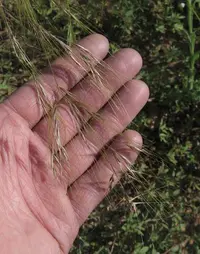
In windy or high-traffic areas, plant in small drifts and mix with sturdier bunchgrasses or low shrubs, which act as wind baffles and help the delicate flowering stems stay upright.

Weed Seed Management

Before seed heads fully mature, hand-strip or lightly shear the top 1/3 of the inflorescences to reduce unwanted self-seeding and to keep nearby planting beds from becoming weedy.

Firewise Spacing

In fire-prone regions, space clumps 45–60 cm apart and remove accumulated dry thatch at the base at the end of summer so the plants act as discrete bunches rather than a continuous fuel bed.

Low-Input Establishment

During the first dry season after planting, use a simple drip line or soaker hose on a timer for deep, infrequent irrigation, then remove it once roots are established to promote a truly drought-adapted stand when growing purple needlegrass.

Common Pests and Diseases

Armyworms

This pest feeds on foliage, chewing ragged edges and sometimes stripping young blades, especially in restoration plantings or pastures. Symptoms include thinning clumps, frayed leaves, and visible green or brown caterpillars near the base of the plant.

Solution

Hand-pick caterpillars in small plantings and destroy them, and reduce nearby tall weeds that shelter adult moths. In heavier infestations, use a targeted biological control such as Bacillus thuringiensis (Bt) on actively feeding larvae, applied in the evening and repeated as label directions indicate.

Grasshoppers

These insects chew on leaves and seed stalks, causing irregular holes and sometimes significant loss of above-ground growth in hot, dry conditions. Symptoms include tattered foliage and visible hoppers moving when disturbed around clumps.

Solution

Reduce weedy vegetation and debris where grasshoppers shelter, and use row covers or fine netting to protect young plantings during peak feeding. In larger, open sites, baits containing Nosema locustae or other labeled biological controls can suppress populations while limiting impact on beneficial insects.

Rust

This disease causes yellow to orange-brown pustules on leaves and stems, which may coalesce and lead to premature browning and reduced vigor in dense, irrigated stands. Symptoms include powdery spore masses that rub off on fingers or clothing.

Solution

Remove and discard heavily infected foliage and avoid overhead irrigation, especially in the evening. Improve airflow by spacing clumps, and if rust persists in high-value plantings, use a grass-safe fungicide labeled for rust on ornamental or native grasses, following label directions carefully.

Leaf spot

This disease produces small tan to dark brown spots on blades that can merge into larger lesions, especially where foliage stays damp for long periods. Symptoms include patchy dieback of leaf tips and a general faded appearance of the tuft.

Solution

Trim and dispose of affected foliage to reduce fungal spores, then allow the plant to regrow under drier leaf conditions. Water early in the day at soil level, increase spacing if clumps are crowded, and only use a labeled fungicide for ornamental grasses if cultural changes do not reduce new spotting.

Interesting Facts

California state grass

Purple needlegrass is officially designated as the state grass of California, reflecting its ecological importance in the region’s historic grassland and oak woodland ecosystems.

Deep, long-lived roots

This species develops a very deep and extensive root system and individual clumps can live for many decades, which helps stabilize soil and maintain structure in long-term native grassland communities.

Supports native wildlife

Its dense tussocks provide habitat structure for insects and small vertebrates, and its seeds serve as food for native granivorous birds and small mammals in California grasslands.

Botan icon

Did you know?

Paleoecological studies using fossilized pollen and plant macroremains show that purple needlegrass has been a dominant component of many California grasslands for thousands of years, indicating a long evolutionary history with the state’s Mediterranean-type climate.

FAQs about purple needlegrass

This bunchgrass forms tight clumps and spreads mainly by seed, not by running roots. It can slowly expand, especially in open, disturbed soil, but is not typically aggressive if old seedheads are trimmed before they shatter.

Grow Healthy Plants with Botan Care

Keep your plants happy and healthy with plant identification, disease detection, and easy care guidance.

Botan plant care app — identify plants on mobile

Explore More Plants