Edge containment
Install a shallow plastic or metal edging 10–15 cm deep around beds to keep spreading rhizomes from wandering into lawn or paths while still allowing the clump to expand naturally inside the boundary.

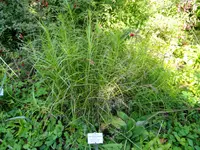
Muskingum sedge, Carex muskingumensis, is a clump-forming, grass-like perennial native to moist woodlands and stream banks in the central United States. It forms upright, bamboo-like stems with narrow, bright green leaves arranged in tiers, giving a soft, architectural look.
The plant slowly spreads to form attractive colonies, yet usually stays tidy and manageable in gardens. It adapts well to consistently moist soils and partial shade, suiting rain gardens, pond edges, and shaded borders.
Because it tolerates periodic flooding, clay soils, and cold winters, it is considered relatively easy to grow for many regions. Gardeners who learn how to care for Muskingum sedge often value it as a low-maintenance choice for naturalistic plantings.

Care Difficulty
Easy Care

Light Preference
Partial Shade

Water Requirements
Keep Soil Moist

Temperature Preference
Cold Hardy

Hardiness Zone
4–9

Soil Texture
Loamy, Silty, Organic-rich

Soil pH
Acidic (5.5–6.5), Slightly acidic (6.5–7.0)

Soil Drainage
Moist but well-drained

Fertilization
Minimal (feed rarely)
Scan your plant to receive care tips personalized for your specific plant
Available on iOS and Android
This sedge prefers consistent moisture and soft light, typical of stream banks and damp woodland edges.
This species is adapted to moist to wet soils and does not tolerate prolonged drying.
This cool-temperate sedge handles a wide outdoor temperature range once established.
This species prefers consistently moist air but tolerates average outdoor humidity in most temperate gardens.
Carex muskingumensis thrives in moist, organic, fine-textured soil that resists drying out.
This sedge can grow successfully in containers when moisture stability is carefully managed.
This native sedge grows well in average soil and needs only light feeding for best container or border performance.
Light pruning maintains a tidy clump and encourages fresh growth on Carex muskingumensis.
This sedge is usually grown in the ground, with transplanting or division every few years to refresh vigor.
Division is the primary and most reliable method for increasing plantings of Carex muskingumensis.
This cold-hardy sedge needs minimal winter care in most temperate climates.

Plant Health Check
Not sure what's wrong with your plant? Check your plant's health inside the app.
The stems produce leaves in regular, horizontal layers along their length, creating a distinctive palm-like or tiered appearance unusual among sedges and often used for textural contrast in planting design.
This species is naturally found in moist to wet woodlands, river floodplains, and stream margins in the central and eastern United States, where it tolerates periodic inundation and helps stabilize soil in seasonally flooded areas.
Unlike some other sedges, it expands slowly by short rhizomes to form dense but tidy clumps, which makes it valued in designed landscapes where erosion control is needed without a strongly invasive spread.
Leaf tips often brown from inconsistent moisture, especially drying out between waterings, or from excess fertilizer salts. Strong sun, hot wind, or winter salt spray can also scorch foliage. Remove damaged leaves and correct the underlying stress.
Keep your plants happy and healthy with plant identification, disease detection, and easy care guidance.