snakegourd Care (Trichosanthes cucumerina)

Also known as: club gourd, long tomato
snakegourd

About snakegourd

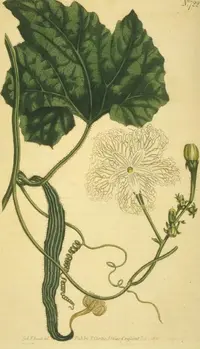
Snakegourd, Trichosanthes cucumerina, is a fast-growing annual vine in the cucumber family, valued for its long, slender, often twisted fruits. It climbs by tendrils and produces deeply lobed leaves and white, lace-like night-blooming flowers that are highly distinctive.

This species is native to tropical Asia and is widely grown in warm, humid regions for both ornamental and edible use. It tends to be vigorous but needs strong support and consistent warmth, which can limit success in cooler climates.

To care for snakegourd, provide a sunny, sheltered site, evenly moist but well-drained soil, and enough vertical space for the vine to climb and develop properly.

Main Plant Requirements

Care Difficulty

Moderate Care

Light Preference

Full Sun

Water Requirements

Regular Water

Temperature Preference

Tropical / Frost Sensitive

Hardiness Zone

10–11

Soil Texture

Sandy, Loamy, Organic-rich

Soil pH

Acidic (5.5–6.5), Slightly acidic (6.5–7.0)

Soil Drainage

Moist but well-drained

Fertilization

Moderate (every 2–4 weeks)

Get Personalized Care Plan

Scan your plant to receive care tips personalized for your specific plant

Available on iOS and Android

How to Care for the snakegourd

This vigorous climber needs strong light to flower and fruit well in most warm climates.

  • Provide 6–8 hours of direct sun daily, ideally with morning sun and light afternoon shade in very hot regions to reduce leaf scorch.
  • Plant snakegourd where vines can climb into full sun, but allow lower stems some partial shade from nearby plants or trellis structures.
  • In late summer and early fall, ensure the site stays as unshaded as possible, since shorter days can reduce flowering if light drops below about 5 hours.

This fast-growing vine prefers consistently moist but not waterlogged soil during its active season.

  • Water when the top 3–5 cm of soil feels dry, aiming for deep soakings that reach the root zone rather than frequent light sprinklings.
  • Use well-drained soil or raised rows so excess water runs off, since prolonged soggy conditions cause yellowing leaves, wilting, and root rot in Trichosanthes cucumerina.
  • In cooler or rainy periods, reduce watering to avoid standing water; in hot, dry spells, increase frequency if leaves droop and soil dries within 1 day.

This warm-season vine grows best in consistently warm, frost-free conditions.

  • Aim for 70–90°F (21–32°C) during active growth for strong vines, flowering, and fruit set in open-ground plantings.
  • Protect plants when temperatures approach 50°F (10°C), since growth slows, and avoid any exposure below 40°F (4°C), which can cause tissue damage or death.
  • In hot spells above 95°F (35°C), provide soil moisture and light afternoon shade to limit heat stress, flower drop, and sunscald on young fruits.

This vining cucurbit prefers moderate outdoor humidity but generally copes well across typical garden ranges.

  • Aim for 40–60% humidity; the plant manages brief drier spells but may grow slower in very arid climates.
  • Watch for leaf edge browning, curling, and stalled new growth as signs of humidity stress combined with heat and wind.
  • In hot, dry weather, increase humidity locally by mulching the soil and using windbreaks rather than misting foliage.

Trichosanthes cucumerina prefers loose, fertile, consistently moist soil that drains freely.

  • Use a loamy, organic-rich structure with visible crumbly aggregates to support deep rooting and even moisture distribution.
  • Ensure fast drainage by incorporating 20–30% coarse sand or perlite into native soil, especially in heavier clay conditions.
  • Keep pH slightly acidic to neutral, around 6.0–7.0, adjusting with garden lime or sulfur only if a soil test indicates imbalance.
  • Avoid compacted, waterlogged, or very shallow soils, and break up subsurface hardpan layers to improve aeration and root penetration.

This vigorous climber is suitable for container growing when the pot is large and stable enough for its root system and vine support.

  • Choose a deep container of at least 40–50 cm to allow strong taproot development and reduce rapid drying.
  • Select a heavy, wide-based pot to prevent tipping once the vine climbs a trellis or support frame.
  • Raise the container on feet or bricks so drainage holes clear quickly after rain or watering, limiting root suffocation.

This vigorous vine benefits from moderate feeding during its warm-season growth for reliable flowering and fruiting.

  • Use a balanced liquid fertilizer (such as 10-10-10) at 1/2 strength every 2–3 weeks during active growth for caring for snakegourd.
  • Apply a slow-release granular fertilizer or well-rotted compost around the root zone at planting or early spring.
  • Water before and after feeding to reduce root burn and help nutrients move into the soil profile.
  • Stop or greatly reduce fertilization in late fall and winter when Trichosanthes cucumerina growth slows or stops.

Pruning helps manage Trichosanthes cucumerina vigor, improve airflow, and direct energy to flowers and fruit.

  • Use clean, sharp hand pruners to remove dead, diseased, or damaged stems whenever noticed.
  • In late winter or early spring, thin crowded vines, taking out weak, tangled, or crossing shoots at the base.
  • Tip back excessively long runners during the growing season to keep the vine on its support and encourage branching.
  • Avoid removing too much leafy growth at once, since the plant relies on foliage for strong flowering and fruit set.

This fast-growing climber is usually grown as an annual in beds, so transplanting young plants correctly matters more than long-term repotting.

  • Start in small pots and transplant outdoors after danger of frost when roots lightly fill the container but are not circling heavily.
  • Choose a sunny site with fertile, well-drained soil and install a trellis or support before setting plants in the ground.
  • Handle the root ball gently, disturbing roots as little as possible and watering thoroughly to settle soil and reduce transplant shock.
  • If grown in large containers, shift to a 1–2 in wider pot only when drainage slows, roots emerge from holes, or growth stalls.

New Trichosanthes cucumerina plants are most commonly raised from seed under warm, bright conditions.

  • Sow fresh or viable stored seed in late winter to spring, 6–8 weeks before planting out in warm climates.
  • Use a free-draining seed mix, keep temperature around 70–80°F, and maintain even moisture without waterlogging.
  • Lightly cover seeds, as they need darkness or low light for germination, and provide good airflow to limit damping-off disease.
  • Harden off young seedlings gradually outdoors over 7–10 days before moving them to their final growing position.

This tropical to subtropical vine is frost-sensitive and usually grown as a warm-season annual in temperate climates.

  • In regions with frost, expect top growth to die back after cold nights and plan to replant each year.
  • Mulch the root zone in late season if hoping for short-term survival during light, brief chills.
  • For container plants, move pots indoors or into a greenhouse before temperatures drop near 40°F, ensuring bright light and reduced watering.

Care Tips

Vertical trellis training

Install a sturdy 1.8–2.4 m trellis or netting before planting, then loosely tie young vines with soft ties so the fruits hang straight and develop uniform, marketable shape.

Fruit load management

Limit the number of developing fruits per vine by removing excess young fruits, which helps the plant direct energy into producing fewer but longer, higher-quality gourds.

Timed hand pollination

In areas with low bee activity, hand-pollinate by transferring pollen from freshly opened male flowers to female flowers early in the morning to improve fruit set and yield.

Row cover rotation

Use lightweight insect netting or row covers over young vines to exclude cucumber beetles and other pests, then remove the covers once flowering begins to allow pollinators access.

Progressive harvest checks

Inspect fruits every 2–3 days and harvest when they reach the desired length but are still tender, which encourages continuous production and supports consistent results when growing snakegourd.

Common Pests and Diseases

Red pumpkin beetle

This pest chews irregular holes in young leaves, flowers, and tender shoots, often stunting growth and reducing flowering and fruit set.

Solution

Handpick beetles early in the morning and drop them into soapy water, then use fine insect netting over young vines to prevent new infestations; for heavier pressure, apply a neem oil or spinosad spray directed to the undersides of leaves, repeating every 7–10 days as needed while avoiding spray during peak bee activity.

Fruit fly maggots

These insects lay eggs in developing fruits, and larvae tunnel inside, causing soft spots, internal rotting, and premature fruit drop.

Solution

Collect and destroy all infested or fallen fruits promptly, use baited traps around the vine to reduce adult populations, and install fine mesh bagging or sleeves around young fruits shortly after pollination to physically block egg laying.

Downy mildew

This disease causes angular yellow patches on upper leaf surfaces with grayish or purplish downy growth underneath, leading to rapid leaf blight in warm, humid weather.

Solution

Remove and dispose of heavily infected leaves, water at soil level in the morning only, increase spacing and airflow along the trellis, and protect new growth with a copper-based or phosphorous acid fungicide applied at the first sign of symptoms and after prolonged wet periods.

Powdery mildew

This disease shows as white, powdery patches on leaf surfaces, which later turn brown and cause leaves to curl and dry prematurely, reducing vine vigor and yield.

Solution

Prune overcrowded growth to improve light and air movement, avoid excessive nitrogen that promotes soft tissue, and treat early infections with sulfur, potassium bicarbonate, or neem oil sprays, repeating at 7–10 day intervals until new growth emerges clean.

Anthracnose

This disease produces dark, sunken spots on leaves, stems, and sometimes fruits, which may merge into larger blighted areas under warm, wet conditions.

Solution

Remove and destroy affected plant parts and crop residues, avoid overhead watering, rotate planting areas for at least 2–3 years, and use a protectant fungicide such as chlorothalonil or copper on young vines during extended wet weather as part of broader Trichosanthes cucumerina plant care.

Interesting Facts

Remarkable flower structure

The flowers of this species are long, narrow, and white, with deeply fringed petals that open at night and are thought to attract moth pollinators, a trait seen in several night-blooming vines. The intricate lace-like fringe increases the apparent size of the flower without adding much weight or resource cost.

Distinct wild and cultivated forms

There is a marked difference between wild and cultivated forms: wild plants often have very long, slender, extremely corrugated fruits, while cultivated vegetable types are usually shorter, straighter, and selected for tender flesh. Botanists have long debated the classification of these forms, which has led to synonym names and confusion in older literature.

Old World tropical origin

This vine is native to tropical Asia, likely with origins centered in India and surrounding regions, and has spread widely through human cultivation as a vegetable crop. It has since naturalized in many tropical and subtropical areas, including parts of Africa and the Caribbean, where it may sometimes behave as a minor weed.

Botan icon

Did you know?

The seeds of this species produce a red, sticky, soap-like aril (a fleshy seed covering) that was traditionally used in some regions as a substitute for soap because it contains saponins, natural compounds that form a lather in water.

FAQs about snakegourd

The immature fruits are commonly eaten cooked in curries, stir-fries, or stuffed dishes, especially in South and Southeast Asia. Fully mature fruits become fibrous and are usually not eaten. Flowers and young shoots may also be used in some cuisines.

Grow Healthy Plants with Botan Care

Keep your plants happy and healthy with plant identification, disease detection, and easy care guidance.


Botan plant care app — identify plants on mobile

Explore More Plants