Create stable flooding
Grow this species in a wide, watertight container or lined pond zone with 5–15 cm of standing water above the substrate to keep the root zone constantly saturated and prevent dieback during hot, dry spells.

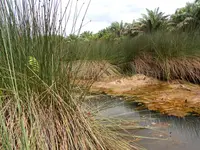
Grey sedge, Lepironia articulata, is a perennial wetland grass-like plant, often used in landscaping around ponds, wetlands, and natural-style water features. It forms upright, leafless, blue-green culms that create a dense, architectural clump with a clean, vertical look.
In nature it grows in marshes, peat swamps, and along still or slow-moving water in tropical and subtropical Asia and Australia. Its strong tolerance of saturated soils and seasonal flooding makes it well suited to rain gardens and constructed wetlands.
For gardeners, the main factors that influence how easy it is to care for grey sedge are its need for constant moisture, full sun to bright light, and low-competition, consistently damp soil.

Care Difficulty
Moderate Care

Light Preference
Full Sun

Water Requirements
Aquatic

Temperature Preference
Tropical / Frost Sensitive

Hardiness Zone
10–12

Soil Texture
Sandy, Silty, Organic-rich

Soil pH
Acidic (5.5–6.5)

Soil Drainage
Waterlogged tolerant

Fertilization
Minimal (feed rarely)
Scan your plant to receive care tips personalized for your specific plant
Available on iOS and Android
This wetland sedge prefers bright, open conditions that mimic sunny marshes and pond margins.
This species is adapted to saturated, marshy conditions and does best with consistently wet roots.
This sedge prefers warm, frost-free climates similar to tropical and subtropical wetlands.
This reed prefers very high humidity and thrives in constantly moist to wet air conditions.
This wetland species grows best in saturated, organic-rich substrates rather than standard potting soil.
This species can be grown in containers when the setup allows permanently waterlogged conditions.
Lepironia articulata grows in nutrient-poor wetland soils and needs only light, targeted feeding in containers.
Pruning Lepironia articulata is mainly hygienic, aimed at removing old culms and keeping clumps tidy.
Grey sedge is usually grown in ponds or saturated beds, so focus on dividing and transplanting clumps rather than frequent repotting.
Lepironia articulata is most commonly propagated by division, with seed use more specialized.
This tropical wetland species is frost-sensitive and needs protection in regions with cold winters.

Plant Health Check
Not sure what's wrong with your plant? Check your plant's health inside the app.
This species naturally dominates acidic peat swamp and freshwater swamp habitats across Southeast Asia, forming almost pure stands where few other vascular plants tolerate the low-nutrient, waterlogged conditions.
Its culms (stem-like shoots) are sharply triangular in cross-section, jointed, and hollow, which helps maintain buoyancy and aeration when growing in deep, still water or saturated soils.
In parts of Malaysia, Indonesia, and Thailand, the stems are harvested, dried, and processed into fine strips for weaving highly durable mats, baskets, and handicrafts that resist mold better than many other sedges and grasses.

In some Southeast Asian wetland restoration projects, dense stands of this species are used as a natural biofilter, as its extensive root and rhizome system helps stabilize organic peat soils and trap suspended sediments in slow-moving water.
Brown tips or whole leaves usually result from low moisture around the roots, high salt buildup from fertilizer, or strong drying winds. Trim damaged foliage, flush the substrate with clean water, and maintain consistently moist conditions without water stagnation.
Keep your plants happy and healthy with plant identification, disease detection, and easy care guidance.