Bulley's Primrose Care (Primula bulleyana)

Bulley's Primrose

About Bulley's Primrose

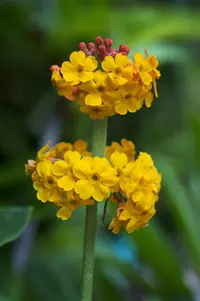
Bulley's primrose (Primula bulleyana) is a hardy, herbaceous perennial known for its elegant, tiered flower spikes and rosettes of soft green leaves. It belongs to the candelabra primrose group, valued for vertical color in damp borders. Flowers typically range from warm yellow to orange tones, rising above the foliage in late spring to early summer. Plants form neat clumps that slowly expand rather than spreading aggressively. Primula bulleyana is native to moist mountain habitats in southwestern China, so it favors cool conditions and consistently damp, humus-rich soil. In temperate gardens, it suits partially shaded spots near ponds, streams, or other reliably moist areas, and gardeners often find it straightforward to care for Bulley's Primrose when its moisture needs are met.

Main Plant Requirements

Care Difficulty

Moderate Care

Light Preference

Partial Shade

Water Requirements

Keep Soil Moist

Temperature Preference

Cool Climate

Hardiness Zone

5–8

Soil Texture

Loamy, Silty, Organic-rich

Soil pH

Acidic (5.5–6.5), Slightly acidic (6.5–7.0)

Soil Drainage

Moist but well-drained

Fertilization

Light (every 4–6 weeks)

Get Personalized Care Plan

Scan your plant to receive care tips personalized for your specific plant

Available on iOS and Android

How to Care for the Bulley's Primrose

This moisture-loving perennial prefers cool, bright conditions with protection from intense sun.

  • Provide 3–4 hours of gentle morning sun with light or open shade the rest of the day, especially in summer.
  • Site Bulley's Primrose where it receives dappled or filtered light under shrubs or trees; avoid harsh midday and afternoon sun that can scorch leaves and dry soil quickly.
  • In hotter climates, shift toward more shade (bright, indirect light all day); in cooler climates, allow a bit more direct morning sun to support flowering.

This plant needs consistently moist soil without becoming waterlogged.

  • Aim for soil that stays evenly damp to 5–8 cm depth; do not let the root zone dry out completely between waterings.
  • Use rich, humus-heavy soil with good drainage so water moves through but moisture is held, especially in sloping or streamside plantings.
  • Increase watering during active growth and warm weather; reduce slightly in cool seasons, watching for limp, dull leaves (too dry) or yellowing, mushy crowns (overwatered).

This species grows best in cool to mild climates with protection from extreme heat.

  • Optimal growth occurs around 50–70°F (10–21°C), especially during spring and early summer flowering.
  • Plants tolerate light frost down to about 20–25°F (-7 to -4°C) once established, but prolonged freezes without snow cover can damage crowns.
  • In hot summers above 80°F (27°C), provide extra shade and soil moisture; sustained heat above 86°F (30°C) stresses plants and can shorten blooming.

This species prefers consistently moist, cool air with moderate humidity to support lush growth.

  • Aim for 50–70% humidity, as very dry air slows growth and can cause leaf edges to brown.
  • Watch for limp foliage, crisp margins, and flower buds that dry up before opening as signs of low humidity stress.
  • Increase humidity outdoors by planting near water features or mulching heavily, and in sheltered spots use grouped pots and shallow pebble trays.

Primula bulleyana grows best in moist, humus-rich soil that stays cool but drains freely.

  • Use a deep, loamy mix with high organic matter, such as garden loam blended with compost and leaf mold, to mimic streamside conditions.
  • Ensure drainage is steady rather than fast by avoiding large amounts of sand or gravel that cause the root zone to dry out too quickly.
  • Maintain a slightly acidic to neutral pH around 6.0–7.0, adding peat-free compost or leaf mold to lower pH in alkaline areas.
  • Improve aeration and structure by working in fine bark or well-rotted compost, and avoid compacted or waterlogged clay that encourages root rot.

This species can grow successfully in containers when moisture and root temperature are carefully managed.

  • Choose a tall, stable pot that allows deep root growth while keeping the crown slightly raised above the rim to prevent water pooling around the stem base.
  • Use a thick-walled ceramic or clay container to buffer rapid temperature and moisture swings in sunny or exposed positions.
  • Set the container inside a larger decorative pot or tray filled with damp gravel to maintain a cool, humid microclimate around the root zone without waterlogging.

This moisture-loving perennial benefits from light, consistent feeding during the growing season for best flowering.

  • Use a balanced, water-soluble fertilizer (around 10-10-10) diluted to 1/4–1/2 strength every 3–4 weeks in spring and early summer.
  • Alternatively, apply a thin layer of fine compost around plants at the start of spring for slow, gentle nutrition.
  • Stop feeding Bulley's Primrose by late summer and avoid fertilizing in fall and winter while growth is slow or dormant.

Primula bulleyana needs simple, light pruning to keep clumps tidy and flowering well.

  • In late spring and early summer, deadhead spent flower spikes at the base to encourage continued blooming and neatness.
  • Remove yellowing, damaged, or diseased leaves with clean scissors to improve air flow and reduce rot risk.
  • In late autumn, tidy by cutting back collapsed foliage, leaving the crown at soil level to renew naturally in spring.

This primula is most often grown in the ground, with transplanting focused on maintaining healthy, moist clumps.

  • Transplant or divide mature clumps every 3–4 years in early spring or early autumn when soil is cool and moist.
  • Move plants if flowering declines, centers die out, or growth is crowded, spacing new clumps 20–30 cm apart.
  • Lift with a fork, keeping a generous soil ball around the roots, and replant promptly at the same soil depth.
  • Water thoroughly after transplanting and shade lightly for 3–5 days to limit transpiration and root stress.

Primula bulleyana plant care often includes propagation by division or seed to refresh clumps and increase numbers.

  • Divide established clumps in early spring or just after flowering, ensuring each division has several buds and healthy roots.
  • Replant divisions into moist, humus-rich soil and keep evenly damp until strong new growth appears.
  • For seed, sow fresh seed on the surface of cool, moist mix, barely covering, in late winter or early spring.
  • Provide cool temperatures (50–60°F), bright shade, and constant moisture to support steady germination and seedling growth.

This hardy primula tolerates typical temperate winters but benefits from some root-zone protection in colder areas.

  • In late autumn, apply a 3–5 cm layer of leaf mold or compost around crowns to insulate roots while keeping crowns exposed.
  • Leave spent foliage lightly in place in cooler zones as extra insulation, then tidy in early spring.
  • For container plants, move pots to a sheltered, unheated but frost-sheltered spot and prevent waterlogging.

Care Tips

Staggered Clump Renewal

Lift and divide crowded clumps every 3–4 years in early autumn, replanting only the youngest, healthiest rosettes to keep flowering strong and reduce disease buildup.

Moisture Basin Setup

On sloping or free-draining sites, create a shallow, saucer-like depression around new plantings so irrigation and rainwater collect near the roots instead of running off.

Cool Root Mulching

Apply a 3–5 cm layer of fine composted bark or leaf mold around, but not touching, the crowns to keep roots cool, conserve moisture, and limit weed competition.

Seedling Succession Sowing

Allow a few flower spikes to set seed, then either let them self-sow into nearby moist soil or collect and surface-sow fresh seed in trays to maintain a steady succession of young plants.

Snail And Slug Exclusion

Before buds emerge in spring, place ring barriers of sharp grit or copper tape around clumps and check traps regularly, since early protection from grazing is critical when caring for Bulley's Primrose.

Common Pests and Diseases

Vine weevil

This pest feeds on roots as larvae and notches the leaf edges as adults, often causing sudden wilting in moist, rich primula beds.

Solution

Inspect plants regularly, hand-pick adult beetles at night, and remove and destroy any badly affected plants with damaged roots. In outdoor beds, apply beneficial nematodes targeting vine weevil larvae in late summer or early fall, and avoid letting the soil stay waterlogged, as this favors larval development.

Primula leaf spot

This disease causes dark, circular to irregular spots on leaves that may merge into larger dead patches, making foliage look scorched and weak.

Solution

Remove and discard affected leaves promptly, then improve airflow by thinning crowded clumps and avoiding overhead watering where possible. In persistent cases, rotate planting areas, keep foliage dry in the evening, and use a fungicide labeled for foliar leaf spots on ornamentals, following label directions carefully as part of Primula bulleyana care instructions.

Powdery mildew

This disease produces a white to gray powdery coating on leaves, which can cause yellowing and distortion in crowded, slightly dry conditions.

Solution

Increase spacing between plants, improve airflow, and water at soil level to avoid wet foliage while keeping the root zone evenly moist. Remove heavily affected leaves and, if needed, apply a sulfur or potassium bicarbonate-based product labeled for powdery mildew on ornamentals, following all safety and timing recommendations.

Aphids

These insects cluster on young shoots and flower stems, sucking sap and causing curling, distortion, and sticky honeydew that can attract sooty mold.

Solution

Wash colonies off with a firm stream of water and pinch off heavily infested soft tips. For ongoing infestations, introduce or encourage natural predators like lady beetles, or use insecticidal soap or horticultural oil, covering all leaf surfaces and repeating as directed until populations collapse.

Slugs and snails

These pests chew irregular holes in leaves, especially on young rosettes, and can skeletonize foliage in damp, shaded primula borders.

Solution

Hand-pick slugs and snails at dusk or after rain, and use barriers such as copper tape or sharp grit around small groups of plants. Where damage is severe, place iron phosphate-based slug baits around the planting area, follow label instructions, and reduce hiding places by keeping mulch thin and debris away from the crowns.

Interesting Facts

Candelabra tiered flowering

This species forms distinct whorls of flowers stacked up a single stem, creating a candelabra-like profile that is one of the key visual traits separating it from many other primroses.

Natural riverbank specialist

In its native range in southwest China, it occurs along cool, moist stream sides and seepage slopes, often in seasonally wet ground that does not fully dry out in summer.

Color shift with maturity

Flower buds open in rich orange shades that can age toward softer yellow tones, so a single flowering stem often displays a gradient of colors at once.

Botan icon

Did you know?

The species was first formally described in the early 20th century from plants collected in Yunnan, China, and named in honor of the English plantsman Arthur Bulley, who was instrumental in introducing many Himalayan and Chinese primulas into European horticulture.

FAQs about Bulley's Primrose

Lack of blooms usually comes from too much shade, drying out in spring, or nutrient-poor soil. Ensure consistent moisture, a cool position with bright but not harsh light, and modest feeding low in nitrogen.

Grow Healthy Plants with Botan Care

Keep your plants happy and healthy with plant identification, disease detection, and easy care guidance.

Botan plant care app — identify plants on mobile

Explore More Plants