British Columbia wildginger Care (Asarum caudatum)

Also known as: Western Wild Ginger, Longtail Wild Ginger
British Columbia wildginger

About British Columbia wildginger

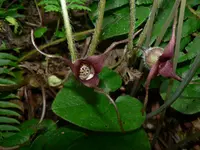
British Columbia wildginger, Asarum caudatum, is a low, spreading woodland perennial that forms dense carpets of heart-shaped, glossy leaves. It grows from creeping rhizomes just below the soil surface. Small, maroon to brownish flowers hide under the foliage and are often overlooked, but they attract ground-dwelling pollinators. The plant is native to moist, shaded forests of the Pacific Northwest, especially along the coast and in mountain foothills. It is generally slow-growing but long-lived, and once established it can create a stable groundcover. Asarum caudatum prefers cool shade, consistent moisture, and humus-rich soil, which guides how to care for British Columbia wildginger in garden settings.

Main Plant Requirements

Care Difficulty

Moderate Care

Light Preference

Shade

Water Requirements

Keep Soil Moist

Temperature Preference

Cold Hardy

Hardiness Zone

5–9

Soil Texture

Loamy, Silty, Organic-rich

Soil pH

Acidic (5.5–6.5), Slightly acidic (6.5–7.0)

Soil Drainage

Moist but well-drained

Fertilization

Minimal (feed rarely)

Get Personalized Care Plan

Scan your plant to receive care tips personalized for your specific plant

Available on iOS and Android

How to Care for the British Columbia wildginger

Asarum caudatum thrives in low, woodland light that mimics a shaded forest floor.

  • Provide bright full shade to dappled light, with at most 1–2 hours of gentle morning sun and no direct afternoon sun to prevent leaf scorch.
  • Plant British Columbia wildginger under trees, shrubs, or on the north or east side of buildings where it receives filtered light throughout the day.
  • In summer, protect from increased sun exposure; in winter, when trees are leafless, temporary extra light is usually tolerated in cool, moist soils.

Asarum caudatum prefers consistently moist but not waterlogged soil throughout the growing season.

  • Aim for soil that feels evenly moist; allow only the top 1–2 cm to dry before watering again, especially during its main growth in spring and early summer.
  • Use humus-rich, well-draining soil so excess water can drain away, reducing risk of root rot, sour smells, or yellowing, mushy leaves from overwatering.
  • In hot, dry weather, monitor for drooping or dry, crispy edges as signs it needs more moisture, and increase watering or mulch depth accordingly.

This woodland perennial grows best in cool, stable conditions with moderate summers and mild to cold winters.

  • Ideal active growth occurs around 50–70°F (10–21°C), where foliage remains lush and soil moisture is easier to maintain.
  • Established plants tolerate winter down to about 10–15°F (-12–-9°C) under mulch or snow cover, with foliage often dying back while roots survive.
  • Heat above 80°F (27°C), especially with dry soil, can stress plants; provide extra shade, thicker mulch, and careful watering during hot spells.

This woodland groundcover prefers consistently moist air similar to a shaded forest floor.

  • Aim for 50–70% humidity, especially in heated or air‑conditioned homes.
  • Tolerates brief dips to 40%, but leaf edges may brown or curl if air stays too dry.
  • Use grouped pots, pebble trays, or a small room humidifier near British Columbia wildginger to stabilize humidity.

This species grows best in loose, humus-rich soil that mimics a cool forest floor.

  • Use a mix of roughly 50% compost or leaf mold, 30% fine bark, and 20% mineral grit such as perlite or pumice for structure.
  • Soil should be moist yet free-draining; water must not pool around the shallow roots of Asarum caudatum.
  • Aim for slightly acidic to neutral pH, around 5.5–7.0, to support root health and nutrient uptake.
  • Avoid heavy clay, compacted ground, or mixes dominated by peat that stay waterlogged and exclude air from the root zone.

This plant is suitable for container growing when moisture and shade are carefully managed.

  • Choose a wide, shallow pot to match the spreading rhizomes and keep the root zone evenly moist.
  • Use a heavier clay or ceramic container if outdoors to prevent the slowly spreading clumps from tipping in wind.
  • Elevate the pot slightly on feet or tiles so drainage holes stay clear and excess water can escape rapidly after rain or watering.

Asarum caudatum grows well in rich, humusy soil and only needs modest supplemental feeding.

  • Apply a thin layer of compost or leaf mold in spring to mimic its woodland habitat and maintain soil fertility.
  • Use a balanced, slow-release fertilizer at 1/2 strength once in late spring if growth appears weak.
  • Avoid summer overfeeding; excess nutrients reduce root and rhizome health and can scorch foliage.
  • Stop feeding British Columbia wildginger in late summer to allow natural hardening before winter dormancy.

Asarum caudatum needs only light pruning to keep the groundcover clean and healthy.

  • Best time is late winter or early spring before new growth elongates.
  • Remove dead, yellowing, or slug-damaged leaves with clean hand pruners or sharp scissors at the base.
  • Thin out crowded or overlapping leaves to improve air movement and reduce fungal spotting.
  • Limit cuts to foliage only; avoid cutting into rhizomes so the colony maintains an even, dense mat.

This woodland groundcover is more often transplanted in the garden than grown long-term in containers.

  • Transplant in early spring or early fall, when temperatures are cool and soil is evenly moist.
  • Move clumps when growth is sparse, the patch is too dense, or roots circle the pot in nursery-grown plants.
  • Lift clumps with a hand fork, keeping soil around the shallow rhizomes to reduce root disturbance and stress.
  • Replant at the same depth in loose, organic-rich soil, water gently, and shade for 1–2 weeks until established.

Asarum caudatum is most reliably propagated by division of established clumps.

  • Divide mature plants in early spring or early fall when soil is moist and temperatures are mild.
  • Lift a section with a trowel and separate rhizomes by hand, keeping several leaves and roots on each piece.
  • Replant divisions immediately at original depth in humus-rich, shaded soil, then water thoroughly.
  • Seed propagation is slow; if attempted, sow fresh seed in a shaded, cool frame and allow natural stratification.

This species is cold hardy in much of its range and usually needs minimal winter care in the ground.

  • Tolerates typical frost in USDA zones 6–8, though foliage may look tattered by late winter.
  • Apply 2–5 cm of leaf mulch in late fall to insulate shallow rhizomes and maintain soil moisture.
  • For container plants in colder areas, move pots to a sheltered, unheated but frost-free location.

Care Tips

Edge Rhizome Control

Once a year in late winter, slice straight down with a knife or spade around the clump edge to cut back wandering rhizomes and prevent this groundcover from invading nearby beds or lawn.

Leaf Litter Mulching

Allow a thin layer of deciduous leaf litter to remain over the colony through winter, then gently crumble and spread it in spring to insulate roots, protect emerging shoots, and provide slow organic matter without heavy mulching.

Slug And Snail Patrol

Inspect the foliage at dusk in wet seasons, hand-pick slugs and snails, and use physical barriers like copper tape along path edges to protect the low leaves from being shredded.

Divide For Colony Health

Every 3–5 years, lift and divide congested patches in early spring, replanting firm rhizome sections with several leaves to maintain vigor and create new, even groundcover elsewhere.

Pathway And Rock Placement

Position flat stepping stones or rocks just above soil level within the planting area to create stable access for maintenance while also moderating soil moisture and temperature for growing British Columbia wildginger.

Common Pests and Diseases

Slugs and snails

This pest is strongly attracted to the tender evergreen leaves and can rapidly skeletonize foliage, especially in cool, moist shade where the plant is normally grown.

Solution

Hand-pick at night, use iron phosphate slug bait around but not on the crowns, and reduce hiding spots such as boards or dense debris. Coarse mulch or copper barriers around valued clumps can also reduce damage without harming beneficial organisms.

Vine weevils

These insects may chew notches in leaf edges as adults, while the larvae feed on roots and rhizomes, causing wilting and decline in container-grown or garden plants.

Solution

Inspect at night and manually remove adults, then target larvae by drenching the soil with beneficial nematodes labeled for vine weevils in spring or late summer. Avoid waterlogged soil and overly loose containers, which favor larval development around the rhizomes.

Leaf spot

This disease causes small brown to purplish spots on leaves that may merge into irregular patches, leading to thinning foliage in damp, shaded sites with poor air movement.

Solution

Remove and discard affected leaves, avoid overhead watering, and thin crowded clumps to improve airflow. In sites with recurring problems, relocate divisions to a slightly more open position and keep mulch off the leaf surfaces to reduce prolonged leaf wetness.

Botrytis blight

This disease develops in cool, wet weather and produces soft, water-soaked lesions and a gray fuzzy mold on decaying leaves and flowers close to the soil surface.

Solution

Promptly remove and dispose of all dead or collapsing foliage, then improve air circulation by thinning and keeping organic debris off the crown. In persistently wet climates, use a light, airy mulch and avoid dense groundcover plantings that trap moisture around the plant.

Interesting Facts

Pacific forest specialist

This species is native to the moist forests of the Pacific Northwest, where it forms dense groundcover under conifers and broadleaf trees and helps protect the soil from erosion.

Hidden beetle-pollinated flowers

Its purplish-brown, three-lobed flowers sit at ground level under the leaves and are pollinated mainly by ground-dwelling beetles and other small insects that crawl rather than fly.

Seed dispersal by ants

The seeds carry a fleshy, oil-rich appendage called an elaiosome that attracts ants, which carry the seeds to their nests, eat the elaiosomes, and discard the seeds, aiding in dispersal.

Botan icon

Did you know?

Genetic and morphological studies place this species in a group of western North American wild gingers that likely diversified as the region’s forests and coastal climates developed, making it a useful species for studying biogeography and the evolutionary history of Pacific Northwest understory plants.

FAQs about British Columbia wildginger

This species spreads slowly to moderately by short rhizomes, forming a low ground-covering patch over several years. It is usually not invasive in gardens but can gradually fill in shady, moist beds if left undisturbed.

Grow Healthy Plants with Botan Care

Keep your plants happy and healthy with plant identification, disease detection, and easy care guidance.

Botan plant care app — identify plants on mobile

Explore More Plants