yellow crocus Care (Crocus flavus)

yellow crocus

About yellow crocus

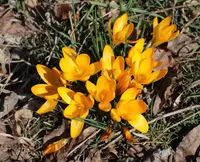
Yellow crocus (Crocus flavus) is a small, bulb-like perennial grown from corms that bloom very early in spring. It produces bright golden-yellow, cup-shaped flowers above narrow, grass-like leaves. Native to southeastern Europe and parts of the Balkans, it often grows in rocky meadows and open, sunny slopes. This background makes it well suited to garden borders, rock gardens, and naturalized lawns in temperate climates. Crocus flavus is generally easy to grow if its corms have good drainage and a dry rest in summer. A position with ample light and moderately moist, well-drained soil usually supports healthy growth, and understanding this helps when learning how to care for yellow crocus.

Main Plant Requirements

Care Difficulty

Easy Care

Light Preference

Full Sun

Water Requirements

Moderate Water

Temperature Preference

Cold Hardy

Hardiness Zone

3–8

Soil Texture

Sandy, Loamy, Organic-rich

Soil pH

Acidic (5.5–6.5), Slightly acidic (6.5–7.0)

Soil Drainage

Well-drained

Fertilization

Minimal (feed rarely)

Get Personalized Care Plan

Scan your plant to receive care tips personalized for your specific plant

Available on iOS and Android

How to Care for the yellow crocus

This spring-flowering bulb thrives in cool conditions with plenty of direct light during its active season.

  • Provide 4–6 hours of direct sun daily in late winter and spring; full morning sun with light afternoon shade suits yellow crocus well.
  • Allow light partial shade in warmer climates, especially after midday, to prevent flower fade and premature wilt.
  • Avoid deep shade, which causes weak, floppy leaves and few blooms; site Crocus flavus where nearby deciduous trees do not fully leaf out until after flowering.

This bulb prefers moderate moisture during growth and quite dry conditions when dormant.

  • In active growth and bloom, water only when the top 3–5 cm of soil feel dry, aiming for evenly moist but never soggy soil around the bulbs.
  • Use sharply drained soil or a raised bed so excess water runs off; prolonged saturation leads to bulb rot and foul-smelling, mushy corms.
  • Reduce or stop watering once foliage yellows and dies back; permanent wetness in summer dormancy weakens Crocus flavus and reduces next year’s flowering.

This species is adapted to cool winters and mild springs with a pronounced dormant period in summer.

  • Active growth and flowering are strongest at 45–60°F (7–16°C), with buds tolerating short dips slightly below freezing once established.
  • Dormant bulbs withstand winter soils down to about 5–10°F (-15 to -12°C) if planted 7–10 cm deep in well-drained ground and mulched lightly in very cold regions.
  • In late spring, once temperatures regularly exceed 75°F (24°C), foliage naturally withers; avoid hot, reflective spots that can push soil above 85°F (29°C) for long periods.

Humidity is not a significant factor for Crocus flavus, which thrives in typical outdoor air conditions.

Crocus flavus grows best in loose, sharply drained mineral soils that never stay waterlogged.

  • Use sandy or gritty loam with 30–50% coarse sand or fine gravel to keep pores open around the bulbs.
  • Aim for slightly acidic to neutral pH around 6.0–7.0, avoiding strongly acidic or alkaline sites that limit nutrient uptake.
  • Mix in a small amount of well-rotted compost above and around, not directly under, the bulbs to prevent rot.
  • Avoid heavy clay or compacted ground; if unavoidable, plant in raised beds with added grit and coarse sand to improve drainage and aeration.

This species is very suitable for container growing outdoors in cool seasons.

  • Choose a pot at least 15–20 cm deep so the bulbs sit 7–10 cm below the rim with space for root spread above the base.
  • Use a heavy or wide-based container if exposed to wind because the narrow foliage and blooms can make the pot prone to tipping.
  • Line the bottom with a shallow layer of coarse grit above the drainage holes to prevent mix loss while keeping water moving freely.

Crocus flavus has modest nutrient needs but responds well to light feeding in active growth.

  • Use a balanced liquid fertilizer (for example 10-10-10) at 1/2 strength as shoots emerge and through flowering.
  • Apply every 2–3 weeks during the spring growing season, then stop once foliage starts to yellow and die back.
  • In borders, a thin topdressing of compost around, not over, the bulbs each spring supports blooming.
  • Avoid high-nitrogen products that encourage soft foliage rather than strong corms.

Crocus flavus needs only minimal pruning focused on cleanliness rather than shaping.

  • In spring, remove spent flowers by pinching off the faded blooms at the base to reduce seed set.
  • Leave green leaves intact until they yellow naturally, allowing energy to return to the corms for next year.
  • In late summer or fall, gently clear away fully dead foliage and debris to limit fungal problems.
  • Use clean fingers or small scissors and avoid damaging emerging shoots or nearby bulbs.

Yellow crocus is usually transplanted by moving or lifting corms rather than by frequent repotting.

  • Plan to lift and divide clumps every 3–4 years if flowering declines or plants crowd together.
  • Schedule transplanting for late summer to early fall when foliage is fully dormant and corms are resting.
  • Gently lift with a hand fork, separate healthy firm corms, and replant at the same depth in well-drained soil.
  • Water lightly after planting, then keep soil just barely moist to reduce root stress as new roots establish.

Crocus flavus is mainly propagated by corm division, with seed used less often for home gardens.

  • Divide corms in late summer or early fall when plants are fully dormant and foliage has disappeared.
  • Lift clumps, gently separate offsets, discard any soft or diseased corms, and replant promptly.
  • Set corms 5–8 cm deep in free-draining soil, spacing 5–8 cm apart for good air circulation.
  • For seed, sow fresh in pots outdoors, allow natural winter chilling, and expect uneven germination.

Crocus flavus is cold hardy in much of the US and usually needs little special winter care in the ground.

  • In regions with severe freeze-thaw cycles, add a light mulch layer after the soil cools to stabilize temperatures.
  • Keep mulch loose and airy so crowns do not stay waterlogged, which can cause corm rot.
  • For containers in very cold zones, move pots into an unheated but frost-free garage or cold frame.

Care Tips

Mark Dormant Sites

After flowers fade and foliage dies back, discreetly mark clump locations with small tags or stones so you do not disturb or accidentally dig up the bulbs during summer garden work.

Use Bulb Baskets

In gardens with rodents or heavy soil, plant corms in shallow plastic bulb baskets to protect them from being eaten and to make future lifting, dividing, and repositioning much easier.

Force Indoors Safely

For indoor bloom, pre-chill healthy corms for 10–12 weeks at 35–45°F in a breathable paper bag, then pot and bring into a cool bright room to enjoy flowers without stressing outdoor plantings.

Time Lawn Mowing

If planted in turf, delay mowing until leaves have fully yellowed and flopped, as cutting foliage earlier weakens the corms and reduces flowering in the next season when growing yellow crocus.

Lift In Wet Climates

In regions with very wet summers, lift corms once foliage dies back, dry them for a few days in a shaded, airy spot, then store in a mesh bag in a cool, dry place to reduce rot and maintain flowering strength.

Common Pests and Diseases

Crocus smut

This disease causes dark brown to black streaks or swollen, distorted areas on leaves and flower stalks, and flowers may fail to open properly. Symptoms include stunted growth and a generally weakened clump over time.

Solution

Carefully dig up and discard any affected corms and surrounding soil, then replant only healthy, firm corms in a fresh location with good drainage. Avoid overhead watering, rotate planting sites every few years, and buy certified disease-free corms to reduce future infection.

Crocus mosaic virus

This disease leads to yellow streaking, mottling, or broken color in the petals and sometimes pale or distorted foliage. Symptoms include poor flowering and weakened plants that decline over several seasons.

Solution

Remove and destroy any plants showing clear mosaic or streaking symptoms, including their corms, to prevent spread. Control aphids that transmit the virus, avoid replanting crocus immediately in the same soil, and only plant stock sourced from reputable suppliers for reliable Crocus flavus care.

Gray mold (Botrytis)

This disease causes soft, water-soaked spots on flowers and leaves that quickly develop a fuzzy gray mold, especially during cool, damp weather. Symptoms include collapsed blooms and slimy tissue at the base of the plant.

Solution

Remove and discard all affected flowers, leaves, and plant debris as soon as they appear, and improve air movement by avoiding dense planting and overhead irrigation. In very wet seasons, consider a preventative fungicide labeled for bulbs and avoid leaving old foliage or spent blooms on the soil surface.

Bulb rot (Fusarium)

This disease attacks the corms, causing soft, brown, or reddish rot with possible white or pinkish fungal growth and poor or absent emergence in spring. Symptoms include weak, yellowing shoots that collapse early or fail to flower.

Solution

Discard all soft or discolored corms and never compost them, then replant only clean, firm bulbs into sharply drained soil or raised beds. Do not overwater in summer dormancy, avoid injuring corms during handling, and if the problem persists, change planting sites and avoid following other bulb crops in the same soil.

Squirrels and rodents

These animals dig up and eat corms or chew off emerging shoots, leaving missing plants or scattered bulb scales on the soil surface. Symptoms include irregular gaps in plantings and damaged or decapitated flower buds.

Solution

Protect beds with wire mesh or hardware cloth laid over the planting area and covered with soil or mulch, or use buried bulb cages around groups of corms. Remove fallen seeds or food sources that attract rodents and, if pressure is high, plant slightly deeper and combine physical barriers with repellents labeled for use around bulbs.

Interesting Facts

Distinct mountain origin

This species is native to rocky slopes and open woodland in the Balkans and parts of Turkey and Greece, where it often grows in thin, stony soils that warm quickly in late winter.

Early pollinator resource

Its bright yellow, cup-shaped flowers open on sunny late-winter or early-spring days and provide pollen and nectar for early-active bees when few other floral resources are available.

Small but long-lived

Individual corms remain relatively small yet can persist for many years in one spot, slowly forming tight clumps through the production of daughter corms rather than rapid spreading by seed.

Botan icon

Did you know?

Historical records show that yellow-flowered crocuses, including Crocus flavus, were traded and cultivated in Europe from at least the 16th century, making them among the earlier ornamental bulb species intentionally selected for bright winter and early-spring color in gardens.

FAQs about yellow crocus

This species usually flowers in late winter to early spring, often as snow recedes. Individual blooms typically last 5–10 days, but staggered flowering across a clump can provide color for 2–3 weeks.

Grow Healthy Plants with Botan Care

Keep your plants happy and healthy with plant identification, disease detection, and easy care guidance.

Botan plant care app — identify plants on mobile

Explore More Plants