Deep mulch ring
Apply a 5–8 cm ring of shredded leaf mulch around, but not touching, the stems each spring to keep roots cool, suppress weeds, and protect the bulbs from summer heat and soil compaction.

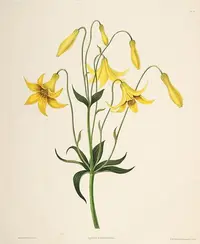
Canada lily, Lilium canadense, is a hardy, herbaceous perennial bulb native to moist meadows and open woodlands of eastern North America. It produces tall, graceful stems with whorled leaves and nodding, bell-shaped flowers in yellow, orange, or red tones, often lightly speckled.
Plants spread slowly by bulbs and seeds, forming loose colonies where conditions suit them. They can be somewhat demanding, as they dislike disturbance and need consistent moisture and protection from strong winds.
In gardens, they grow best in cool, humus-rich, well-drained soil with partial sun and steady moisture, so understanding how to care for Canada lily helps improve long-term success.

Care Difficulty
Moderate Care

Light Preference
Partial Shade

Water Requirements
Regular Water

Temperature Preference
Cold Hardy

Hardiness Zone
3–8

Soil Texture
Loamy, Silty, Organic-rich

Soil pH
Acidic (5.5–6.5)

Soil Drainage
Moist but well-drained

Fertilization
Minimal (feed rarely)
Scan your plant to receive care tips personalized for your specific plant
Available on iOS and Android
This species prefers bright, gentle light that mimics open woodland edges.
This bulb prefers consistently moist but not waterlogged soil around its root zone.
This hardy perennial tolerates cold winters but needs a moderate growing-season temperature range.
This species prefers moderately moist air but usually adapts to typical outdoor humidity levels of 40–70%.
This species performs best in cool, moist, well-drained soils that stay aerated around the bulbs.
This species can be grown in containers but needs deep, stable pots and careful moisture management.
Native Lilium canadense usually needs only modest feeding, especially in rich, undisturbed soil.
Pruning needs for Lilium canadense are minimal and mainly focus on hygiene and bulb health.
This species is usually grown in the ground; transplanting is done infrequently to avoid disturbing the bulbs.
Propagation of Lilium canadense is possible by seed and by careful bulb division, but it is a slow process.
This hardy North American lily needs little special winter care in most temperate climates.

Plant Health Check
Not sure what's wrong with your plant? Check your plant's health inside the app.
This species bears nodding, trumpet-shaped flowers that hang downward with strongly recurved tepals, an adaptation that helps protect reproductive organs from rain in its moist meadow habitats.
The flowers are primarily pollinated by large, long-tongued butterflies and certain swallowtail species that can reach nectar deep in the tube, shaping the flower’s length and orientation through mutual evolutionary pressure.
Lilium canadense is naturally restricted to eastern North America, typically found in moist meadows, damp woods, and stream margins from southeastern Canada down into the northeastern and north-central United States.

In several parts of its native range, Lilium canadense has declined markedly due to habitat loss, overcollecting, and susceptibility to the invasive lily leaf beetle, and in some US states and Canadian provinces it is now listed as a species of conservation concern.
Lack of flowering often comes from too much shade, insufficient bulb energy, or overcrowding. Ensure several years without heavy bulb disturbance, allow foliage to die back naturally, and provide balanced nutrition. Consistent conditions are key for reliable blooms.
Keep your plants happy and healthy with plant identification, disease detection, and easy care guidance.