Stake Tall Stems
Install slender stakes or a wire grid early in the season and loosely tie the stems as they elongate to prevent wind damage and snapped flower spikes on this tall, top-heavy species.

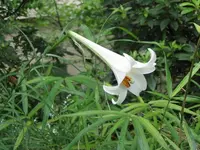
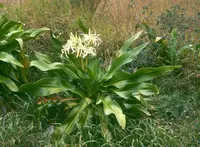
Formosa lily, Lilium formosanum, is a bulb-forming perennial known for its tall, upright stems and large, trumpet-shaped white flowers with a light fragrance. It often blooms in late summer, adding strong vertical structure to borders and mixed plantings.
This species is native to Taiwan, where it grows on slopes and open hillsides, so it adapts well to sunny, well-drained garden sites. It is generally vigorous and can self-seed, which makes it relatively easy to establish if conditions suit it.
Gardeners who want to care for Formosa lily should provide full sun or light shade, moderately moist but free-draining soil, and shelter from very strong winds.

Care Difficulty
Moderate Care

Light Preference
Full Sun

Water Requirements
Moderate Water

Temperature Preference
Cool Climate

Hardiness Zone
6–9

Soil Texture
Sandy, Loamy, Organic-rich

Soil pH
Acidic (5.5–6.5), Slightly acidic (6.5–7.0)

Soil Drainage
Moist but well-drained

Fertilization
Light (every 4–6 weeks)
Scan your plant to receive care tips personalized for your specific plant
Available on iOS and Android
This species prefers bright, open conditions for strong stems and abundant flowers.
Soil should stay moderately moist around the bulbs without becoming waterlogged.
This lily prefers mild to warm growing seasons with cool, dormant winters.
This species grows best in moderate ambient humidity but usually adapts to typical indoor and outdoor levels.
Lilium formosanum prefers loose, well-aerated, moisture-retentive but sharply draining soil.
This lily is suitable for containers when the pot is deep and drainage is efficient.
This fast-growing bulb responds well to moderate feeding during its active season.
Pruning focuses on cleaning and directing energy rather than shaping Lilium formosanum.
This lily is usually grown in beds, with transplanting focused on maintaining healthy, uncrowded bulbs.
Lilium formosanum is commonly propagated from bulbs and seeds to build up strong flowering groups.
This lily is moderately hardy, but winter care depends on climate and planting method.

Plant Health Check
Not sure what's wrong with your plant? Check your plant's health inside the app.
The flowers release their strongest fragrance after dusk, which helps attract night-flying moth pollinators in its native range of Taiwan.
Although a perennial by life cycle, this species often behaves like a biennial or short-lived perennial in cultivation, readily self-seeding and forming new colonies around the parent plant.
This lily is naturally restricted to Taiwan, where it grows on open grassy slopes and disturbed sites, yet it has naturalized in several subtropical and warm-temperate regions worldwide.

This species can set viable seed very quickly, sometimes flowering from seed in as little as 1–2 years, which is unusually fast for a large, trumpet-flowered lily.
Lack of flowers usually comes from immature bulbs, insufficient light, overcrowded bulbs, or heavy nutrient-rich soil that encourages foliage over buds. Allow bulbs to size up, avoid overfertilizing, and keep them undisturbed for several seasons.
Keep your plants happy and healthy with plant identification, disease detection, and easy care guidance.