


Rotate for symmetry
Turn the pot 90° every 7–10 days so new shoots develop evenly around the plant and the flower spikes do not lean strongly toward the light source.

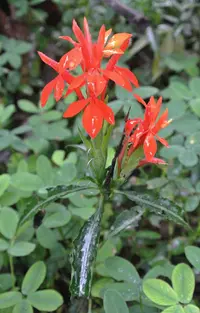
Fiery spike (Aphelandra aurantiaca) is a tropical evergreen shrub grown mainly for its bright orange flower spikes and glossy green leaves. It usually stays compact indoors, forming a bushy clump with upright, sturdy stems.
This species comes from humid forests of Central and South America, where it grows under partial shade with warm, stable temperatures. It can be somewhat demanding, as it dislikes cold drafts, dry air, and irregular watering, so it suits owners ready for moderate attention. In simple terms, understanding how to care for fiery spike starts with providing warm, bright, sheltered conditions and evenly moist, well-drained soil.

Care Difficulty
Moderate Care

Light Preference
Bright Indirect Light

Water Requirements
Keep Soil Moist

Temperature Preference
Tropical / Frost Sensitive

Hardiness Zone
11–12

Soil Texture
Loamy, Peaty, Organic-rich

Soil pH
Acidic (5.5–6.5), Slightly acidic (6.5–7.0)

Soil Drainage
Moist but well-drained

Fertilization
Moderate (every 2–4 weeks)
Scan your plant to receive care tips personalized for your specific plant
Available on iOS and Android
Aphelandra aurantiaca prefers bright, indirect light that mimics dappled tropical shade.
This species needs evenly moist but not waterlogged soil to stay healthy.
Consistent warmth supports strong growth and flowering for this tropical shrub.
This species needs consistently high humidity to maintain healthy foliage and flower spikes.
This plant prefers airy, moisture-retentive yet sharply draining soil to protect its sensitive roots.
This species is well-suited to container growing due to its compact, upright habit.
Aphelandra aurantiaca responds well to modest, consistent feeding during its active growing season.
Pruning helps keep Aphelandra aurantiaca compact, well-branched, and floriferous.
This species appreciates timely repotting or transplanting to avoid root congestion and stalled growth.
Aphelandra aurantiaca is commonly propagated from stem cuttings taken during warm months.
This tropical species is frost-sensitive and needs protective winter care in temperate climates.

Plant Health Check
Not sure what's wrong with your plant? Check your plant's health inside the app.
The showy orange structures are not the true flowers but bracts that can shift from bright orange to more muted tones as they age, while the small tubular flowers appear briefly and are less conspicuous.
This species occurs naturally in humid, mid- to high-elevation tropical forests of Central America, where it grows as an understory shrub receiving filtered light beneath taller vegetation.
In its native range, the tubular orange flowers are primarily pollinated by hummingbirds, whose long bills and hovering flight allow precise access to the nectar deep inside the flower tube.
This species blooms best with bright, indirect light, steady warmth, and slightly cooler nights. Lack of light, irregular feeding, or keeping it pot-bound too long often reduce flowering. After a rest period, improved conditions usually restore blooms.
Keep your plants happy and healthy with plant identification, disease detection, and easy care guidance.

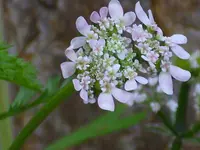
Flat-fruited Orlaya
Orlaya daucoides
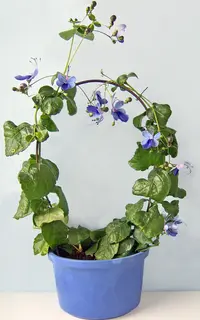
Rough-leaved Cats-whiskers
Rotheca myricoides
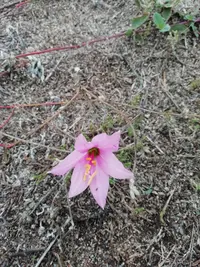
Zephyranthes gracilifolia
Zephyranthes gracilifolia
 POPULAR
Hoya
Hoya australis
Fancy-leaf Caladium
Caladium 'Red Flash'
Peruvian wild petunia
Ruellia chartacea

Thaumatophyllum spruceanum
Thaumatophyllum spruceanum
Monadenium ritchiei
Euphorbia ritchiei