BotaN logo

Chinese peony Care (Paeonia lactiflora)

Chinese peony

About Chinese peony

Chinese peony, Paeonia lactiflora, is a long-lived herbaceous perennial grown for its large, often fragrant blooms and lush, divided foliage. Plants form rounded clumps that die back in winter and re-emerge each spring from underground buds.

This species is native to parts of China, Siberia, and Mongolia, where it grows in open meadows and light woodland edges. In gardens it is valued for reliable flowering once established, but it can be slow to settle after planting and dislikes frequent disturbance.

It generally prefers full sun, evenly moist but well-drained soil, and a cool winter period, which guides how to care for Chinese peony in temperate climates.

Main Plant Requirements

Care Difficulty

Moderate Care

Light Preference

Full Sun

Water Requirements

Moderate Water

Temperature Preference

Cold Hardy

Hardiness Zone

3–8

Soil Texture

Loamy, Sandy, Organic-rich

Soil pH

Acidic (5.5–6.5), Slightly acidic (6.5–7.0)

Soil Drainage

Well-drained

Fertilization

Minimal (feed rarely)

Get Personalized Care Plan

Scan your plant to receive care tips personalized for your specific plant

Available on iOS and Android

How to Care for the Chinese peony

This perennial prefers strong light to flower well and build sturdy stems.

  • Provide 6–8 hours of direct sun daily, ideally with morning sun and light afternoon shade, especially in hotter climates.
  • Tolerates light partial shade (4–5 hours) but flowering in Chinese peony clumps decreases and stems stretch if shade is too dense.
  • In summer, protect from intense late-afternoon sun in zones with very hot summers to reduce leaf scorch and premature bloom fade.

Consistent, moderate soil moisture supports healthy growth and long-lasting blooms.

  • Water when the top 3–5 cm of soil feels dry, soaking the root zone deeply rather than giving frequent light splashes.
  • Use well-drained soil; prolonged soggy conditions cause root rot, yellowing foliage, and weak, collapsing stems in Paeonia lactiflora.
  • Increase monitoring during hot, dry periods; wilted, limp leaves signal thirst, while blackened buds or mushy crowns often indicate overwatering or poor drainage.

This hardy perennial thrives in climates with cold winters and mild to warm summers.

  • Optimal growth occurs around 60–75°F (16–24°C) during spring and early summer, when new shoots and buds develop.
  • Dormant roots tolerate winter lows down to about -20°F (-29°C) with mulch, but emerging shoots can be damaged by late hard frosts.
  • Mature plants handle short heat spells up to about 90°F (32°C), but prolonged higher temperatures reduce flowering and benefit from afternoon shade and consistent soil moisture.

This species is largely unaffected by household humidity and does not need special adjustments.

Paeonia lactiflora prefers deep, loose, well-drained loam that stays evenly moist but never waterlogged.

  • Aim for a loamy mix built from garden soil, compost, and coarse sand to balance moisture retention and drainage.
  • Keep pH slightly acidic to neutral, around 6.5–7.2, as strongly acidic or alkaline soils reduce nutrient availability.
  • Work 5–10 cm of mature compost into the top 30–40 cm to improve structure, water holding, and root aeration.
  • Avoid compacted clay or spots with standing water, and raise beds or use sandier amendments where drainage is slow.

This species can be grown in large containers outdoors if the pot is deep and very stable.

  • Select a container at least 40–50 cm deep so the long, fleshy roots can extend without circling tightly.
  • Choose a heavy material such as ceramic or thick terracotta to keep the container from tipping when stems are in full bloom.
  • Elevate the pot on feet or bricks so drainage holes stay clear and excess water escapes rapidly after rain or irrigation.

Paeonia lactiflora benefits from modest, well-timed feeding rather than heavy fertilization.

  • Apply a balanced, slow-release fertilizer (around 10-10-10) or well-rotted compost once in early spring as new shoots emerge.
  • Use light rates; for granular products, apply at roughly half the label rate for flowering perennials to avoid lush, weak growth.
  • Keep fertilizer off the crown and stems, spreading it in a ring over the root zone and watering in thoroughly.
  • Do not feed during summer dormancy or winter; Chinese peony performs best with a clear rest period.

Pruning Paeonia lactiflora is mainly about hygiene and supporting strong flowering the next season.

  • In late fall after hard frost, cut back all browned stems to ground level using clean, sharp pruners.
  • During the growing season, deadhead spent blooms just above a strong leaf to tidy the plant and reduce seed set.
  • Remove any dead, diseased, or weak shoots promptly to improve air flow and reduce fungal disease risk.
  • Avoid heavy shaping cuts; the plant’s natural clump form returns each year from underground buds.

Garden peonies are usually transplanted in-ground rather than frequently repotted in containers.

  • Plan major transplanting for fall, when foliage has died back and soil is still workable but cooling.
  • Move clumps only every 10–20 years or when flowering declines, growth is stunted, or crowns are overcrowded.
  • Dig widely around the root system, lift gently, and replant with eyes 2–5 cm below soil level to limit transplant shock.
  • Water thoroughly after transplanting, then keep soil evenly moist but not waterlogged until new roots establish.

Paeonia lactiflora is most reliably propagated by division of established clumps rather than by seed or cuttings.

  • Divide mature plants in early fall when foliage has died back and soil temperatures are moderate.
  • Lift the clump carefully, wash off soil, and cut into sections with 3–5 eyes and ample roots per division.
  • Replant divisions with buds just below the soil surface in well-drained, fertile ground, spacing 60–90 cm apart.
  • Water in gently and maintain consistent moisture during the first season to support root establishment.

This hardy perennial usually needs only simple winter preparation in most temperate climates.

  • After hard frost, cut stems to ground level and remove debris to reduce overwintering fungal spores.
  • Apply a 5–8 cm mulch layer over the root zone in late fall, keeping material slightly away from the crown.
  • In very cold regions or exposed sites, add extra mulch or straw for insulation, removing excess in early spring.
  • Container-grown plants in cold zones can be moved into an unheated garage or against a sheltered wall.

Care Tips

Sturdy stem support

Install peony rings or low wire grids in early spring when shoots are 10–15 cm tall so the stems grow up through the support and heavy flower heads do not flop or snap in wind and rain.

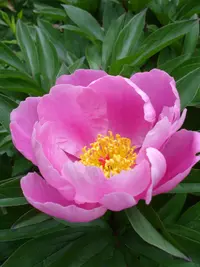
Bud thinning practice

For larger, better-formed blooms, remove side buds on each stem when they are pea-sized, leaving only the terminal bud to direct more energy into fewer flowers.

Root zone cooling

Mulch lightly around, but not over, the crown with 3–5 cm of shredded bark or compost to keep roots cool, suppress weeds, and maintain even soil moisture without burying the growing points.

Dividing for vigor

Every 10–15 years, lift and divide clumps in fall after foliage dies back, replanting firm divisions with 3–5 healthy eyes set 3–5 cm below soil level to restore flowering performance.

Botrytis hygiene

Reduce fungal problems such as botrytis by spacing plants for good air flow and removing spent flowers, fallen petals, and any blackened stems promptly, especially in wet springs when growing Chinese peony outdoors.

Common Pests and Diseases

Botrytis blight

This disease causes young shoots to blacken and collapse, buds to turn brown and fail to open, and petals to develop brown, water-soaked spots covered with gray mold in humid weather.

Solution

Remove and discard all affected buds, flowers, and stems as soon as symptoms appear, and keep plants well spaced with good airflow; avoid overhead watering. In areas with a history of Botrytis, apply a labeled fungicide at shoot emergence and again during wet, cool periods as part of Paeonia lactiflora care instructions.

Powdery mildew

This disease produces a white, powdery coating on leaves and sometimes stems, which can cause yellowing and early leaf drop later in the season.

Solution

Improve air circulation by thinning crowded stems and avoid wetting foliage late in the day. Remove heavily affected leaves and, if infections are severe year after year, use a suitable fungicide on new growth when the first white patches appear.

Phytophthora blight

This disease leads to sudden blackening and wilting of stems from the base upward, often with dark, water-soaked areas on lower stems and crowns, especially in poorly drained soil.

Solution

Dig out and destroy badly affected plants, and do not replant peonies in the same spot for several years. Improve drainage by raising beds or amending heavy soil, and water at the soil level rather than allowing standing water around the crown.

Leaf blotch (Cladosporium)

Symptoms include irregular purple to brown spots on leaves that may merge into large blotches, sometimes forming ringed or target-like patterns and causing premature leaf drop.

Solution

Cut and dispose of infected foliage at the end of the season and keep the area around plants clean of plant debris. During wet summers, improve airflow and, if needed, use a registered fungicide at the first sign of spotting to limit spread.

Thrips

These insects feed inside buds and on petals, causing streaked, deformed, or discolored flowers and sometimes silvered or speckled foliage.

Solution

Remove and discard damaged buds and spent blooms, and hose plants with a strong stream of water to dislodge insects. For persistent infestations, use blue or yellow sticky traps and treat with insecticidal soap or a neem-based product, focusing on buds and the undersides of leaves.

Interesting Facts

Genetic diversity center

Wild populations in northern China show unusually high genetic variation, which has made this species a key parent in breeding hundreds of modern garden peony cultivars.

Cold-dependent flowering

This species requires a pronounced winter chill period to initiate flower buds, which is why it performs best in climates with cold winters and struggles in warm, frost-free regions.

Historical Chinese selection

Cultivation and selection in China date back at least to the Tang and Song dynasties, where it was grown primarily for large, fragrant cut flowers and as an ornamental in scholar gardens.

Botan icon

Did you know?

Molecular studies have shown that many famous double-flowered garden peonies are complex hybrids, but their maternal lineage often traces back to Paeonia lactiflora, making it a foundational species in the genetic background of modern herbaceous peonies.

FAQs about Chinese peony

Lack of blooms usually comes from planting too deep, insufficient winter chill, or too much shade. Overfertilizing with high nitrogen can also suppress flowers. Check planting depth, sun exposure, and use a balanced fertilizer in early spring.

Grow Healthy Plants with Botan Care

Keep your plants happy and healthy with plant identification, disease detection, and easy care guidance.

Botan plant care app — identify plants on mobile

Explore More Plants