Cluster management
Thin out the weakest stems in crowded clumps every few years so air can move through the crown, which reduces fungal issues and keeps the remaining canes stronger and more stable.

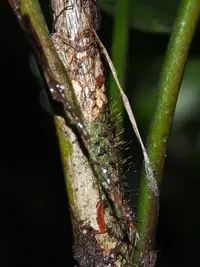
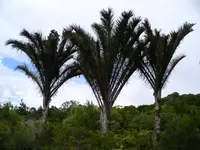
Bactris obovata is a small to medium palm species, usually clustering, with slender spiny stems and narrow, feather-like leaves. It often forms dense thickets in its natural habitat. Native to tropical regions of Central and South America, it grows in warm, humid lowland forests, often in partially shaded sites. The plant may produce small flowers and dark fruits, which add to its value in naturalistic plantings. Spines and a need for consistent warmth and moisture make it more suitable for experienced growers. Understanding how to care for Bactris obovata starts with providing stable warmth, filtered light, and well-drained but evenly moist soil.

Care Difficulty
Hard Care

Light Preference
Partial Shade

Water Requirements
Keep Soil Moist

Temperature Preference
Tropical / Frost Sensitive

Hardiness Zone
11–12

Soil Texture
Sandy, Loamy, Organic-rich

Soil pH
Acidic (5.5–6.5), Slightly acidic (6.5–7.0)

Soil Drainage
Moist but well-drained

Fertilization
Minimal (feed rarely)
Scan your plant to receive care tips personalized for your specific plant
Available on iOS and Android
This tropical clustering palm prefers bright, warm conditions with filtered sun.
This species prefers consistently moist, not stagnant, soil conditions.
This palm is a true lowland tropical species and reacts quickly to cold.
This palm prefers consistently humid air similar to its tropical habitat.
Bactris obovata grows best in moist, well-aerated, organic-rich substrate.
This species can be grown in containers when given enough depth and stability for its clumping palm habit.
Nutrient inputs for Bactris obovata should be modest and tailored to soil conditions rather than heavy feeding.
Structural pruning for Bactris obovata is light and mainly focused on cleanliness and safety.
This clumping palm is more often field-grown, so focus on careful transplanting or infrequent container up-potting.
Reproduction of Bactris obovata is usually done from seed and is relatively slow and specialized.
This tropical palm is frost-sensitive and needs careful winter management in cooler climates.

Plant Health Check
Not sure what's wrong with your plant? Check your plant's health inside the app.
This species forms clusters of slender, upright stems covered in sharp black spines, a characteristic defense trait in the genus that helps deter large herbivores in its native habitats.
It is naturally distributed in lowland to premontane rainforests of Central and parts of South America, where it typically grows in warm, humid, partially shaded forest understories.
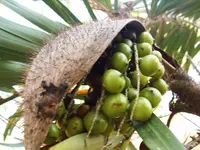
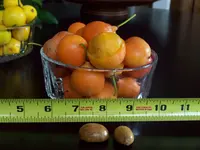
The small, fleshy fruits are eaten by birds and other wildlife, which then disperse the seeds through their droppings, an important ecological role for maintaining forest plant diversity and structure when people grow Bactris obovata near natural areas.
This palm can be grown in large, deep containers while young or in dwarf forms. Use a sturdy pot, well-draining mix, and regular repotting as roots fill the space, since it eventually becomes too large for long-term container culture.
Keep your plants happy and healthy with plant identification, disease detection, and easy care guidance.