Protect taproot
Use deep, tall containers or planting holes so the long taproot can develop straight, and avoid disturbing roots during repotting or transplanting to reduce setback and transplant shock.

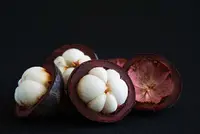
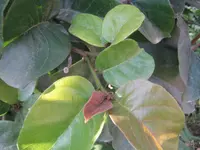
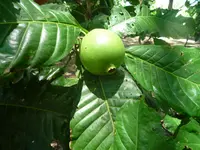
Mangosteen, Garcinia mangostana, is a slow-growing tropical evergreen tree valued for its thick, glossy foliage and distinctive purple fruits. It forms a dense, rounded crown and can become a medium-sized tree in warm, humid climates.
The species is native to Southeast Asia and is typically found in lowland tropical forests with consistently warm temperatures and high rainfall. Outside its natural range it is considered challenging, since it dislikes cold, drought, and poorly drained soils.
To care for mangosteen, growers need stable warmth, filtered bright light, evenly moist but not waterlogged soil, and protection from wind and sudden temperature drops.

Care Difficulty
Hard Care

Light Preference
Partial Shade

Water Requirements
Keep Soil Moist

Temperature Preference
Tropical / Frost Sensitive

Hardiness Zone
11–12

Soil Texture
Loamy, Silty, Organic-rich

Soil pH
Strongly acidic (4.5–5.5), Acidic (5.5–6.5)

Soil Drainage
Moist but well-drained

Fertilization
Moderate (every 2–4 weeks)
Scan your plant to receive care tips personalized for your specific plant
Available on iOS and Android
This tropical evergreen needs bright, gentle light to develop strong, healthy growth.
Garcinia mangostana prefers steadily moist, never saturated soil for reliable growth.
This species thrives only in warm, frost‑free climates with stable temperatures.
This species needs consistently high humidity to grow well indoors or in greenhouses.
Garcinia mangostana prefers deep, moisture-retentive but well-drained, organic-rich soil.
This slow-growing tree can be maintained in large containers for many years under warm, humid conditions.
Nutrient inputs for Garcinia mangostana should be moderate and focused on the warm growing season.
Pruning Garcinia mangostana is mainly about light structural shaping and sanitation.
Mangosteen is usually transplanted to the ground once established, as long‑term container culture is challenging.
Sexual propagation of Garcinia mangostana is usually by seed, which can be slow but is standard for this species.
Mangosteen is a strictly tropical tree that suffers in cool or freezing conditions and needs careful winter management.

Plant Health Check
Not sure what's wrong with your plant? Check your plant's health inside the app.
Mangosteen trees produce fruits almost entirely through apomixis, a type of asexual seed formation, so nearly all cultivated trees are genetically very similar and functionally female clones.
The thick purple rind is rich in xanthones, a class of polyphenolic compounds that have been extensively studied in laboratory settings for antioxidant and other biological activities, making the rind a focus of phytochemical research.
Mangosteen has a very long juvenile period and often needs 8–10 years or more from seed to first fruiting under suitable tropical conditions, which slows down breeding and large‑scale expansion of new orchards.

The commercial distribution of fresh mangosteen has been historically limited because the fruit is highly perishable, bruises easily, and cannot tolerate chilling injury below about 10°C, which makes long‑distance cold‑chain shipping technically challenging and expensive.
Growth is slow. Seedlings often reach only 30–60 cm in several years and may need 7–10+ years to start fruiting. Stable warmth, consistent moisture, and fertile, deep soil are essential for growing mangosteen successfully.
Keep your plants happy and healthy with plant identification, disease detection, and easy care guidance.