Wind-firm training
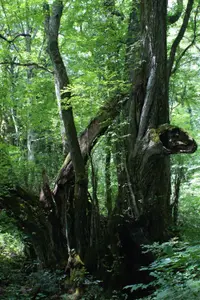
In the first 3–5 years, allow moderate wind exposure and avoid staking unless necessary so the trunk develops taper and strong anchorage, which greatly reduces storm damage risk in mature trees.

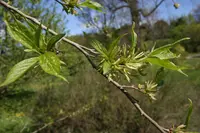
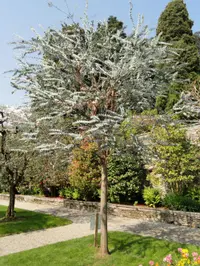
Du Zhong, Eucommia ulmoides, is a deciduous tree traditionally grown in China for its bark and as a hardy landscape plant. It forms a neat, upright crown with oval, glossy green leaves that turn yellow in fall.
In nature it occurs in temperate mountain regions, where it tolerates cold winters and a range of soils. The tree is generally robust, with good resistance to pests and diseases, which makes it easier to establish than many other medicinal trees.
It prefers full sun, moderately moist but well-drained soil, and is easier to manage in gardens with space, since mature trees can become quite large; understanding how to care for Du Zhong starts with planning its final size.

Care Difficulty
Moderate Care

Light Preference
Full Sun

Water Requirements
Moderate Water

Temperature Preference
Cold Hardy

Hardiness Zone
4–7

Soil Texture
Loamy, Sandy, Clay

Soil pH
Acidic (5.5–6.5), Slightly acidic (6.5–7.0)

Soil Drainage
Moist but well-drained

Fertilization
Minimal (feed rarely)
Scan your plant to receive care tips personalized for your specific plant
Available on iOS and Android
This hardy deciduous tree prefers full sun but accepts light shade in warmer regions.
This species prefers evenly moist, well-drained soil and does not tolerate standing water.
This cold-hardy tree thrives in temperate climates with distinct seasons.
Eucommia ulmoides tolerates a wide humidity range and usually does not need special humidity management in typical outdoor conditions.
This species prefers deep, moist but well-drained, loamy soil with stable structure.
This tree can be grown in containers when young or kept smaller with pruning, but it remains a long-term challenge due to eventual size.
Eucommia ulmoides grows steadily with modest feeding when cultivated in gardens or containers.
Eucommia ulmoides needs only light structural pruning to maintain a healthy, balanced canopy.
This species is usually grown as a landscape tree, so management focuses on careful transplanting rather than frequent repotting.
Propagation of Eucommia ulmoides is possible but slower than many ornamental shrubs and is usually done from seed.
Mature Eucommia ulmoides trees are cold hardy in much of the US and usually need minimal winter care once established.

Plant Health Check
Not sure what's wrong with your plant? Check your plant's health inside the app.
This species produces trans-1,4-polyisoprene, a form of natural rubber, in its bark and leaves; when a leaf is torn, fine rubber threads can be seen stretching between the parts. It is the only temperate tree cultivated specifically as an alternative rubber source to tropical Hevea species.
Fossils from closely related species show that this lineage was widespread across North America and Europe during the Tertiary period, yet today Eucommia ulmoides survives in the wild only in limited areas of central China. Its restricted modern range compared with its broad fossil record has led botanists to describe it as a relict, or living fossil, species.
It is the sole living species in the family Eucommiaceae, making it taxonomically isolated among flowering plants. This isolation helps scientists study evolutionary relationships between different groups of woody plants.

Chromosome counts and genetic studies indicate that Eucommia ulmoides is a paleopolyploid, meaning its ancestors underwent ancient whole-genome duplications; this genomic history is thought to contribute to its notable stress tolerance to cold and urban air pollution compared with many other broadleaf trees.
Growth is moderate. Young trees usually add around 20–40 cm per year under good conditions, sometimes more in warm summers. Growth slows as the tree matures, especially in poorer soils or cooler climates.
Keep your plants happy and healthy with plant identification, disease detection, and easy care guidance.