Meadow Mushroom Care (Agaricus campestris)

Also known as: Field Mushroom
Meadow Mushroom

About Meadow Mushroom

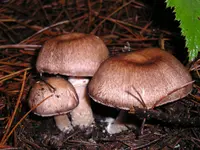
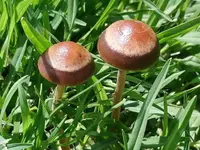
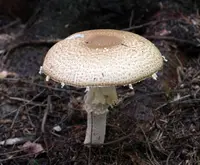
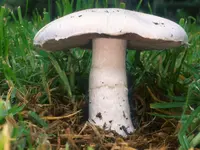
The meadow mushroom, Agaricus campestris, is a common saprophytic fungus that feeds on decaying organic matter rather than living as a green plant. It produces smooth white caps with pink gills that darken to chocolate brown as the spores mature, and usually appears in clusters or rings in short grass.

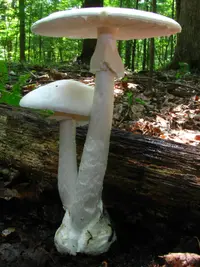
This species is native to grasslands across Europe and North America and also occurs in many other temperate regions. It is generally considered easy to grow where conditions are right, but it needs clean, well-drained, organically rich soil and regular moisture. For anyone learning how to care for Meadow Mushroom, accurate identification is essential because it can be confused with toxic white mushrooms.

Main Plant Requirements

Care Difficulty

Hard Care

Light Preference

Partial Shade

Water Requirements

Keep Soil Moist

Temperature Preference

Cool Climate

Hardiness Zone

Unknown

Soil Texture

Loamy, Silty, Organic-rich

Soil pH

Slightly acidic (6.5–7.0), Neutral (7.0)

Soil Drainage

Moist but well-drained

Fertilization

Minimal (feed rarely)

Get Personalized Care Plan

Scan your plant to receive care tips personalized for your specific plant

Available on iOS and Android

How to Care for the Meadow Mushroom

This grassland fungus needs moderate sun exposure and stable moisture to fruit well in open sites.

  • Provide 3–6 hours of direct morning or late-afternoon sun, with light shade at midday; Meadow Mushroom performs best in open lawns, pastures, or edges of paths.
  • Allow partial shade from taller grasses or low shrubs; consistent dappled light still supports mycelium growth below the surface.
  • Avoid full, harsh afternoon sun in dry periods, which overheats and desiccates the upper soil layer, reducing fruiting and shrinking caps.

This species depends on evenly moist but not saturated soil around its underground mycelium network.

  • Aim for soil that feels moist 2–5 cm down but not muddy; fruiting often follows steady rainfall or thorough irrigation rather than light, frequent splashes.
  • Improve drainage in compacted lawns or pastures so water does not pool for more than 2–3 hours, which encourages rot and anaerobic conditions around Agaricus campestris mycelium.
  • Watch for shriveling or cracking caps as a sign of drought stress, and for slimy, discolored stems or a sour smell as indicators of overwatering or waterlogged soil.

This temperate mushroom fruits best in cool to mild conditions rather than extreme heat or cold.

  • Target 55–68°F (13–20°C) for most active growth and fruiting, which often aligns with spring and fall in many lawn and pasture environments.
  • Tolerates short drops near 32°F (0°C) in soil but fresh mushrooms are damaged by frost; repeated hard freezes reduce fruiting until the next mild season.
  • Above about 77–82°F (25–28°C), fruiting declines and caps may yellow or dry rapidly, especially if heat combines with low soil moisture and direct sun.

This species needs steadily moist, high-humidity conditions to form healthy mushrooms.

  • Aim for 80–95% humidity around the substrate from pin formation to harvest, avoiding any prolonged drying of the surface.
  • Dry air causes cracked caps, stalled pin development, and yellowing or shriveling of the mycelium on the casing layer.
  • Increase humidity with a tented plastic cover, a humidity dome, or frequent fine misting that moistens the casing but does not leave standing water.

Agaricus campestris fruits best in moist, organic-rich, well-structured substrate rather than traditional mineral garden soil.

  • Use a base of pasteurized composted manure blended with straw or chopped hay to create a loose, fibrous, nutrient-rich matrix.
  • Ensure excess water can drain away beneath the compost layer so the mycelium stays moist but not waterlogged or anaerobic.
  • Maintain a near-neutral pH around 6.5–7.5, avoiding strongly acidic or alkaline materials that slow mycelial growth.
  • Top with a thin, crumbly casing layer of peat-free compost mixed with 20–30% coarse sand to improve aeration and surface moisture balance.

This mushroom can be grown in containers if they are wide, shallow, and allow controlled moisture management.

  • Choose trays or tubs at least 15–20 cm deep with wide surface area to give the mycelium enough lateral spread for fruiting.
  • Drill extra side drainage holes a few cm above the base so excess leachate escapes without drying the composted manure layer too quickly.
  • Select opaque, rigid containers that limit light to the substrate and help stabilize moisture and temperature throughout the fruiting cycle.

This meadow-dwelling fungus generally needs little feeding, but light supplementation can support yields when cultivated as Meadow Mushroom.

  • Use well-rotted compost or a balanced, low-salt 10-10-10 equivalent incorporated into the bulk substrate before spawning.
  • During the main cropping period, apply a light liquid feed at 1⁄4–1⁄2 strength every 2–3 weeks if growth appears weak.
  • Avoid overfertilizing, which can burn mycelium; prioritize organic matter rather than high-mineral fertilizers.
  • Stop supplemental feeding in winter or when the substrate is exhausted and flushes decline.

Pruning is not a standard practice for Agaricus campestris, since it is a mushroom rather than a leafy plant.

Transplanting for Agaricus campestris focuses on renewing and relocating the growing substrate rather than moving traditional roots.

  • Replace or relocate trays or beds once flushes diminish and the substrate compacts, usually after 2–3 main harvests.
  • Plan any move during a lull between flushes to reduce stress on the mycelial network.
  • Lift and transfer substrate gently as a block, disturbing the white mycelium as little as possible.
  • Immediately provide similar moisture, temperature, and ventilation conditions at the new site to support recovery.

Propagation of Agaricus campestris is done through spores or, more reliably, through spawn rather than vegetative cuttings.

  • Use commercial grain or sawdust spawn and mix it evenly into a pasteurized compost-based substrate.
  • In mild seasons, maintain 68–75°F, steady moisture, and good aeration to encourage strong mycelial colonization.
  • Distribute spawn at several depths to create multiple growth points and faster substrate takeover.
  • For spore work, germinate on sterile agar or grain under lab-like cleanliness to avoid contamination.

Outdoor Agaricus campestris usually needs no elaborate winter care, as it fruits in cool conditions and then declines naturally.

  • In cold climates, allow beds to rest; new flushes typically resume only when temperatures rise again.
  • Mulching lightly with straw or leaves can moderate soil temperature and moisture but is not strictly required.
  • Container culture is uncommon; if used, store trays in a cool, frost-free, well-ventilated space over winter.

Care Tips

Staggered spawn runs

Start several small trays or beds 7–10 days apart so if one batch contaminates, you still have others progressing, which increases overall success when growing Meadow Mushroom.

Controlled casing moisture

After casing, mist the surface lightly and cover with breathable plastic or damp newspaper for 24–48 hours to keep the casing uniformly moist without waterlogging, then remove the cover to allow pin formation.

Clean harvest technique

Harvest by gently twisting and lifting the mushroom at the base, then trim off any attached casing with a clean knife so decaying tissue does not attract fungus gnats or mold to the bed.

Bed rotation outdoors

If grown in lawns or outdoor beds, shift the inoculated area each season and avoid repeating the same exact patch to reduce disease buildup and nutrient depletion in one location.

Ventilation without drafts

Provide mild, steady air movement across indoor trays using a small fan pointed away from the bed, which helps prevent CO2 buildup and malformed caps without drying the casing surface.

Common Pests and Diseases

Green mold (Trichoderma)

This disease causes dense green patches on the compost or casing and can overgrow the mycelium, leading to poor or no mushroom formation.

Solution

Remove heavily contaminated substrate and any affected flushes, then lower humidity slightly and increase fresh air exchange to discourage the mold. Disinfect trays, tools, and surfaces between batches, and use only well-pasteurized compost and clean casing when growing Meadow Mushroom indoors or in controlled beds.

Cobweb mold

This disease appears as fast-spreading, grey to whitish, cobweb-like growth on casing and mushroom caps, often turning brown as it ages.

Solution

Immediately remove and discard heavily affected mushrooms and lightly affected casing, then spot-treat the surrounding area with a 3–4% hydrogen peroxide solution and improve air circulation. Avoid overmisting, keep relative humidity closer to 85–90%, and maintain good hygiene to limit spores.

Dry bubble

This disease produces distorted, dry, and cracked mushroom caps or small, hard masses instead of normal fruiting bodies, usually starting as small spots on developing buttons.

Solution

Harvest and discard affected mushrooms promptly and avoid handling them over healthy beds to reduce spore spread. Use clean, pasteurized casing, control fungus gnats that can vector spores, and keep surfaces, tools, and containers disinfected between crops.

Bacterial blotch

This disease causes yellow to brown, greasy-looking spots and lesions on caps, especially when surfaces stay wet for long periods.

Solution

Reduce overhead watering, avoid water sitting on caps, and increase air movement to let the crop dry quickly after misting. Remove and discard badly spotted mushrooms and keep casing, irrigation water, and tools as clean as possible.

Fungus gnats

These insects lay eggs in the compost or casing, and the larvae feed on mycelium and young mushrooms, causing poor yield and sometimes introducing diseases such as dry bubble.

Solution

Use fine-mesh screens on vents, sticky traps near growing areas, and avoid leaving wet organic debris nearby that can breed gnats. In severe cases, apply a biological control such as Bacillus thuringiensis israelensis (Bti) to the substrate surface according to label directions, and keep compost well-pasteurized before use.

Interesting Facts

Pink-to-brown gill shift

The gills of this mushroom start pale pink, then turn dull pink and finally chocolate brown as the spores mature, which helps distinguish it from several toxic white Amanita species whose gills stay white.

Short-lived fruiting bodies

Individual meadow mushroom caps usually persist only a few days before collapsing and decomposing, yet the underground mycelium can survive for years and fruit repeatedly in the same lawn or pasture.

Nitrogen-rich grassland specialist

This species fruits most often in grazed pastures, lawns, and meadows enriched by animal manure, where it helps recycle nitrogen by breaking down organic matter and returning nutrients to the soil.

Botan icon

Did you know?

Historical records from Europe describe meadow mushrooms forming large, nearly perfect “fairy rings” in grasslands, where the expanding circular growth of the underground mycelium leaves a visible ring of darker, lusher grass that can persist and slowly widen for many years.

FAQs about Meadow Mushroom

This species is edible when correctly identified and harvested fresh from unpolluted areas. It has pink to dark brown gills, a pleasant mushroom smell, and white flesh. Misidentification with toxic white Amanita species is a serious risk.

Grow Healthy Plants with Botan Care

Keep your plants happy and healthy with plant identification, disease detection, and easy care guidance.


Botan plant care app — identify plants on mobile

Explore More Plants