Franchet's Amanita Care (Amanita franchetii)

Franchet's Amanita

About Franchet's Amanita

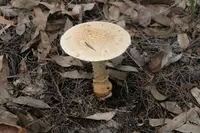
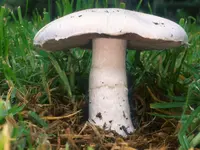
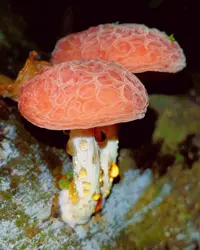
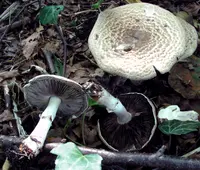
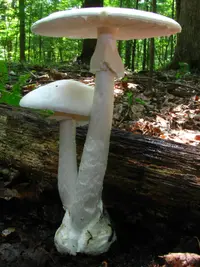
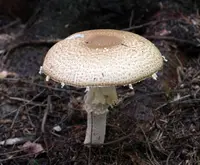
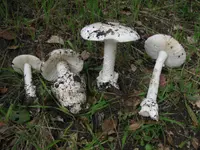
Franchet's amanita (Amanita franchetii) is a woodland mushroom, not a typical houseplant. It forms mycorrhizal partnerships, meaning it grows in close association with tree roots. Caps are yellow to olive with darker, warty patches and a sturdy, ringed stem, giving it a distinctive, somewhat ornamental look in the wild. It naturally occurs in parts of Europe and western Asia, often in mixed or broadleaf forests. Because it depends on living host trees and complex soil fungi, it is very difficult to cultivate reliably at home. Anyone wanting to learn how to care for Franchet's Amanita should understand it is best observed in its natural habitat rather than actively grown.

Main Plant Requirements

Care Difficulty

Hard Care

Light Preference

Partial Shade

Water Requirements

Regular Water

Temperature Preference

Cool Climate

Hardiness Zone

Unknown

Soil Texture

Loamy, Sandy, Organic-rich

Soil pH

Acidic (5.5–6.5)

Soil Drainage

Moist but well-drained

Fertilization

Minimal (feed rarely)

Get Personalized Care Plan

Scan your plant to receive care tips personalized for your specific plant

Available on iOS and Android

How to Care for the Franchet's Amanita

This ectomycorrhizal mushroom prefers dappled woodland light rather than open sun.

  • Provide bright shade or filtered light under trees, with brief morning sun but avoid direct midday sun that can dry the soil surface too fast.
  • Aim for conditions similar to mixed woodland: 2–4 hours of soft, indirect light and the rest of the day in partial shade beneath a canopy.
  • In hot summers, increase shade to prevent substrate overheating, while in late autumn slightly more open light can still support Franchet's Amanita without scorching.

This species relies on consistently moist, well-drained forest soil around its tree partners.

  • Maintain soil that is evenly moist but never waterlogged, allowing the top 2–3 cm to lose surface wetness between natural rain or supplemental watering.
  • Use well-drained, humus-rich ground so excess water can move away, reducing risk of standing water and root-zone suffocation.
  • During hot, dry periods, increase watering frequency and watch for shrinking caps or dry, cracked soil as signs of lack of moisture, and for sour smell or slimy mycelium as signs of excess water.

This mushroom develops best in mild to cool conditions typical of temperate woodlands.

  • Support active growth in a range of about 55–70°F (13–21°C), which favors mycelium activity and fruiting body formation.
  • Tolerate short drops close to 32°F (0°C), but repeated hard frosts below about 28°F (-2°C) can damage fruiting bodies and slow mycelium.
  • In hot weather above 80°F (27°C), provide shade and consistent moisture, since sustained soil temperatures over 86°F (30°C) may stress or inhibit development.

This ectomycorrhizal fungus develops naturally outdoors and does not need controlled air humidity.

This mycorrhizal mushroom relies on specific tree partners, so only approximate its soil conditions for study or display, not for long-term cultivation.

  • Use a loose, well-drained, humus-rich forest-type substrate, mixing leaf litter, fine bark, and a small amount of native woodland soil.
  • Aim for slightly acidic to neutral conditions around pH 5.0–7.0, avoiding limed or strongly alkaline substrates.
  • Maintain a crumbly, aerated structure; never compact the mix and avoid standing water or waterlogged trays beneath containers.
  • Exclude fertilizers and heavily composted manures, which alter the soil chemistry and biological community needed by Amanita franchetii.

This species is not suitable for normal container growing because it depends on living tree roots and complex soil fungi communities.

This mycorrhizal fungus does not benefit from conventional fertilizing and typically needs no added nutrients in garden or woodland settings.

Pruning is not applicable to Amanita franchetii, since it is a wild mycorrhizal mushroom rather than a plant with stems and branches.

This species is not suited to normal repotting or transplanting because it depends on a stable mycorrhizal partnership with host tree roots.

  • Avoid attempting to lift and move established fruiting sites, as this disrupts the underground mycelium and host tree roots.
  • If cultivation is attempted in research settings, any transfer must include intact colonized substrate and compatible host seedlings.
  • Carry out experimental moves during cooler, moist periods to reduce stress on both mycelium and host roots.
  • Minimize disturbance to surrounding soil structure, keeping the original root–fungus relationship as undisturbed as possible.

Propagation is highly specialized and rarely attempted outside research, because this Amanita depends on complex mycorrhizal relationships with specific tree hosts.

No special winter care is used, as this wild ectomycorrhizal fungus survives seasonally in the soil and fruits only under suitable conditions.

Care Tips

Host tree matching

Select and maintain suitable ectomycorrhizal host trees such as oak, beech, chestnut, or pine on the site, because this fungus needs a compatible living tree root system to establish and fruit reliably.

Minimal soil disturbance

Avoid digging, tilling, or heavy traffic in the root zone of host trees, since intact fine roots and soil structure are critical for stable mycorrhizal networks and consistent fruiting.

Leaf litter management

Leave a loose layer of leaf litter and small twigs under host trees rather than raking everything away, as this moderates soil moisture and temperature and supports the organic layer in which this species typically fruits.

Targeted irrigation zone

If supplemental watering is needed, water broadly over the host tree’s drip line instead of directly onto emerging mushrooms, which helps the root-fungus partnership without physically damaging primordia or caps.

Long-term site stability

When planning how to take care of Franchet's Amanita, prioritize long-term stability of the planting area by avoiding major grade changes, hardscaping, or root pruning around established host trees, since sudden environmental shifts can suppress fruiting for many years.

Common Pests and Diseases

Mycophagous larvae

This pest targets the fruiting bodies, with fly or beetle larvae tunneling through caps and stems and accelerating decay. Symptoms include soft, collapsing tissue, small exit holes, and rapid breakdown of the mushroom after emergence.

Solution

Remove and discard heavily infested mushrooms to limit local breeding populations, and avoid disturbing nearby soil where larvae may pupate. Where foraging or observing in managed areas, collect mushrooms promptly at maturity and maintain good site hygiene by not leaving damaged caps scattered around.

Slug and snail grazing

These mollusks feed on the caps and stems, creating irregular holes, shredded margins, and slime trails on or around the mushrooms. Symptoms include rapid cosmetic damage and partial loss of the cap surface, especially in damp, shaded conditions.

Solution

Hand-remove slugs and snails during cool, damp periods and avoid piling organic debris right around fruiting areas. If protection of fruiting bodies is desired in a garden or research setting, use physical barriers such as copper tape rings or coarse grit around target zones rather than chemical baits that may harm other organisms.

Mammal and insect scavenging

These animals consume or tear the fruiting bodies, sometimes within hours of emergence, leaving broken stems, missing caps, or scattered fragments. Symptoms include clean bite marks, disturbed leaf litter, and sudden disappearance of previously healthy mushrooms.

Solution

In areas where preserving fruiting bodies is important, limit access by pets and livestock and use temporary low fencing or protective cages over developing mushrooms. Avoid leaving food waste or attractants that may draw rodents or other scavengers into the area where Amanita franchetii fruiting is expected.

Interesting Facts

Distinctive cap ornamentation

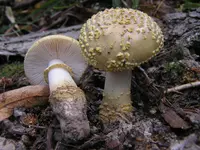
The cap typically shows yellowish, warty veil remnants on a darker brown to olive background, a combination that helps distinguish it from many other similar amanitas in the field.

Oak and beech associate

This species forms ectomycorrhizal partnerships with broadleaf trees, especially oaks and beeches, exchanging mineral nutrients and water from the soil for sugars produced by the host tree.

Regionally protected fungus

In parts of Europe, such as some regions of the United Kingdom, this species is considered locally uncommon and is included in conservation recording efforts to monitor woodland fungal diversity.

Botan icon

Did you know?

Although sometimes confused with edible species in its range, this fungus is considered inedible and potentially toxic, and ingestion has been associated with gastrointestinal symptoms in humans, so collection for food is strongly discouraged.

FAQs about Franchet's Amanita

This species is considered poisonous and should not be eaten. It can cause serious gastrointestinal and neurological symptoms. Avoid handling with damaged skin, never ingest it, and teach children and pets not to touch wild mushrooms.

Grow Healthy Plants with Botan Care

Keep your plants happy and healthy with plant identification, disease detection, and easy care guidance.

Botan plant care app — identify plants on mobile

Explore More Plants