Gray-Zoned Ringless Amanita Care (Amanita battarrae)

Also known as: banded amanita
Gray-Zoned Ringless Amanita

About Gray-Zoned Ringless Amanita

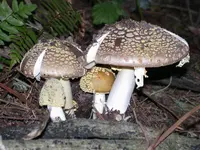
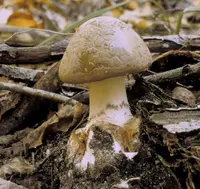
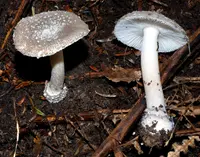
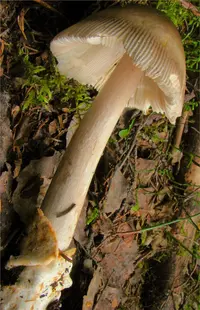
The gray-zoned ringless amanita, Amanita battarrae, is a woodland mushroom, not a true plant. It forms medium-sized, brownish to gray caps with distinct zoning and a slender, ringless stem. This species typically appears on the ground among trees, often in mixed or coniferous forests.

It lives in symbiosis with tree roots, which makes it unsuitable for typical indoor cultivation or pot culture. Because it depends on this root partnership, it is considered difficult to grow intentionally. Anyone looking into how to care for Gray-Zoned Ringless Amanita should focus on understanding its natural forest habitat rather than traditional plant care.

It favors undisturbed, humus-rich soils with consistent moisture and dappled forest light, usually emerging in cool, damp seasons.

Main Plant Requirements

Care Difficulty

Hard Care

Light Preference

Partial Shade

Water Requirements

Regular Water

Temperature Preference

Cool Climate

Hardiness Zone

Unknown

Soil Texture

Loamy, Silty, Organic-rich

Soil pH

Acidic (5.5–6.5)

Soil Drainage

Moist but well-drained

Fertilization

Minimal (feed rarely)

Get Personalized Care Plan

Scan your plant to receive care tips personalized for your specific plant

Available on iOS and Android

How to Care for the Gray-Zoned Ringless Amanita

This ectomycorrhizal fungus prefers woodland light conditions rather than open, direct sun.

  • Provide bright, dappled shade under trees, mimicking mixed woodland edges with 2–4 hours of gentle morning sun and no harsh afternoon sun.
  • Avoid full, exposed sun; prolonged direct exposure dries the leaf litter and upper soil, reducing fruiting of Gray-Zoned Ringless Amanita and favoring competing species.
  • In summer, rely on canopy shade or light-filtering shrubs; in early spring or late autumn, brief low-angle sun is acceptable while air and soil remain cool.

This species depends on consistently moist, well-drained forest soil rather than fixed watering schedules.

  • Maintain soil that is evenly moist in the top 2–5 cm, never waterlogged; use leaf litter or mulch to slow evaporation and stabilize moisture around host tree roots.
  • Reduce supplemental watering in cool, wet seasons; in hot, dry spells, water deeply but infrequently, allowing surface moisture to almost return to natural woodland dampness between soakings.
  • Watch for overwatering signs such as sour, swampy odor and standing water, and for underwatering indicated by dusty, hydrophobic soil and brittle surface leaf litter around Amanita battarrae habitat.

This woodland fungus performs best in cool to mild conditions typical of temperate forests.

  • Support fruiting in temperatures around 50–68°F (10–20°C), which favor stable soil moisture and healthy mycorrhizal activity with host trees.
  • Protect habitat from hard frost below 25°F (-4°C) when possible using organic mulch; sporocarps are sensitive to repeated freeze–thaw cycles, though underground mycelium tolerates short cold spells.
  • Limit exposure to prolonged heat above 80°F (27°C); high temperatures combined with dry soil quickly reduce mushroom emergence and can shift the community toward more heat-tolerant fungi.

Humidity is not a controllable or relevant factor for this wild ectomycorrhizal mushroom in cultivation.

This species relies on a natural mycorrhizal partnership with tree roots and cannot be reliably grown in standard potting mixes.

  • Amanita battarrae associates with living tree roots in mineral forest soils that are typically sandy to loamy, well-drained, and only moderately rich in organic matter.
  • Soil is usually slightly acidic to neutral (around pH 5.0–7.0), often overlying parent materials such as sandstone or similar well-draining substrates.
  • Attempts at cultivation should mimic undisturbed woodland soil, with leaf litter on top rather than deep, loose compost or high-peat mixes.
  • Avoid compacted, waterlogged, or heavily fertilized soils, which disrupt mycorrhizal formation and can prevent fruiting entirely.

This species is not suitable for container growing because it depends on complex, long-term associations with tree roots in open ground.

Amanita battarrae is a wild ectomycorrhizal fungus that relies on its tree partners for nutrition and should not be fertilized directly.

Amanita battarrae does not require pruning because the visible mushroom is only the temporary fruiting body of an underground fungus.

This fungus is not suited to normal repotting, as its mycelium lives in complex association with tree roots in soil.

  • Transplanting is only meaningful when moving host trees whose root systems already carry the mycelium.
  • Minimize disturbance to the root zone; keep as much native soil attached to the roots as possible.
  • Carry out any tree relocation during cool, moist seasons to reduce stress on roots and fungal partners.
  • Avoid container culture, since the ectomycorrhizal relationship is difficult to maintain in pots.

Intentional propagation of this species is technically challenging and rarely attempted outside research settings, so practical home methods are not available.

This woodland fungus is naturally cold hardy in its native range and needs no dedicated winter care from gardeners.

Care Tips

Host tree selection

Establish this mycorrhizal fungus near compatible trees such as pines, oaks, or beeches, since it relies on their roots for nutrients and will not persist in isolated pots or beds without a woody host.

Minimal soil disturbance

Avoid rototilling, deep digging, or frequent bed reshaping around the host trees so the fine fungal mycelium network is not broken, which helps maintain regular fruiting.

Leaf litter management

Allow a thin layer of natural leaf litter to remain over the soil to conserve moisture and provide a stable microclimate, but clear heavy, matted layers that might block mushroom emergence.

Targeted micro-irrigation

In dry periods, apply low-pressure irrigation to the root zone of the host trees rather than directly on visible mushrooms, which supports the underground mycelium while reducing physical damage to fruiting bodies.

Record seasonal patterns

Keep simple notes with dates, rainfall, and temperature when mushrooms appear, so over several seasons you can link local weather patterns to fruiting and make better decisions for growing Gray-Zoned Ringless Amanita in that site.

Common Pests and Diseases

Mycophagous springtails

These insects feed on fungal tissue, especially young caps, leaving pitted, roughened surfaces and small feeding scars on gills and stipe. Symptoms include slightly deformed or partially eaten fruiting bodies that appear otherwise healthy.

Solution

Collect and remove heavily infested mushrooms and surrounding decaying debris, since the fungus fruits from the soil rather than being a houseplant. Reduce excessive surface moisture and standing water in the fruiting area and, if grown in controlled culture, improve drainage and airflow; this discourages springtail buildup without harming the underlying mycelium.

Slugs and snails

These pests rasp away soft mushroom tissue, creating large irregular holes, shredded cap edges, and slime trails on and around the fruiting bodies. Symptoms include partially eaten caps that collapse prematurely near damp forest edges or cultivated beds.

Solution

Hand-pick slugs and snails in the evening or early morning and remove nearby hiding spots such as boards, dense leaf piles, or stones. In outdoor or culture settings, use physical barriers like copper tape, coarse sand, or slug collars around the fruiting zone, and place iron phosphate slug bait at a distance from where mushrooms emerge to limit direct contact.

Fungal parasitism (Hypomyces spp.)

This disease develops when parasitic fungi colonize the mushroom surface, producing powdery, felt-like, or crusty coatings that can distort the cap and gills. Symptoms include discolored patches (often white, yellow, or orange) that spread over the cap and eventually render the fruiting body non-viable.

Solution

Promptly remove and discard any parasitized mushrooms and nearby fruiting bodies to limit spore spread onto healthy specimens. Avoid injuring young mushrooms, maintain good air circulation in culture or collection areas, and do not move contaminated material to new sites, which reduces the chance of repeated Hypomyces outbreaks.

Mite infestation

These pests are tiny arthropods that tunnel or graze on mushroom tissue, causing fine speckling, pitting, or a dusty appearance on caps and stems. Symptoms include slow-developing, misshapen, or partially collapsed fruiting bodies in culture trays or heavily organic soils.

Solution

Discard visibly infested mushrooms and clean the surrounding substrate surface, tools, and containers to remove lingering mites and eggs. In controlled culture, lower excessive humidity, improve ventilation, and, if necessary, introduce predatory mites from reputable suppliers that target pest mites without damaging the mycelium.

Bacterial blotch

This disease is caused by opportunistic bacteria that colonize wet mushroom surfaces, leading to slimy, greasy, or water-soaked spots that turn yellow-brown. Symptoms include localized soft rot on caps and stipes, often following prolonged surface wetness or physical damage.

Solution

Remove and dispose of affected fruiting bodies and avoid overhead watering or prolonged wetting of caps in any managed growing or holding environment. Improve airflow, reduce condensation, and handle mushrooms gently during collection so surfaces can dry quickly, which suppresses bacterial growth and spread.

Interesting Facts

Distinct gray zoned cap

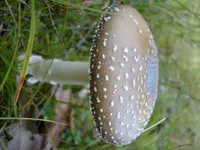
This species has a smooth, gray- to brownish-gray cap with subtle, often concentric zoning and typically lacks the scattered white warts seen on many more familiar Amanita species, which helps distinguish it in the field.

Ringless but with volva

Mature mushrooms lack a persistent ring on the stem, yet retain a sac-like volva (cup) at the base, a key diagnostic feature that separates it from some other grayish, ring-bearing Amanita species.

Mycorrhizal forest partner

Amanita battarrae forms ectomycorrhizal associations with trees, especially in mixed or coniferous woodlands, where its fine root-fungus network helps host trees absorb water and mineral nutrients from the soil.

FAQs about Gray-Zoned Ringless Amanita

Yes, this mushroom is considered poisonous. It contains toxic compounds that can cause serious gastrointestinal and potentially neurological symptoms if eaten. It should never be ingested, and children and pets must be kept from consuming it.

Grow Healthy Plants with Botan Care

Keep your plants happy and healthy with plant identification, disease detection, and easy care guidance.
Botan plant care app — identify plants on mobile

Explore More Plants