Fly Death Fungi Care (Entomophthora muscae)

Also known as: Complex Entomophthora muscae
Fly Death Fungi

About Fly Death Fungi

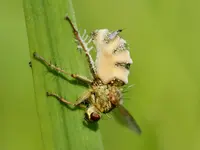
Fly death fungi, Entomophthora muscae, is not a typical houseplant but a parasitic fungus that infects adult flies. It grows inside the insect’s body, then produces a white, powdery spore layer around the fly after death.

In nature, it occurs mainly in temperate regions, especially outdoors where fly populations are high. It relies on live insect hosts rather than soil nutrients, so it is not suited to standard pot culture.

Because it needs specific insect hosts, humidity, and temperature conditions, it is difficult to maintain in regular home environments. Enthusiasts who want to learn how to care for Fly Death Fungi usually work in controlled laboratory or specialized culture settings, not in typical indoor collections.

Main Plant Requirements

Care Difficulty

Hard Care

Light Preference

Partial Shade

Water Requirements

Keep Soil Moist

Temperature Preference

Warm Climate

Hardiness Zone

Unknown

Soil Texture

Loamy, Organic-rich

Soil pH

Acidic (5.5–6.5)

Soil Drainage

Moist but well-drained

Fertilization

Minimal (feed rarely)

Get Personalized Care Plan

Scan your plant to receive care tips personalized for your specific plant

Available on iOS and Android

How to Care for the Fly Death Fungi

This fungus relies on moderate, indirect light that mimics shaded outdoor habitats.

  • Provide bright shade or dappled light, such as under low vegetation or in leaf litter, avoiding direct midday sun that can dry the substrate quickly.
  • Aim for 2–4 hours of soft morning or late-afternoon sun at most; stronger exposure reduces humidity and can limit the activity of Fly Death Fungi.
  • In summer, shield from harsh afternoon sun; in cooler seasons, slightly brighter but still indirect light supports steady development.

Moisture management focuses on consistently damp, never waterlogged, organic material.

  • Maintain the substrate evenly moist, allowing only the surface 1–2 cm to begin drying before lightly rewetting to avoid anaerobic, sour-smelling conditions.
  • Use loose, well-drained organic matter; excess standing water or a persistently soggy feel indicates overwatering and raises the risk of rot for Entomophthora muscae.
  • In cooler seasons, reduce frequency and watch for slow drying; in warmer weather, increase misting or light watering when edges feel dry and brittle.

Stable, cool to mild conditions support reliable growth and sporulation.

  • Target 60–72°F (16–22°C) for active development, avoiding rapid swings that stress the fungus and its insect hosts.
  • Tolerates down to about 45°F (7°C), but prolonged exposure below this slows activity; protect from frost, which can kill spores and host insects.
  • At temperatures above 80°F (27°C), monitor closely; excessive heat and drying air reduce viability, so provide shade and higher humidity during hot periods.

This insect-pathogenic fungus needs consistently very high humidity to infect and sporulate effectively.

  • Aim for 85–95% relative humidity using an enclosed chamber, misting system, or humidifier around culture containers.
  • Dry air slows sporulation and causes mycelium to desiccate, seen as shriveled growth and poor spore release.
  • Increase humidity by sealing cultures in ventilated plastic boxes with moist, not dripping, paper or vermiculite and frequent monitoring when caring for Fly Death Fungi.

This species does not grow in conventional potting soil and instead colonizes insect hosts and moist substrates.

  • Use a fine, organic-rich substrate such as moistened peat, composted leaf litter, or agar plates rather than standard potting mixes for Entomophthora muscae.
  • Keep the substrate just moist with excellent aeration; it should feel damp but never waterlogged or compacted.
  • Maintain near-neutral pH around 6.5–7.5 to support host insects and microbial stability in experimental or culture setups.
  • Avoid dense clay, heavy garden soil, and any medium that stays saturated, as these conditions encourage anaerobic zones and secondary rot organisms.

This fungus is only marginally suitable for container growing and is typically maintained in controlled culture setups rather than decorative pots.

  • Choose shallow, wide containers or culture trays to spread the substrate thinly, which keeps moisture uniform and improves gas exchange.
  • Use rigid plastic or glass containers with tight-fitting but vented lids to stabilize humidity while still allowing limited airflow.
  • Place containers on raised racks or grids so any condensed moisture can drain or evaporate rather than pooling under the culture.

This entomopathogenic fungus is not managed like a typical plant and does not require intentional fertilization in cultivation.

Pruning is not relevant for Entomophthora muscae because it is a microscopic fungus parasitizing insects, not a plant with stems or foliage.

This species is maintained on host insects or in laboratory media rather than in pots, so classical repotting or transplanting does not apply.

  • In experimental setups, monitor culture density; transfer to fresh medium when growth slows or contamination appears.
  • Move infected host insects to clean containers when sporulation begins to prevent unwanted spread.
  • Limit handling to reduce mechanical stress on hosts and disturbance of fungal structures.
  • Dispose of used substrates and hosts in sealed bags and sterilize equipment after transfers.

Reproduction of this fungus is typically handled by specialists using controlled insect hosts or sterile culture techniques.

Outdoor or garden-style winter care is not applicable, as this is an insect-pathogenic fungus managed in laboratory or controlled environments.

Care Tips

Use sentinel insects

Maintain a small, contained culture of non-pest flies as sacrificial hosts so the fungus can complete its life cycle without depending on accidental household flies.

Optimize airflow patterns

Position host containers so a gentle cross-breeze passes over them, helping spores disperse between flies while still keeping the microchamber itself sheltered from direct drafts.

Design safe microchambers

House infected flies in clear, sealable containers with fine mesh vents so spores stay confined, you can observe easily, and the risk of unintended spread in living spaces is minimized.

Control contamination surfaces

Line culture boxes with disposable, non-absorbent cards or plastic strips that can be removed and replaced after sporulation to limit bacterial buildup and cross-contamination between cycles.

Plan ethical disposal

After sporulation peaks, freeze or tightly bag used hosts and culture materials before trash disposal to prevent surviving spores from reaching wild fly populations when caring for Fly Death Fungi indoors.

Common Pests and Diseases

Bacterial contamination

This disease occurs when bacteria colonize culture media or moist substrates used to maintain this fungus, rapidly overrunning the slow-growing fungal mycelium. Symptoms include cloudy films, sour or unpleasant odor, and loss of visible fungal growth.

Solution

Use strict sterile technique when preparing and handling cultures, including flame-sterilized tools and disinfected work surfaces. Discard contaminated cultures, prepare fresh sterile medium, and, if possible, transfer a clean fragment from an uncontaminated edge into a new sterile container to continue growing Fly Death Fungi.

Competitive saprophytic molds

This disease is caused by fast-growing molds such as Penicillium or Aspergillus that colonize the same organic substrate, outcompeting the target fungus. Symptoms include fuzzy green, blue, gray, or black mold patches that quickly cover the culture or substrate surface.

Solution

Remove and discard heavily contaminated containers, then reduce humidity around storage areas and improve air circulation. For new cultures, use fresh sterile substrates, seal containers properly, and avoid exposing open media to room air longer than necessary during transfers.

Yeast overgrowth

This disease appears when wild yeasts colonize sugary or nutrient-rich media, forming slimy or creamy layers that interfere with normal spore and mycelial development. Symptoms include shiny wet films or small pasty colonies that spread across the surface.

Solution

Discard affected cultures and prepare new ones using sterilized media and containers. Limit exposure time of open dishes, work close to a flame or in a clean enclosure, and store cultures at moderated temperatures and humidity to reduce airborne yeast settlement.

Mite infestation

This pest problem involves tiny soil or storage mites that feed on fungal mycelium and spores, physically damaging structures and introducing secondary contaminants. Symptoms include bare scraped areas on the culture surface, fine moving specks, and reduced sporulation.

Solution

Isolate and discard infested containers and clean storage shelves thoroughly. Store cultures in tightly sealed jars or dishes, avoid using reused, unsterilized organic materials, and maintain a clean, dust-reduced environment to limit mite access and survival.

Fungus gnat larvae

These insects lay eggs in moist organic substrates, and the larvae feed on fungal tissues, disrupting colony structure and increasing the risk of bacterial and mold invasion. Symptoms include small black adult gnats around containers and visible tunneling or thinning of the fungal mat in substrate-based setups.

Solution

Cover culture containers with fine mesh or tight lids that still allow limited gas exchange but block flying adults. Remove and discard heavily infested substrates, reduce excess surface moisture, and use clean, pasteurized or sterilized substrates to prevent larvae from establishing.

Interesting Facts

Precise host manipulation

This fungus alters the behavior of houseflies and related species, making them climb to elevated spots and extend their wings before death, which positions the corpse to maximize spore dispersal into air currents and onto other flies.

Explosive spore discharge

It produces forcibly discharged spores from structures called conidiophores, shooting them short distances with enough force to stick to nearby flies and start a new infection.

Daily infection timing

In nature, many infected flies die and release spores in the evening, a timing that likely evolved because healthy flies are settling on surfaces then, increasing the chance that spores land on new hosts.

Botan icon

Did you know?

Genomic and behavioral studies suggest that this species times both host death and spore release not only to fly activity patterns but also to natural light–dark cycles, indicating a fungus-driven day–night rhythm that optimizes its transmission.

FAQs about Fly Death Fungi

This species can be maintained in containers only under controlled laboratory-style conditions, using insect hosts and strict biosecurity. It is not suited to casual container culture, and growing Fly Death Fungi at home is not recommended.

Grow Healthy Plants with Botan Care

Keep your plants happy and healthy with plant identification, disease detection, and easy care guidance.

Botan plant care app — identify plants on mobile

Explore More Plants