Western Yellow-veiled Amanita Care (Amanita augusta)

Also known as: Majestic Amanita
Western Yellow-veiled Amanita

About Western Yellow-veiled Amanita

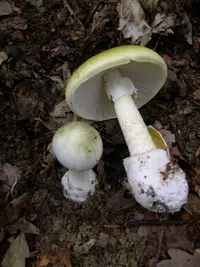
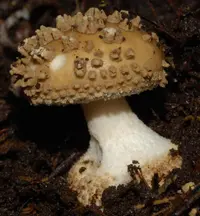
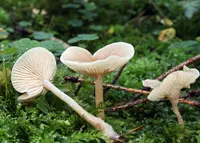
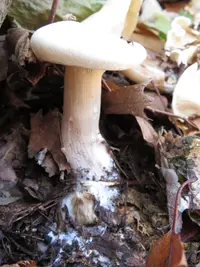
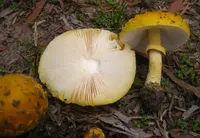
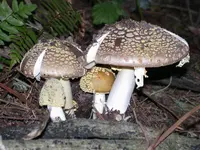
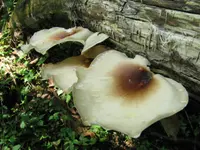
The Western Yellow-veiled Amanita (Amanita augusta) is a forest-dwelling mushroom, not a houseplant. It forms fleshy, short-lived fruiting bodies rather than leaves and stems. Caps are yellow to olive-brown with veil fragments, and the stem often shows a ring and a swollen base.

This species occurs mainly in western North America, where it associates with conifers and hardwoods in a mycorrhizal relationship, meaning it trades nutrients with tree roots. It is difficult to cultivate because it depends on living host trees and specific soil fungi. Anyone exploring how to care for Western Yellow-veiled Amanita should treat it as a specialized woodland species rather than a typical cultivated plant.

Main Plant Requirements

Care Difficulty

Hard Care

Light Preference

Partial Shade

Water Requirements

Regular Water

Temperature Preference

Cool Climate

Hardiness Zone

Unknown

Soil Texture

Loamy, Sandy, Organic-rich

Soil pH

Acidic (5.5–6.5)

Soil Drainage

Moist but well-drained

Fertilization

Minimal (feed rarely)

Get Personalized Care Plan

Scan your plant to receive care tips personalized for your specific plant

Available on iOS and Android

How to Care for the Western Yellow-veiled Amanita

This mycorrhizal mushroom prefers dappled woodland light rather than direct, open sun.

  • Provide bright, filtered light under shrubs or trees, ideally 2–4 hours of gentle morning sun with shade or broken light for the rest of the day.
  • Tolerates partial shade to deep shade, but fruiting bodies are more common where overhead canopy allows moderate light patches through the day.
  • Avoid strong midday and afternoon sun in open areas, which can dry the litter layer and shorten cap lifespan, especially in late summer and early fall for Western Yellow-veiled Amanita.

This forest-dwelling fungus depends on consistently moist, not saturated, soil and litter.

  • Aim for evenly moist upper soil and leaf litter; if the top 2–3 cm feel dry and crumbly, conditions are becoming too dry for reliable fruiting.
  • Encourage good drainage with loose, organic-rich soil; standing water or sour, swampy smells indicate overwatering and can damage the fungal mycelium.
  • Expect higher moisture needs in late summer–fall; sparse, cracked caps and rapid collapse often reflect drought stress, while slimy, discolored stems point to excess water.

This species fruits best in cool to mild conditions typical of temperate forests.

  • Optimal fruiting usually occurs around 50–68°F (10–20°C), with stable, cool nights and mild days encouraging more robust caps.
  • The fungus tolerates soil temperatures down to about 32°F (0°C) when dormant, but hard freezes during active fruiting can damage or halt Amanita augusta development.
  • Sustained heat above 80°F (27°C), especially with dry air, shortens the lifespan of fruiting bodies, so peak appearances often follow cooler, damp periods in late summer to fall.

Humidity is not a primary controllable factor for this ectomycorrhizal mushroom in typical cultivation attempts.

This fungus relies on natural forest soil rather than standard potting mixes.

  • Requires loose, well-aerated, humus-rich forest soil with abundant decomposed leaf litter and woody debris.
  • Prefers consistently moist but sharply draining conditions; water must percolate quickly through the upper soil profile without pooling.
  • Tends to occur in slightly acidic soils around pH 5.0–6.5, often under conifers or mixed woodland canopies.
  • Mimicking native habitat for Amanita augusta involves preserving undisturbed leaf litter layers instead of blending conventional container additives.

This species is not suitable for true container growing because it depends on symbiosis with living tree roots in natural soil.

Amanita augusta is a wild ectomycorrhizal fungus that should not be fertilized directly, since it depends on a natural nutrient balance with its host trees.

Pruning is not applicable to Amanita augusta, as it is a wild mushroom producing seasonal fruiting bodies rather than a plant with stems or branches.

This species forms symbiotic associations with tree roots in soil and is not suited to standard repotting or transplanting as a potted specimen.

  • Transplanting attempts usually fail because the fungus depends on an intact mycorrhizal network with its host roots.
  • If relocation is necessary for study, move a generous block of native soil containing host fine roots, keeping it undisturbed.
  • Carry soil and root sections in a cool, shaded container to reduce desiccation and heat stress.
  • Avoid breaking or washing roots, since this disrupts the fungal hyphae that allow the organism to survive.

Propagation of Amanita augusta is specialized and rarely successful in home settings, since it relies on spore dispersal and complex mycorrhizal relationships with suitable tree species.

Western Yellow-veiled Amanita requires no active winter care, as it persists in soil as mycelium and fruits only under suitable seasonal conditions.

Care Tips

Use host trees

Establish the fungus only near suitable mycorrhizal partners such as live tanoak, Douglas-fir, or pine, since the organism depends on these tree roots rather than growing as an isolated houseplant or in standard pots.

Protect fungal zone

Mark and avoid disturbing the soil within at least a 1–2 ft radius of known fruiting spots, minimizing raking, digging, and heavy foot traffic so the underground mycelium network remains intact and productive.

Mulch with leaf litter

Apply a thin, natural mulch layer of local hardwood leaves or conifer needles instead of bark chips, keeping it loose and no deeper than 2–3 in to mimic the forest floor while still allowing gas exchange.

Limit nutrient inputs

Avoid routine fertilization or manure additions around associated host trees, since high nutrient levels can suppress mycorrhizal formation and reduce the chance of growing Western Yellow-veiled Amanita successfully.

Monitor and document

Keep a simple log with dates, weather patterns, tree health, and mushroom appearances to better understand local fruiting triggers and refine long-term Amanita augusta care decisions on your site.

Common Pests and Diseases

fungal gill parasites

This disease is caused by specialized fungi that infect the gills and can distort, spot, or prematurely age the hymenium (spore-bearing surface). Symptoms include discolored, patchy, or powdery areas on the gills and reduced spore production.

Solution

Remove and discard any affected fruiting bodies so spores of the parasitic fungus are not spread through the area. Avoid disturbing or transporting infected caps, and keep foraging tools and baskets clean and dry between sites to limit cross-contamination when caring for Western Yellow-veiled Amanita habitats.

slug and snail feeding

These pests chew irregular holes and gouges in caps and stems, often starting at the margin of young mushrooms and moving inward. This pest leaves slime trails and can quickly deform or consume small fruiting bodies.

Solution

Hand-pick slugs and snails during cool, damp periods and relocate them away from the fruiting zone, and reduce nearby slug refuges such as dense ground debris or boards. Copper barriers or coarse, dry mulches (like sharp gravel) around key fruiting patches can help discourage their movement without directly treating the fungus.

mycophagous insect larvae

These insects, often fly or beetle larvae, tunnel through caps and stems, causing internal browning, soft spots, and small exit holes. Symptoms include spongy texture and rapid collapse of otherwise normal-looking mushrooms.

Solution

Harvest or observe mushrooms promptly when they first appear, since older specimens are more likely to host larvae. Remove and dispose of heavily infested fruiting bodies off-site and avoid leaving cut, damaged, or decaying mushrooms in place, as these attract more adult insects that lay eggs in the patch.

bacterial soft rot

This disease develops when wet conditions and surface damage allow bacteria to invade tissue, leading to soft, slimy, foul-smelling decay. Symptoms include rapid collapse of caps and stems and a watery, slippery texture.

Solution

Minimize physical damage to fruiting bodies and avoid handling them in very wet conditions. Remove and dispose of rotting specimens promptly and avoid compacting the surrounding soil or duff, which helps promote better drainage and airflow around future mushrooms.

Interesting Facts

West Coast specialist

This species is native to the Pacific Northwest and California, where it is closely associated with conifer forests dominated by Douglas-fir, pine, and occasionally tanoak and madrone.

Mycorrhizal partner

Amanita augusta forms ectomycorrhizal associations with tree roots, wrapping fine roots in a fungal sheath that helps trees absorb water and nutrients while receiving sugars in return.

Distinctive yellow veil

The cap and stem often show yellow to golden veil remnants that can stain brown with age, a field character that helps separate it from the classic red-and-white fly agaric and from other brown-capped amanitas in the region.
Botan icon

Did you know?

Molecular studies have shown that this mushroom was long confused with several related taxa in western North America, and the name Amanita augusta was only clarified and more precisely applied in the 21st century after DNA-based work separated it from look-alike species.

FAQs about Western Yellow-veiled Amanita

This mushroom is considered poisonous and should never be eaten. It contains psychoactive and potentially harmful compounds. Ingestion can cause nausea, vomiting, confusion, and other neurological symptoms. Keep children and pets away and seek medical help after exposure.

Grow Healthy Plants with Botan Care

Keep your plants happy and healthy with plant identification, disease detection, and easy care guidance.
Botan plant care app — identify plants on mobile

Explore More Plants