Spore Containment
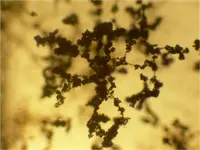
Use a dedicated, easy-to-clean tray or terrarium base and wipe it down regularly to limit spore buildup, which reduces contamination risk when growing panther cap in controlled conditions.

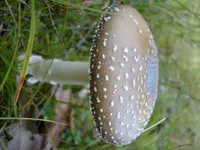
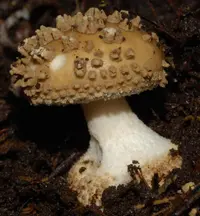
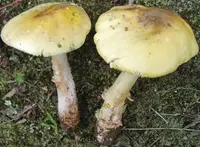
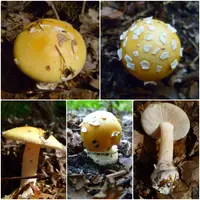
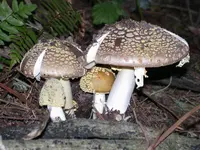
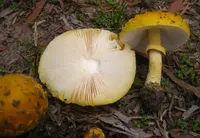
Panther cap, Amanita pantherina, is a mycorrhizal mushroom that forms symbiotic relationships with the roots of trees, not a houseplant or garden ornamental. It produces medium-sized, brown caps with distinct white warts and a white stem with a ring and volva, giving it a striking but deceptive appearance. This fungus typically occurs in temperate forests of Europe, Asia, and North America, often near conifers and broadleaf trees. It is not practical to care for panther cap at home, as it depends on complex tree root partnerships that are hard to reproduce. In nature it prefers well-drained, humus-rich forest soils with adequate moisture and dappled woodland light.

Care Difficulty
Hard Care

Light Preference
Partial Shade

Water Requirements
Keep Soil Moist

Temperature Preference
Cool Climate

Hardiness Zone
Unknown

Soil Texture
Loamy, Silty, Organic-rich

Soil pH
Acidic (5.5–6.5), Slightly acidic (6.5–7.0)

Soil Drainage
Moist but well-drained

Fertilization
Minimal (feed rarely)
Scan your plant to receive care tips personalized for your specific plant
Available on iOS and Android
This mycorrhizal fungus prefers dappled woodland light rather than direct open sun.
This woodland fungus depends on consistently moist, not waterlogged, soil around its tree partners.
This species thrives in cool to mild conditions typical of temperate woodlands.
Humidity plays a minimal role in the ecology of Amanita pantherina compared with temperature, light, and host tree association.
This fungus depends on natural, undisturbed forest soil rather than prepared mixes.
This species is not suitable for container growing because it needs a living symbiosis with tree roots in open soil.
Amanita pantherina is a wild ectomycorrhizal fungus that should not be fertilized like a garden or houseplant.
Amanita pantherina does not require pruning, since the mushroom fruiting body is temporary and the main organism lives hidden in the soil.
This species is not suited to typical repotting, as the fungus depends on a stable ectomycorrhizal partnership with host tree roots in natural soil.
Propagation of Amanita pantherina is highly specialized and not recommended for home cultivation or routine horticultural practice.
This fungus is naturally cold hardy in its native range and does not require active winter care.

Plant Health Check
Not sure what's wrong with your plant? Check your plant's health inside the app.
This species contains the neuroactive compounds ibotenic acid and muscimol, which can cause hallucinations, delirium, and severe neurological symptoms when ingested.
It forms ectomycorrhizal associations with the roots of trees such as beech, oak, and conifers, trading mineral nutrients and water for sugars produced by the host tree.
Its brown cap with white warts and a ringed, white stem can resemble some edible Amanita species, which makes misidentification a serious and sometimes life-threatening risk.

Historical records from parts of Europe suggest that this species, along with related Amanita taxa, was sometimes linked to folklore about “bewitched” or erratic animal behavior, likely due to accidental consumption of fallen caps by wildlife.
Yes, this species is highly poisonous to both humans and animals if eaten. It contains psychoactive and neurotoxic compounds that affect the brain. Ingestion requires urgent medical attention. It must never be collected or consumed as food.
Keep your plants happy and healthy with plant identification, disease detection, and easy care guidance.