Entonaema liquescens Care

Entonaema liquescens

About Entonaema liquescens

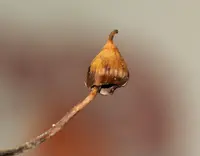
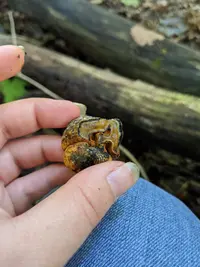
Entonaema liquescens is not a true plant but a rare, wood-inhabiting fungus known for its swollen, orange to reddish fruiting bodies that exude a liquid interior. It typically develops on decaying hardwood in humid, shaded forests.

This species is mainly recorded from tropical and subtropical regions in Asia and the Pacific, often in undisturbed woodland. It is difficult to maintain in cultivation because it depends on specific dead-wood substrates and stable moisture.

Most growers observe it in nature rather than in gardens, as it does not adapt well to pots or landscaped beds. Anyone attempting to care for Entonaema liquescens should focus on consistently damp, shaded, well-ventilated conditions with abundant decaying wood.

Main Plant Requirements

Care Difficulty

Hard Care

Light Preference

Shade

Water Requirements

Keep Soil Moist

Temperature Preference

Warm Climate

Hardiness Zone

Unknown

Soil Texture

Loamy, Silty, Organic-rich

Soil pH

Acidic (5.5–6.5)

Soil Drainage

Moist but well-drained

Fertilization

Minimal (feed rarely)

Get Personalized Care Plan

Scan your plant to receive care tips personalized for your specific plant

Available on iOS and Android

How to Care for the Entonaema liquescens

This fungus prefers low, woodland-type light rather than open, direct sun.

  • Provide bright shade or dappled light under shrubs or trees, aiming for 1–3 hours of weak morning sun and no harsh afternoon sun.
  • Site Entonaema liquescens where it receives filtered light through canopy or leaf litter, similar to a moist forest floor edge.
  • Avoid spots with more than 2–3 hours of strong direct sun, which can dry the substrate; deep, constant shade may slow development.

Moist, consistently damp substrate is important for this wood-inhabiting fungus.

  • Maintain substrate that feels evenly moist but not waterlogged; avoid standing water around the decaying wood or log base.
  • Allow only the upper 1–2 cm of surrounding soil or organic matter to begin drying before re-wetting in dry periods, especially in summer.
  • Reduce supplemental watering in cool, wet seasons and watch for sour smells or surface slime as signs of excess moisture and poor drainage.

This species prefers mild, cool to moderately warm conditions similar to shaded woodland.

  • Aim for growth conditions around 55–75°F (13–24°C), which support steady development on decaying wood.
  • Protect from hard frost; prolonged exposure below 28°F (-2°C) can damage tissue and slow future fruiting.
  • In hot weather above 82–86°F (28–30°C), maintain heavy shade and higher humidity to prevent excessive drying of the substrate.

This species is a wood-inhabiting fungus that does not require managed air humidity in cultivation.

Entonaema liquescens is not adapted to typical garden or potting soils but to decaying wood substrates.

  • Grow it on thoroughly rotted hardwood logs or thick branches rather than mineral soil, imitating its natural saprobic habitat on dead wood.
  • Ensure the woody substrate stays consistently moist but never waterlogged by using well-decayed, sponge-like wood that drains freely after rain or watering.
  • Avoid compacted garden soil, dense clay, or sterile potting mixes, which lack the structure, aeration, and complex organic matter this species needs to develop.
  • For experimental culture, combine coarse wood chips, partially decomposed leaf litter, and small bark pieces to maximize aeration and fungal food sources.

This species is not well suited to conventional container growing and is better established on natural logs or wood pieces outdoors.

This wood-inhabiting fungus typically gains nutrients from decaying wood and usually does not benefit from added fertilizer.

As a saprophytic fungus forming fruiting bodies on dead wood, Entonaema liquescens does not require structured pruning.

  • If removal is needed, cut off fruiting bodies at the base using a clean, sharp knife or pruning scissors.
  • Target only damaged, decayed, or unwanted structures; cutting does not improve growth or reproduction.
  • Disinfect tools with alcohol before and after cutting to reduce transfer of other fungi or pathogens.

This species naturally colonizes dead wood and is not suited to typical container culture, so transplanting options are very limited.

  • Transplant only when wood hosting the fungus must be moved, treating the entire log or branch as the unit, not the organism itself.
  • Carry or relocate the colonized wood during mild, moist weather to limit desiccation stress.
  • Avoid shaking, splitting, or stripping bark from the substrate, since the fungal network (mycelium) is embedded within it.
  • Place the wood in a similarly shaded, humid site with minimal disturbance to encourage continued fungal activity.

Propagation of this fungus under home conditions is experimental and not commonly practiced.

  • In nature, spread occurs mainly by spores released from mature fruiting bodies that colonize fresh dead wood.
  • To attempt controlled spread, place colonized wood in contact with recently fallen, similar wood in a shaded, humid location.
  • Maintain steady moisture without waterlogging, since alternating wet–dry extremes reduce mycelial growth.
  • Avoid chemical treatments, sealants, or fungicides on target wood, which can inhibit colonization and growing Entonaema liquescens.

Established on dead wood outdoors, this fungus generally tolerates natural winter conditions in its native range and needs no targeted care.

  • Leave colonized logs or branches in place; do not bring them into heated indoor spaces that cause desiccation.
  • If extreme freeze–thaw cycles occur, a light layer of leaf litter around the wood can moderate moisture loss.

Care Tips

Use decaying logs

Establish the fungus on well-rotted hardwood logs or stumps left shaded and undisturbed, as stable decaying wood provides the long-term substrate it needs to fruit reliably.

Limit site disturbance

Flag or mark the colonized wood and avoid stepping on, moving, or cutting it so the internal mycelium network is not damaged and can continue producing fruiting bodies for several seasons.

Maintain forest litter

Leave leaf litter, small branches, and bark pieces around the host log to help conserve moisture and mimic natural woodland conditions that support the fungus community.

Control air movement

If attempting Entonaema liquescens indoor care in a controlled lab-style setup, reduce strong air currents around the culture chamber to prevent the substrate from drying and to keep humidity more stable.

Monitor for competitors

Inspect the substrate periodically and remove heavily competing fast-growing molds or other fungi early, using clean tools, so the established colony keeps access to its food resource.

Common Pests and Diseases

Wood-decay fungi

This disease reflects the natural colonization of already weakened or dead hardwood by other decay fungi that compete with Entonaema liquescens for substrate. Symptoms include softening, cracking, or delamination of the bark and underlying wood, with other fungal fruiting bodies appearing near or over the orange masses.

Solution

Management focuses on the host tree rather than the fungus itself: remove severely decayed branches or logs for safety, avoid injuring live trees, and keep landscape trees healthy to slow structural decline. In managed sites, pruning out heavily decayed areas and disposing of them away from other aging hardwoods can reduce further spread of aggressive decay fungi.

Bark-boring beetles

These insects tunnel into stressed or dead hardwood where Entonaema liquescens typically develops, creating galleries under the bark and exit holes on the surface. This activity accelerates bark loosening and fragmentation around the fungal colonies.

Solution

To limit damage in managed woodlots or gardens, promptly remove and chip or burn heavily infested branches and logs before new beetle generations emerge. Avoid stacking fresh-cut hardwood near valuable standing trees, and keep host trees healthy to reduce initial beetle attack pressure.

Sap beetles

These insects are attracted to moist, nutrient-rich fungal tissues and decomposing wood, and may feed on or around the gelatinous fruiting bodies. This pest can introduce secondary fungi and bacteria that speed up breakdown of the substrate around the colony.

Solution

Sanitation is the main tool: remove and dispose of excessively decomposed wood and any heavily infested material if beetle numbers become problematic near structures or sensitive plantings. Where feasible, store firewood and decaying logs away from ornamental trees to reduce beetle buildup.

Mite colonization

These insects form micro-communities on moist fungal surfaces and decaying bark, grazing on spores, bacteria, and soft tissues. Symptoms include fine pitting of the gelatinous surface and small moving specks visible on close inspection.

Solution

If localized control is needed in a monitored research or display setting, gently rinse affected areas with clean water or physically remove heavily colonized fragments of substrate. Maintaining good airflow around downed wood and avoiding long-term plastic covers or tarps reduces the persistently damp conditions that favor high mite densities.

Interesting Facts

Unusual liquid core

Mature fruiting bodies contain a dark, gelatinous liquid filling the interior cavity, which is released when the outer tissue breaks down or is damaged.

Wood-inhabiting lifestyle

This fungus typically develops on decaying hardwood, especially dead branches and logs in humid forests, contributing to wood decomposition and nutrient recycling.

Rarely encountered species

Although distributed in various temperate and subtropical regions, it is infrequently recorded, partly because the fruiting bodies are short-lived and often overlooked on rotting wood.

FAQs about Entonaema liquescens

This species is not considered edible and has no established culinary use. It should be treated as inedible and left in place, mainly observed for study or curiosity rather than harvested for food.

Grow Healthy Plants with Botan Care

Keep your plants happy and healthy with plant identification, disease detection, and easy care guidance.

Botan plant care app — identify plants on mobile

Explore More Plants