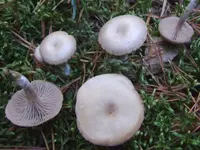
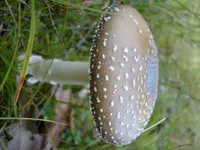
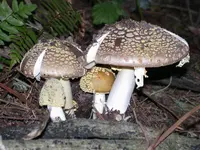
Brown American Star-footed Amanita Care (Amanita brunnescens)

Also known as: Cleft-footed Amanita
Brown American Star-footed Amanita

About Brown American Star-footed Amanita

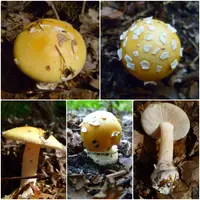
Amanita brunnescens, commonly called the brown American star-footed amanita, is a wild mushroom-forming fungus, not a typical houseplant or garden ornamental. It produces brown to tan caps with pale gills and a sturdy stem that often shows characteristic star-like patches near the base.

This species occurs mainly in North America, growing on the ground in forests, usually in association with trees, where it forms mycorrhizal relationships that help roots absorb nutrients. It is not suited to standard home cultivation, and attempts to care for Brown American Star-footed Amanita are usually unsuccessful because it relies on complex partnerships with living trees.

In nature it favors woodland habitats with moist, well-drained, organic-rich soil and moderate shade.

Main Plant Requirements

Care Difficulty

Hard Care

Light Preference

Partial Shade

Water Requirements

Keep Soil Moist

Temperature Preference

Cool Climate

Hardiness Zone

Unknown

Soil Texture

Loamy, Organic-rich

Soil pH

Acidic (5.5–6.5)

Soil Drainage

Moist but well-drained

Fertilization

Minimal (feed rarely)

Get Personalized Care Plan

Scan your plant to receive care tips personalized for your specific plant

Available on iOS and Android

How to Care for the Brown American Star-footed Amanita

This woodland fungus prefers shaded forest conditions with only brief, gentle sunlight exposure.

  • Provide dappled or filtered light under trees, with no more than 1–2 hours of weak morning sun and no direct afternoon sun on caps or mycelium zones.
  • Site Brown American Star-footed Amanita where canopy cover blocks at least 70–90% of direct sun, mimicking mixed or deciduous woodland shade.
  • In late spring and summer, avoid exposed sites that heat and dry quickly, which can desiccate fruiting bodies; slight winter openness is acceptable when trees are leafless.

This ectomycorrhizal fungus depends on consistently moist, well-drained forest soil rather than direct surface watering.

  • Aim for soil that feels moist 2–5 cm deep but never waterlogged; allow only the top 1–2 cm to begin drying between natural rains.
  • In dry spells, lightly irrigate the broader tree root zone instead of the mushrooms themselves, using gentle soaking that drains within 30–60 minutes to protect Amanita brunnescens mycelium.
  • Watch for soggy, foul-smelling soil or prolonged puddling as signs of overwatering, and for shrinking, brittle caps and very loose, dusty topsoil as signs of drought stress in the habitat.

This species fruits best in mild, temperate conditions typical of shaded woodland habitats.

  • Optimal activity usually occurs around 55–70°F (13–21°C), with mycelium remaining functional slightly outside this range if soil moisture stays stable.
  • Avoid sustained exposure below 25°F (-4°C), which can damage shallow mycelial strands, especially in poorly insulated, compacted ground.
  • Limit heat stress by maintaining shade and leaf litter when air temperatures exceed 80–85°F (27–29°C), since hot, exposed soil can halt fruiting and dry the substrate.

Humidity is not a key factor for Amanita brunnescens, which grows naturally in outdoor woodland conditions.

This mycorrhizal fungus depends on natural forest soil conditions rather than prepared potting substrates.

  • Grows in well-drained, loose, leaf-litter-rich soil over mineral layers, often in mixed hardwood or conifer woods.
  • Prefers slightly acidic soil around pH 4.5–6.0, avoiding limed or heavily amended alkaline ground.
  • Thrives where organic matter is steadily decomposing, so undisturbed leaf litter and decaying wood fragments are important.
  • Avoid compacted, waterlogged, or heavily fertilized areas, which disrupt the fine root–fungus association needed by Amanita brunnescens.

This species is not suitable for container growing, as it relies on complex mycorrhizal relationships with tree roots in natural soil.

This ectomycorrhizal fungus relies mainly on its tree host for nutrients, so Brown American Star-footed Amanita needs no direct fertilization.

Pruning does not apply to Amanita brunnescens in the way it does to garden plants, since it is a wild mushroom forming seasonal fruiting bodies.

This fungus is not suited to standard repotting, since it depends on a living tree root system and surrounding soil community.

  • Transplant only by moving colonized soil along with the associated host tree seedling or sapling, not the mushroom alone.
  • Plan any move during the host tree’s dormant season, when root disturbance stress is lower.
  • Keep as much native soil around the roots as possible to preserve fungal mycelium and beneficial microbes.
  • Water the transplanted tree thoroughly afterward and maintain stable moisture while roots and mycelium re-establish.

Propagation of Amanita brunnescens is specialized and rarely done successfully in home settings because it must form mycorrhizae with host tree roots.

Amanita brunnescens is typically cold hardy in its native range and needs no targeted winter care, as the mycelium remains insulated in the soil.

Care Tips

Spore-print monitoring

Place white and dark paper under mature caps overnight to collect spores, which helps confirm identification and track fruiting success without disturbing the mycelium in the substrate.

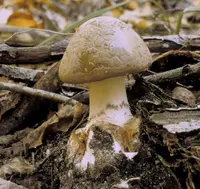
Minimal disturbance zone

Mark a 30–50 cm radius around each fruiting site and avoid raking, digging, or compacting soil there so the mycorrhizal network remains intact and can fruit reliably over multiple seasons.

Host tree management

Maintain the health of associated trees (such as oaks or other hardwoods) with proper mulching and moderate irrigation, since the fungus depends on these roots for nutrients and will decline if the host is stressed or removed.

Leaf-litter mulching

Retain or add a thin layer of fallen leaves from the host tree over the colonized area to mimic natural forest duff, stabilizing moisture and temperature while still allowing gas exchange.

Targeted site documentation

Record GPS location, tree species present, soil type, and seasonal weather at each fruiting site so long-term patterns in caring for Brown American Star-footed Amanita can be understood and future management can be adjusted with better precision.

Common Pests and Diseases

Mycophagous insects

These insects feed directly on caps, gills, and stems, leaving tunnels, pits, or deformed fruiting bodies. Symptoms include soft, riddled tissue and accelerated decay of the mushroom.

Solution

Collect and discard heavily tunneled mushrooms, then remove nearby decaying fungal material that shelters larvae. In outdoor settings, reduce thick leaf litter around fruiting sites and harvest or photograph mushrooms promptly, since older fruiting bodies attract more insects.

Slug and snail grazing

This pest creates ragged holes and missing sections on caps and margins, often leaving slime trails on or around the mushroom. Symptoms include uneven cap edges and rapid loss of tissue overnight in damp weather.

Solution

Hand-remove slugs and snails at dusk or early morning and reduce moist hiding spots such as dense debris or stacked wood near the fruiting zone. Where allowed, simple barriers like copper tape or rough, dry mulch can limit access to emerging mushrooms without altering the soil for the mycelium.

Saprophytic mold overgrowth

This disease appears as fast-spreading fuzzy or powdery growth on caps, stems, or at the base, often white, gray, or green. Symptoms include collapse or dissolution of the mushroom as competing fungi colonize its tissues.

Solution

Remove and dispose of mold-covered fruiting bodies promptly to reduce spore load at the surface. Avoid piling fresh organic debris directly on active fruiting spots, and if observing for study, improve air movement around the patch so mushrooms dry off more quickly after rain.

Bacterial soft rot

This disease causes wet, foul-smelling, slimy patches on caps or stems that quickly turn the mushroom into a soft, collapsing mass. Symptoms include discoloration, water-soaked lesions, and strong odor as tissue breaks down.

Solution

Cut and remove affected mushrooms as soon as soft, slimy areas appear, using separate tools from edible or ornamental plants. Limit mechanical injury to fruiting bodies and avoid trampling the site, since damaged tissue in warm, wet conditions favors bacterial invasion.

Interesting Facts

Brown star-like warts

This species typically shows brownish, star-shaped veil remnants on the cap surface, a feature that helps separate it from similar pale amanitas in mixed hardwood forests of eastern North America.

Staining and odor traits

Its cap and stem flesh may slowly stain brownish when handled or damaged, and mature specimens often develop a somewhat unpleasant odor, which field mycologists use as supporting identification characters.

Mycorrhizal oak partner

The fungus forms ectomycorrhizae, a mutualistic root association, mainly with oaks in the eastern United States, exchanging mineral nutrients from the soil for sugars produced by the tree.

FAQs about Brown American Star-footed Amanita

Yes. This mushroom is considered highly poisonous to both humans and pets. Ingestion can cause severe liver and kidney damage and may be fatal. Never taste wild specimens and keep children and animals away from fruiting bodies.

Grow Healthy Plants with Botan Care

Keep your plants happy and healthy with plant identification, disease detection, and easy care guidance.

Botan plant care app — identify plants on mobile

Explore More Plants