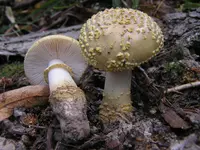
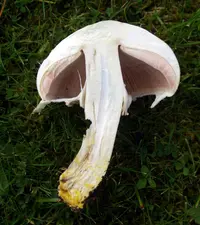
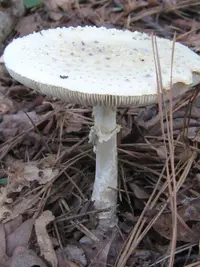
Maori dust amanita Care (Amanita nehuta)

Maori dust amanita

About Maori dust amanita

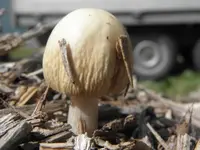
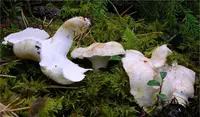
Maori dust amanita, Amanita nehuta, is a small to medium mushroom-forming fungus rather than a leafy houseplant. It produces classic amanita-style caps with a pale, dusted surface and a central stem, emerging from soil where it forms partnerships with tree roots. This species is native to New Zealand, often appearing in forested or woodland habitats.

In cultivation it is very difficult to maintain, because it depends on specific tree partners and soil fungi communities. Most plant owners admire it in habitat or photos rather than trying to care for Maori dust amanita at home.

Main Plant Requirements

Care Difficulty

Hard Care

Light Preference

Partial Shade

Water Requirements

Keep Soil Moist

Temperature Preference

Warm Climate

Hardiness Zone

Unknown

Soil Texture

Loamy, Organic-rich

Soil pH

Acidic (5.5–6.5)

Soil Drainage

Moist but well-drained

Fertilization

Minimal (feed rarely)

Get Personalized Care Plan

Scan your plant to receive care tips personalized for your specific plant

Available on iOS and Android

How to Care for the Maori dust amanita

This ectomycorrhizal fungus prefers dappled woodland light rather than open, exposed sun.

  • Provide 2–5 hours of gentle, filtered light beneath shrubs or trees, avoiding direct midday sun that can dry the duff and harm the mycelium network.
  • Allow bright morning sun with afternoon shade where possible, as Maori dust amanita tends to fruit best along edges of paths or clearings, not in full-sun grassland.
  • In hot summers, increase shade using leaf litter or nearby plant cover; in cooler, overcast seasons, slightly more open canopy helps maintain energy for fruiting.

Amanita nehuta depends on consistently moist, well‑drained soil around its tree partners rather than direct watering of the mushrooms.

  • Maintain evenly moist, not soggy, soil by letting the top 2–3 cm of forest duff or mulch start to dry before gently rewetting the area.
  • Use loose, well‑drained, organic‑rich soil so excess water moves away quickly; persistent puddles or a sour smell indicate poor drainage and risk of rot.
  • In warm, dry seasons, mist or lightly soak the surrounding soil more often; in cool or rainy periods, reduce added water and watch for mushy, collapsing caps as a sign of excess moisture.

This woodland fungus favors mild, stable temperatures and suffers in both hard frost and intense heat.

  • Aim for an active growth range around 55–70°F (13–21°C), with many fruitings triggered by cool, moist conditions following autumn rains.
  • Protect the habitat from hard freezes below 28°F (-2°C), which can damage fruiting bodies, though the underground mycelium often survives brief cold spells.
  • Limit exposure to prolonged heat above 85°F (29°C); provide deeper shade and thicker mulch in hot periods so the soil stays cooler and retains moisture.

This species needs moderately moist air, with humidity more critical in dry indoor environments than outdoors.

  • Aim for 50–70% humidity; short drops to 40% are usually tolerated without lasting damage.
  • Crisping caps, premature cracking, and dull, faded surface color indicate humidity stress and excessive dryness.
  • Increase humidity by grouping containers, using a nearby open-water tray, or running a room humidifier rather than misting Maori dust amanita directly.

This fungus relies on specific outdoor soil conditions and cannot be maintained long term in standard potting mixes.

  • In nature, Amanita nehuta associates with tree roots in loose, well-drained, sandy to loamy forest soil with high organic debris on top, not mixed in deeply.
  • Soil should drain freely, with water percolating through in seconds; standing water, compaction, or sticky, clay-heavy sites suppress fruiting and promote rot.
  • A slightly acidic profile, roughly pH 5.0–6.5, is typical; avoid liming the area or applying wood ash that can push pH higher.
  • To approximate its habitat, use a mineral base (native sandy soil) topped with a thin layer of leaf litter or fine bark, avoiding peat-heavy bagged mixes and synthetic wetting agents.

This species is not suitable for true container cultivation, as its natural mycorrhizal relationship with tree roots is extremely difficult to reproduce in pots.

This fungus forms nutrient-sharing partnerships with host trees and usually does not benefit from direct fertilization.

Direct pruning is not applicable to Amanita nehuta, as it is a mycorrhizal fungus rather than a conventional garden plant.

This species is not suited to normal repotting or transplanting because it depends on a mycorrhizal association with living tree roots.

  • If grown in research or specialized culture, disturb the root–fungus zone as little as possible to avoid breaking the symbiosis.
  • Any move must occur when the host tree is dormant, minimizing stress on fine roots and fungal mycelium.
  • Lift and replant with a wide soil root ball, keeping original soil structure and moisture level intact.

Propagation of Amanita nehuta is specialized and not practical for typical home growers, as it relies on complex spore and root interactions.

In native or suitable outdoor habitats, this fungus overwinters naturally in the soil and usually needs no dedicated winter care.

Care Tips

Substrate refresh cycles

Rebuild or refresh the wood chip and leaf litter layer every 6–12 months so the fungus has a steady supply of decomposing material and does not stall from exhausted substrate.

Shaded moisture basin

Create a shallow mulch basin around the host tree or shrub to catch water and keep the upper soil horizon evenly moist, which encourages stable mycelium spread without waterlogging deeper layers.

Minimal soil disturbance

Avoid digging, raking, or aerating the soil where the fungus is established because disruption of the fine mycelial threads can delay or reduce future fruiting.

Seasonal fruitbody protection

Once fruitbodies emerge, place low wire hoops or ventilated mesh covers over the area to prevent trampling, animal damage, and direct hose spray while still allowing air movement and rainfall.

Host root monitoring

Periodically assess the vigor of the associated tree or shrub and adjust fertilizer and irrigation for the host rather than the fungus itself, since stable host roots are the main driver for long‑term success when growing Maori dust amanita.

Common Pests and Diseases

Fungus gnat larvae

This pest targets the moist substrate, where larvae feed on decomposing material and can damage fine mycelial strands. Symptoms include slowed growth, thinning mycelial mats, and tiny black gnats flying near trays or containers.

Solution

Allow the substrate surface to dry slightly between misting, use fine sand or a top layer of coir to discourage egg laying, and set out yellow sticky traps to capture adults. In severe cases, drench the substrate with a biological control containing Bacillus thuringiensis israelensis (Bti), following label directions closely.

Mite infestation

These insects, often saprophytic or predatory mites, can overpopulate culture containers and disturb developing fruiting bodies. Symptoms include distorted caps, uneven or aborted primordia, and fine moving specks on the substrate or caps.

Solution

Reduce excess organic debris and keep culture areas clean, then isolate affected containers to limit spread. If needed, introduce predatory mites suited to mushroom production and adjust humidity and airflow to less favorable levels for pest mites without drying the substrate completely.

Trichoderma green mold

This disease is caused by competitive Trichoderma fungi that colonize the same substrate and rapidly overgrow mycelium. Symptoms include bright to dark green patches on the substrate, reduced or stopped fruiting, and a strong earthy or sour odor.

Solution

Immediately remove and discard heavily contaminated blocks or trays to prevent spore spread, and clean nearby surfaces with a dilute bleach or alcohol solution. For future cycles, improve hygiene, thoroughly pasteurize or sterilize substrate, and increase fresh air exchange to prevent overly stagnant, humid conditions that favor contamination.

Bacterial blotch

This disease develops under very high humidity and poor air circulation, allowing bacteria to thrive on caps and stems. Symptoms include sticky, greasy-looking spots, yellow to brown lesions, and soft, water-soaked tissue on fruiting bodies.

Solution

Improve airflow, lower humidity slightly, and avoid overhead misting directly onto caps so surfaces can dry between cycles. Remove and discard affected fruiting bodies, sanitize tools and trays, and use clean, low-mineral water for misting to reduce bacterial load.

Substrate mold overgrowth

This disease involves opportunistic molds such as Penicillium or Aspergillus that colonize uncolonized or weak parts of the substrate. Symptoms include blue, gray, or black fuzzy patches, stalled mycelial expansion, and patchy or absent fruiting.

Solution

Cut out small contaminated sections if feasible, then adjust conditions to favor strong mycelial growth, including stable temperature, correct moisture, and adequate aeration. For larger contamination, discard the culture, thoroughly clean the growing area, and start again with fresh, well-prepared substrate and uncontaminated spawn, following careful Maori dust amanita care instructions for cleanliness and airflow management.

Interesting Facts

New Zealand woodland specialist

This species is native to New Zealand and is strongly associated with Nothofagaceae (southern beech) and some introduced conifers, forming ectomycorrhizal relationships that help trees access nutrients in poor soils.

Distinctive dusky cap

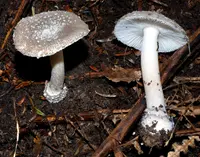
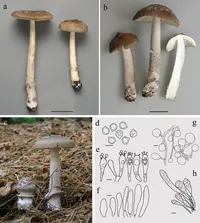
The cap typically shows grey‑brown to sooty tones with a finely granular or dusted surface, and lacks the bright red and white coloration many people associate with familiar Amanita species.

Hidden underground structure

Like other ectomycorrhizal fungi, most of its biomass lives as a fine network of hyphae in the soil, intimately wrapped around tree roots, while the visible mushroom is only a short‑lived reproductive structure for spore dispersal.

FAQs about Maori dust amanita

This mushroom is considered poisonous and should never be eaten. It can cause serious gastrointestinal and neurological symptoms if ingested. Keep children and pets away, and wear gloves when handling, especially when collecting or disposing of fruiting bodies.

Grow Healthy Plants with Botan Care

Keep your plants happy and healthy with plant identification, disease detection, and easy care guidance.

Botan plant care app — identify plants on mobile

Explore More Plants