Dyer's Polypore Care (Phaeolus schweinitzii)

Also known as: Dye Polypore, Dyer's Mazegill, velvet-top fungus
Dyer's Polypore

About Dyer's Polypore

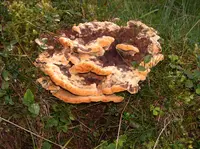
Dyer's polypore (Phaeolus schweinitzii) is a wood-decaying fungus, not a typical houseplant, best known for its role in natural dyeing. It forms large, rosette-like fruiting bodies with velvety, yellow-brown to dark brown bands that grow at the base of conifers or on buried roots.

This species naturally occurs in forests across North America and parts of Europe, often associated with pine and spruce. It prefers moist, well-drained, acidic conditions and needs decomposing wood, which makes it challenging to cultivate in standard garden or indoor settings.

Because it depends on living or dead conifer roots, attempts to care for Dyer's Polypore at home are usually experimental and more suited to advanced growers or fungal enthusiasts.

Main Plant Requirements

Care Difficulty

Moderate Care

Light Preference

Partial Shade

Water Requirements

Keep Soil Moist

Temperature Preference

Cool Climate

Hardiness Zone

3–9

Soil Texture

Sandy, Loamy, Organic-rich

Soil pH

Strongly acidic (4.5–5.5), Acidic (5.5–6.5)

Soil Drainage

Moist but well-drained

Fertilization

Minimal (feed rarely)

Get Personalized Care Plan

Scan your plant to receive care tips personalized for your specific plant

Available on iOS and Android

How to Care for the Dyer's Polypore

This wood-decay fungus prefers outdoor conditions that mimic a lightly shaded forest edge.

  • Provide 3–6 hours of dappled or filtered light daily, with morning sun and afternoon shade to prevent drying of host roots and substrate.
  • Allow partial to full shade under conifers or pines; Dyer's Polypore often fruits where direct sun is limited but ambient daylight is consistent.
  • Avoid full, exposed midday sun in open sites, which can overheat the substrate; in hot summers, increased shade helps maintain moisture and prolong fruiting.

This fungus depends on steady substrate moisture rather than direct watering of the fruiting body.

  • Keep the host tree root zone or buried wood slightly moist but never waterlogged; allow the top 2–5 cm of surrounding soil to dry lightly between soakings.
  • In rainy seasons, rely mostly on natural precipitation and ensure good drainage so pooled water does not remain for more than 24 hours around the base.
  • Watch for shrinking, brittle fruiting bodies as a sign of drought stress and dark, sour-smelling, soft wood as an indicator of chronic overwatering in Phaeolus schweinitzii habitat.

This species develops best in cool to mild outdoor conditions typical of temperate forests.

  • Optimal fruiting often occurs around 55–70°F (13–21°C), with mycelial growth continuing across a wider cool range in the soil and decaying wood.
  • Tolerates down to about 25–30°F (-4–-1°C) during short cold spells, but hard, prolonged freezes may halt visible activity until temperatures rise again.
  • Handles warm periods up to about 80–85°F (27–29°C) if shade and moisture are stable; sustained higher heat combined with dry soil can sharply reduce fruiting.

Humidity is not a primary concern, as this wood-decaying fungus develops outdoors on tree roots and stumps in open air conditions.

This fungus does not grow in conventional potting soil but associates with conifer roots or stumps in the ground.

  • Establish it on or near buried conifer wood (stumps, large roots, or logs), which serves as its main resource rather than mineral soil.
  • Choose a site with loose, well-drained, slightly acidic subsoil (roughly pH 4.5–6.0) typical of conifer plantations or acidic forest edges.
  • Avoid compacted, waterlogged, or heavily amended garden beds; excess nutrients and poor aeration can disrupt host root health and fungal development.
  • For experimental growing Phaeolus schweinitzii, partially bury conifer wood in sandy or sandy-loam soil to improve drainage and oxygen availability around the host roots.

This species is not suitable for conventional container growing, as it relies on living or recently dead conifer roots in the ground rather than a pot-based substrate.

This wood-decay fungus typically needs no fertilizer when infecting host trees, so caring for Dyer's Polypore focuses on habitat rather than feeding.

Phaeolus schweinitzii does not need structured pruning, but fruiting bodies can be managed for safety and monitoring.

  • Cut and remove only dead or decaying fruiting bodies using a sharp knife or pruning saw, especially on high-traffic trees.
  • Carry out removals in dry weather to limit spreading spores and to keep cuts clean and less slippery.
  • Avoid cutting into living tree tissue more than necessary; target only the fungal body at the bark surface.
  • Dispose of removed material in sealed bags or municipal green waste, not on-site, to reduce local spore load.

This species is not suited to normal container culture; management focuses on where and how it colonizes host trees and soil.

  • Transplant only when moving colonized wood or stump sections for study or dye use; avoid relocating near healthy conifers.
  • Choose cool, moist seasons such as early fall for any movement to reduce stress on host wood and associated organisms.
  • Handle stumps or logs gently to keep mycelium intact; limit cutting or splitting that would dry the wood rapidly.
  • After placement, maintain moderate, consistent soil moisture around the wood while avoiding waterlogged conditions that invite other fungi.

Propagation of this decay fungus is specialized and usually restricted to research or dye production contexts, not routine garden practice.

This fungus is naturally cold hardy in temperate climates and generally needs no special winter care in the landscape.

Care Tips

Select Host Trees

Establish cultures only near mature conifers known to tolerate this fungus locally, and avoid high-value specimen trees or recently transplanted conifers since the fungus can weaken roots over several years.

Use Sterile Inoculation

When introducing this fungus to wood for dye projects, drill clean holes into fresh, untreated conifer stumps or logs and plug with spawn under clean conditions to reduce contamination by faster-growing fungi.

Mark and Monitor Sites

Flag inoculated stumps or trees and record dates so you can check annually for fruiting bodies, wood stability, and any decline in adjacent trees, removing hazardous material if structural integrity becomes compromised.

Time Harvest Carefully

Harvest brackets when they are firm, bright-colored, and still slightly damp inside, since older, darkened, and crumbly fruiting bodies yield weaker dye and release more spores that can spread to nearby roots.

Manage Wood Safety

Where this fungus occurs near paths, play areas, or structures, assess affected roots and stumps regularly and, if necessary, reduce traffic, install barriers, or remove dangerously decayed wood as part of responsible caring for Dyer's Polypore in managed landscapes.

Common Pests and Diseases

butt rot progression

This disease reflects the natural, advanced decay of conifer roots and butt wood caused by the fungus itself as it expands within its host tree. Symptoms include crown thinning, yellowing needles, windthrow, and large, annual brackets at the base or on major roots of susceptible conifers such as pine and spruce.

Solution

Management focuses on tree and site selection rather than curing existing infections. Remove and safely dispose of heavily infected or unstable trees, avoid planting susceptible conifers on compacted or previously infested sites, and favor mixed-species or non-host plantings to reduce future colonization when growing Dyer's Polypore in managed landscapes.

secondary wood-decay fungi

This disease issue arises when other decay fungi colonize the same weakened tree or stump already occupied by this species. Symptoms include additional fruiting bodies of other fungi, accelerated structural decay, and increased risk of limb or stem failure.

Solution

In managed areas, regularly inspect host trees and associated stumps for multiple types of fungal brackets, and remove hazardous trees or limbs where structural integrity is compromised. Improve stand structure by thinning to reduce mechanical stress on weakened trees and by gradually replacing severely affected individuals with non-host species.

bark beetle association

These insects often exploit conifers stressed or predisposed by butt and root decay, leading to galleries under the bark and further decline of the host tree. Symptoms include boring dust, resin pitch tubes, fading foliage, and bark that loosens easily over infested sections.

Solution

Management relies on early detection and removal of highly infested or dead trees to reduce local beetle populations. Maintain tree vigor through proper spacing and reduced soil compaction, and avoid leaving fresh, shaded conifer logs or large stumps on site that can act as breeding material for bark beetles when this fungus is already present.

Interesting Facts

Conifer root parasite

This fungus primarily attacks living conifers such as pines, Douglas-firs, and spruces by causing a destructive brown cubical butt rot in the lower trunk and major roots, often leading to windthrow of mature trees.

Short-lived but recurring

The large, velvety fruiting bodies are annual and decay within a season, but the underlying mycelium in the roots and soil can persist for many years and produce new brackets repeatedly in the same area.

Natural yellow dye source

The fruiting bodies have long been used in natural dyeing, especially with mordants like alum or iron, to produce a range of durable yellow, gold, and olive-brown shades when caring for Dyer's Polypore.

Botan icon

Did you know?

Although the fruiting bodies usually appear at or near the base of conifers, the decay often originates deep in the underground roots, so brackets can emerge several meters away from the actual infection center, revealing hidden root rot long before the tree falls.

FAQs about Dyer's Polypore

This fungus is not considered edible due to its tough, woody texture and lack of culinary value. It is mainly used as a natural dye source rather than food and should not be foraged as an edible mushroom.

Grow Healthy Plants with Botan Care

Keep your plants happy and healthy with plant identification, disease detection, and easy care guidance.

Botan plant care app — identify plants on mobile

Explore More Plants