Wind exposure training
In the first 2–3 years, allow moderate, steady wind exposure and avoid staking unless absolutely necessary, so the trunk and root system develop strong taper and anchorage suited to long-term landscape conditions.


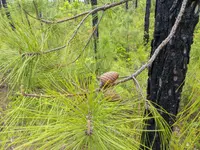
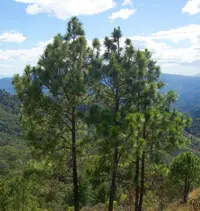
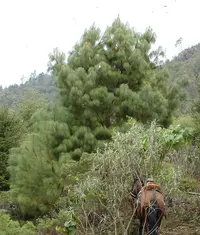
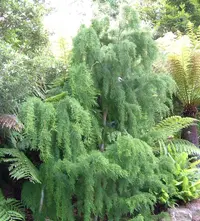
Formosa pine, Pinus taiwanensis, is a medium to large evergreen tree valued for its narrow, upright form and dense, dark green needles. It develops a straight trunk with layered branches that create a clean, architectural outline. Cones are typically small to medium in size and appear among the foliage. This species is native to higher elevations in Taiwan, where it grows on exposed mountain slopes and ridges. It prefers full sun, well-drained, slightly acidic soil, and does not tolerate prolonged waterlogging. Once established, it shows good wind and drought tolerance, which makes it relatively straightforward to care for Formosa Pine in suitable climates.

Care Difficulty
Moderate Care

Light Preference
Full Sun

Water Requirements
Low Water

Temperature Preference
Warm Climate

Hardiness Zone
8–10

Soil Texture
Sandy, Loamy, Rocky

Soil pH
Acidic (5.5–6.5), Slightly acidic (6.5–7.0)

Soil Drainage
Well-drained

Fertilization
Minimal (feed rarely)
Scan your plant to receive care tips personalized for your specific plant
Available on iOS and Android
This high-elevation pine thrives in bright, open sites with long daily sun exposure.
This mountain pine prefers evenly moist but never saturated soil, especially while young and establishing roots.
This species is adapted to cool to mild climates with distinct seasons and tolerates significant cold once established.
Pinus taiwanensis tolerates a broad humidity range but prefers moderately dry air similar to outdoor conditions.
Pinus taiwanensis grows best in sharply drained, mineral, slightly acidic soil that mimics a mountain slope.
This species can be grown in containers when managed as a long-term patio or bonsai tree.
This mountain pine grows acceptably in poor soils, but moderate feeding supports denser growth in containers and young plantings.
Pruning Pinus taiwanensis is usually light and focuses on structure and safety rather than frequent shaping.
This pine is mainly a landscape tree, so care focuses on careful transplanting rather than frequent repotting.
Pinus taiwanensis is usually propagated from seed and is not commonly multiplied by home growers.
This pine is fairly cold hardy in suitable climates and usually needs minimal winter intervention once established.

Plant Health Check
Not sure what's wrong with your plant? Check your plant's health inside the app.
This species is native to Taiwan’s central and northern high mountains, where it forms pure or mixed forests on ridges and slopes, typically at elevations around the cloud belt with cool, humid, and windy conditions.
After disturbances such as typhoons or landslides, this pine often colonizes exposed slopes, stabilizing shallow, acidic soils and helping create conditions that later allow more shade-tolerant broadleaf trees to establish.
Morphological and genetic studies show that this species is closely related to Pinus densiflora (Japanese red pine), and some taxonomists have treated it as a variety of that species, reflecting their shared evolutionary history in East Asia.

In its native Taiwan, this pine often forms striking, wind-shaped stands along ridgelines, where persistent strong monsoon winds sculpt asymmetrical crowns that serve as a visible indicator of prevailing wind direction across the landscape.
This species has a moderate to fast growth rate, often adding 30–60 cm per year in suitable conditions. Growth is quicker in deep, well-drained, slightly acidic soil with consistent moisture and good light exposure.
Keep your plants happy and healthy with plant identification, disease detection, and easy care guidance.