Root zone protection
Mulch the soil surface with a 5–8 cm layer of coarse organic mulch, keeping it 5–8 cm away from the trunk, to stabilize root temperature, reduce moisture loss, and protect shallow palm roots from mechanical damage.

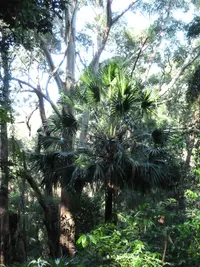
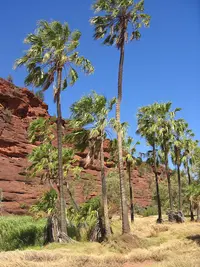
The Australian fan palm, Livistona australis, is a single-trunked palm tree with a dense crown of large, circular, pleated fan leaves. It often forms a tall, slender silhouette with old leaf bases sometimes clinging to the trunk.
This species is native to coastal and subtropical forests of eastern Australia, where it grows in moist habitats, often near waterways. It adapts moderately well to cultivation but needs consistent moisture and space, so planning how to care for Australian Fan Palm is important.
It prefers bright light, regular watering, and well-drained soil, and it handles mild cool spells better than many tropical palms.

Care Difficulty
Moderate Care

Light Preference
Full Sun

Water Requirements
Regular Water

Temperature Preference
Warm Climate

Hardiness Zone
9–11

Soil Texture
Sandy, Loamy, Organic-rich

Soil pH
Acidic (5.5–6.5), Slightly acidic (6.5–7.0)

Soil Drainage
Moist but well-drained

Fertilization
Minimal (feed rarely)
Scan your plant to receive care tips personalized for your specific plant
Available on iOS and Android
This palm thrives in bright, open conditions with some protection from extreme midday sun.
Watering should keep soil consistently moist but never saturated for this palm.
This species prefers warm, mild climates and tolerates light, brief cold once established.
This palm benefits from moderate humidity but adapts to many home environments.
This palm prefers deep, moist but well-drained, slightly acidic to neutral substrates.
This species is suitable for container growing when given a large, stable setup.
Livistona australis benefits from light, consistent nutrition in active growth but is sensitive to overfeeding.
Pruning Livistona australis focuses on hygiene and safety rather than reshaping the palm.
Australian Fan Palm is slow to establish and prefers infrequent but careful repotting or transplanting.
Livistona australis is usually propagated from seed, which requires warmth and patience.
Livistona australis has moderate cold tolerance but benefits from basic winter protection in cooler climates.

Plant Health Check
Not sure what's wrong with your plant? Check your plant's health inside the app.
This species is the southernmost naturally occurring palm on the Australian east coast, reaching into cooler temperate zones where few other palms can survive long-term.
Natural bushfires can scorch and remove the old leaf bases, leaving distinct ring patterns on the tall gray trunk and allowing mature trees to recover and continue growing.
First Nations peoples of eastern Australia traditionally used the tough leaves to make items such as baskets, mats, and shelter coverings due to their durability and fan-shaped form.

Mature specimens can form large, dense colonies along Australian coastal watercourses and swamps, creating visually dominant palm groves that serve as important roosting and nesting sites for birds such as flying foxes, cockatoos, and various waterbirds.
Growth is moderate. In warm climates with consistent moisture and fertilizer, it may add around 30–60 cm of trunk per year. In cooler or drier sites, growth slows noticeably, especially while the plant is establishing.
Keep your plants happy and healthy with plant identification, disease detection, and easy care guidance.