Sturdy Ring Supports
Install peony rings or low, sturdy hoops in early spring when shoots are 10–15 cm tall so flower stems grow up through the support and large blooms do not flop or snap in wind and rain.

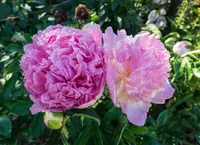
Paeonia lactiflora 'Raspberry Sundae' is a herbaceous perennial peony grown mainly for its large, fragrant, double flowers. Blooms show layered pink and cream petals that resemble a dessert-like scoop.
The plant forms a rounded clump of leafy stems that die back in winter and reemerge each spring from underground buds. It originates from garden breeding selections of East Asian peonies rather than a wild habitat.
This cultivar suits temperate climates with cold winters, as it relies on winter chill to flower well. Fertile, well-drained soil and full sun to light shade support healthy growth and make it easier to care for Peony.

Care Difficulty
Moderate Care

Light Preference
Full Sun

Water Requirements
Moderate Water

Temperature Preference
Cold Hardy

Hardiness Zone
3–8

Soil Texture
Loamy, Sandy, Organic-rich

Soil pH
Acidic (5.5–6.5), Slightly acidic (6.5–7.0)

Soil Drainage
Moist but well-drained

Fertilization
Minimal (feed rarely)
Scan your plant to receive care tips personalized for your specific plant
Available on iOS and Android
This peony prefers bright, direct sun but benefits from some protection in hotter climates.
This perennial prefers evenly moist, well-drained soil rather than frequent light watering.
This hardy perennial performs best in regions with cold winters and mild to warm summers.
Humidity is rarely a concern for Paeonia lactiflora 'Raspberry Sundae' in outdoor garden conditions.
Soil preparation strongly affects flowering and longevity for Paeonia lactiflora 'Raspberry Sundae'.
This peony can be grown in containers, but long-term performance is often better in the ground.
This cultivar benefits from modest, well-timed feeding rather than heavy fertilization.
Pruning Paeonia lactiflora 'Raspberry Sundae' is simple and focuses on hygiene and end-of-season cleanup.
Garden-grown plants are usually left in place, and transplanting is done only when necessary.
Propagation of Paeonia lactiflora 'Raspberry Sundae' is most reliable by division, not by seed.
This herbaceous peony is cold hardy and usually needs minimal winter care in temperate climates.

Plant Health Check
Not sure what's wrong with your plant? Check your plant's health inside the app.
This cultivar is known for its distinctive double flowers with creamy white outer petals and densely packed inner petals that shift from soft pink to deeper raspberry tones as they age, creating a multicolored effect on a single bloom.
Among herbaceous garden peonies, it flowers in the late midseason period, often extending the overall peony display by opening after many early lactiflora cultivars have finished.
It was selected in part for relatively sturdy flowering stems that support its large double blooms better than many older lactiflora cultivars, which are more prone to flopping in rain or wind.
Lack of blooms usually comes from planting too deep, too much shade, or recent division. Crowded clumps, excessive nitrogen fertilizer, or late frosts damaging buds also reduce flowering. Adjust site and planting depth before considering replacement.
Keep your plants happy and healthy with plant identification, disease detection, and easy care guidance.