Bulb Depth Marking
Mark planting rows or spots with small stakes at the correct depth once, then reuse them each year so divisions and new bulbs are consistently planted at the optimal level for reliable flowering when growing Siberian squill.

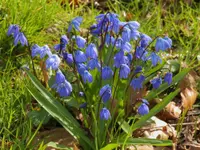
Siberian squill, Scilla siberica, is a small spring-flowering bulb from woodlands and meadows in eastern Europe and western Asia. It is usually grown outdoors in temperate gardens. Plants form low clumps of narrow green leaves and produce nodding, bell-shaped blue flowers on short stems, often creating a dense carpet as they naturalize. It spreads by seed and offsets, so it can slowly colonize suitable areas. This species is generally easy to grow and returns reliably each year in cold climates. To care for Siberian squill, provide sun to light shade, moisture in spring, and well-drained soil that dries somewhat in summer dormancy.

Care Difficulty
Easy Care

Light Preference
Partial Sun

Water Requirements
Moderate Water

Temperature Preference
Cold Hardy

Hardiness Zone
2–8

Soil Texture
Sandy, Loamy, Organic-rich

Soil pH
Acidic (5.5–6.5), Slightly acidic (6.5–7.0)

Soil Drainage
Well-drained

Fertilization
Minimal (feed rarely)
Scan your plant to receive care tips personalized for your specific plant
Available on iOS and Android
This bulb prefers cool, bright outdoor light with protection from harsh afternoon sun.
This bulb needs moderately moist but not saturated soil, especially during active spring growth.
This hardy spring bulb prefers cool conditions and tolerates significant winter cold in the ground.
This bulb tolerates typical indoor humidity, so active humidity management is rarely needed.
Soil for Scilla siberica should be loose, well-draining, and never stay waterlogged.
This species is well suited to container growing outdoors in cool climates.
This bulb needs only light feeding, as many naturalized clumps thrive in average garden soil.
Scilla siberica needs minimal pruning, mainly to tidy spent growth and support bulb health.
This bulb is usually grown in the ground and only occasionally needs lifting and transplanting.
Scilla siberica plant care often includes propagation through natural offsets and, less commonly, seed.
This species is very cold hardy and normally needs no special winter care in typical temperate climates.

Plant Health Check
Not sure what's wrong with your plant? Check your plant's health inside the app.
This bulb often flowers while snow is still on the ground, using stored energy in its bulb to push leaves and flower stalks through partially frozen soil in very early spring.
Its intense blue flowers are rich in delphinidin-based anthocyanins, a pigment combination that produces a stable, saturated blue tone that is relatively uncommon among spring bulbs.
The seeds carry small, nutrient-rich appendages called elaiosomes that attract ants, which transport the seeds away from the parent plant and help the species spread in suitable habitats.

In several regions of Europe and North America, Scilla siberica is monitored as a potentially invasive garden escapee because its bulbs and ant-dispersed seeds can form very dense carpets that outcompete native early spring flora in woodlands and lawns.
This bulb naturalizes readily by seed and offsets, forming dense carpets over time. In mild, moist climates it can spread beyond planting areas, so consider physical barriers, deadheading, or choosing non-sensitive sites when growing Siberian squill.
Keep your plants happy and healthy with plant identification, disease detection, and easy care guidance.