Rock-garden placement
Plant bulbs in shallow pockets between rocks or gravel edged areas to mimic their native rocky slopes, which improves drainage around the bulbs and reduces rot risk when growing red Sierra onion.

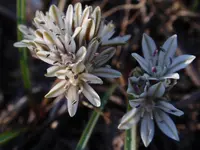
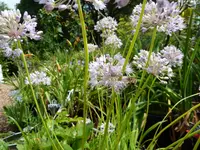
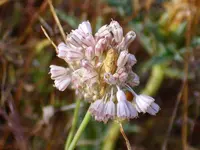
Red Sierra onion, Allium obtusum, is a small bulb-forming perennial in the amaryllis family, related to culinary onions but grown mainly as a wildflower or ornamental. It typically forms low clumps of narrow, grasslike leaves and short flower stalks topped with clusters of pink to reddish star-shaped blooms.
This species is native to mountainous regions of California and nearby areas, often found in rocky slopes and open woodland clearings. Its compact size, cold tolerance, and drought resistance make it suitable for rock gardens and naturalistic plantings.
Allium obtusum prefers sunny, well-drained sites and does best in gritty or sandy soil that does not stay wet for long. These traits make it relatively straightforward to care for red Sierra onion in temperate climates.

Care Difficulty
Easy Care

Light Preference
Full Sun

Water Requirements
Low Water

Temperature Preference
Cold Hardy

Hardiness Zone
4–9

Soil Texture
Sandy, Loamy, Rocky

Soil pH
Acidic (5.5–6.5), Slightly acidic (6.5–7.0)

Soil Drainage
Well-drained

Fertilization
Minimal (feed rarely)
Scan your plant to receive care tips personalized for your specific plant
Available on iOS and Android
Allium obtusum prefers bright conditions typical of open rocky slopes and meadows.
This species prefers well-drained soil and is more drought-tolerant than moisture-loving.
This bulb tolerates a wide temperature range but has clear preferences for active growth and dormancy.
This species tolerates a wide humidity range and rarely needs special humidity management indoors or outdoors.
This bulb prefers mineral, well-drained soil that dries between waterings.
This species grows reliably in containers when the pot and substrate prevent waterlogging.
Allium obtusum, often called red Sierra onion, needs only light feeding when grown in gardens or containers.
Allium obtusum needs minimal pruning, focused mainly on cleanliness and bulb health rather than shaping.
This species is more often grown in ground, so care focuses on lifting and transplanting clumps rather than frequent repotting.
Allium obtusum is typically propagated by bulb division, with seed used mainly for larger restoration or breeding projects.
This cold-hardy bulb usually needs little special winter care when grown in suitable climates.

Plant Health Check
Not sure what's wrong with your plant? Check your plant's health inside the app.
This species naturally grows in shallow soil pockets and rock crevices on granitic outcrops in the central and southern Sierra Nevada, tolerating intense sun, wind, and rapid drainage that many other bulbs cannot handle.
Populations are typically found at relatively high elevations in California montane habitats, where the plant completes most of its growth and flowering during the short snow-free season before summer drought intensifies.
The plant has ovoid bulbs with reddish outer tunics that help distinguish it in the field from several other small Sierra alliums with paler bulb coats.

Allium obtusum is considered a narrow California endemic, meaning it occurs naturally only within a limited range in the Sierra Nevada and adjacent areas, making local habitat conservation especially important for long-term population stability.
Lack of flowers is usually due to insufficient light, overcrowded bulbs, or nutrient-poor, overly rich, or frequently disturbed soil. Allow foliage to mature naturally, avoid excessive fertilizer, and divide congested clumps after dormancy to restore flowering.
Keep your plants happy and healthy with plant identification, disease detection, and easy care guidance.