Rock crevice planting
Tuck plants into wide cracks between stones or at the top edge of a low wall so stems can spill downward, which improves drainage, reduces crown rot risk, and showcases the natural trailing habit when growing alpine rockcress.

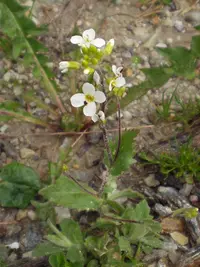
Alpine rockcress (Arabis alpina) is a compact, low-growing perennial often used in rock gardens, wall crevices, and edging. It forms dense mats of foliage topped with small white flower clusters in early spring.
This species is native to mountainous regions of Europe, Asia, and parts of North America, where it thrives in cool, well-drained, often rocky soils. Its hardy nature and modest size make it suitable for gardeners with limited space who want to care for alpine rockcress without complex maintenance.
It generally prefers full sun to light shade, good drainage, and moderate moisture, which helps prevent root problems and supports healthy, long-lasting clumps.

Care Difficulty
Moderate Care

Light Preference
Full Sun

Water Requirements
Moderate Water

Temperature Preference
Cold Hardy

Hardiness Zone
4–7

Soil Texture
Sandy, Loamy, Rocky

Soil pH
Acidic (5.5–6.5), Slightly acidic (6.5–7.0)

Soil Drainage
Well-drained

Fertilization
Minimal (feed rarely)
Scan your plant to receive care tips personalized for your specific plant
Available on iOS and Android
This alpine perennial prefers bright sun but tolerates some shade, especially in warmer climates.
This species prefers evenly moist, sharply drained soil and does not tolerate standing water.
This mountain plant thrives in cool conditions and tolerates considerable cold once established.
This species handles a wide range of humidity and rarely needs special humidity management outdoors.
Arabis alpina prefers sharply drained, mineral-rich soil that mimics its natural alpine habitats.
This species is well suited to container and trough culture when drainage is carefully controlled.
This alpine perennial needs only light feeding to maintain compact, floriferous growth in lean, well-drained soil.
Pruning Arabis alpina keeps the mat dense, tidy, and encourages better flowering the next season.
This species is more often transplanted in rock gardens or borders than grown long-term in containers.
Arabis alpina is commonly propagated by division, cuttings, or seeds to refresh older plantings and expand groundcover.
This alpine perennial is generally cold hardy and needs minimal winter care in most temperate climates.

Plant Health Check
Not sure what's wrong with your plant? Check your plant's health inside the app.
Arabis alpina is a perennial plant that can behave like an annual in some cold alpine environments, where harsh conditions favor rapid flowering and seed set over long-lived growth.
This species is used as a model organism to study perenniality and flowering control, helping researchers compare how long-lived perennials differ from short-lived relatives such as Arabidopsis thaliana at the genetic level.
In its natural range, Arabis alpina often colonizes snowbeds and rocky slopes where snow melts late, taking advantage of cool, moist conditions and reduced competition from taller plants.

Populations of Arabis alpina in different mountain ranges have evolved distinct flowering responses to cold, so some require a prolonged winter chill (vernalization) to flower, while others can flower with much shorter or almost no cold exposure, making this species a key system for studying adaptation to climate in high-altitude plants.
Lack of flowers usually comes from too much shade, rich or over-fertilized soil, or heavy, wet conditions. Ensure good light, sharply drained soil, and lightly trim after flowering to encourage more buds the following season.
Keep your plants happy and healthy with plant identification, disease detection, and easy care guidance.