Staking Tall Stems
Install sturdy stakes or a low wire framework around clumps in late spring, then loosely tie stems with soft ties before they reach full height to prevent wind lodging and stem breakage.

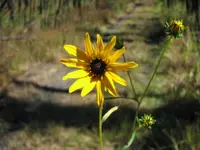
Swamp sunflower (Helianthus angustifolius) is a tall, clump-forming perennial native to wet areas of the southeastern United States. It belongs to the same genus as the common sunflower but has slimmer leaves and many smaller, bright yellow flower heads. Plants often form dense stands along pond edges, ditches, and moist meadows, providing late-season color and wildlife value. They are generally vigorous and fast-growing, which makes them easy to establish in suitable conditions. For those learning how to care for swamp sunflower, it prefers full sun, consistently moist soil, and space to spread.

Care Difficulty
Easy Care

Light Preference
Full Sun

Water Requirements
Regular Water

Temperature Preference
Cold Hardy

Hardiness Zone
5–9

Soil Texture
Sandy, Loamy, Organic-rich

Soil pH
Acidic (5.5–6.5), Slightly acidic (6.5–7.0)

Soil Drainage
Moist but well-drained

Fertilization
Minimal (feed rarely)
Scan your plant to receive care tips personalized for your specific plant
Available on iOS and Android
This perennial thrives in open, bright conditions and produces best flowering with strong sun exposure.
This species prefers consistently moist soil but not stagnant or airless conditions around the roots.
This warm-season perennial performs best in mild to hot conditions and tolerates short cold periods when dormant.
Humidity is rarely a concern for Helianthus angustifolius grown outdoors in typical US climates.
Helianthus angustifolius prefers moist, well-drained, organic-rich soil that stays evenly damp without becoming waterlogged.
This species can be grown in containers, but pots must support tall, moisture-loving growth without tipping or drying too fast.
Helianthus angustifolius grows well in average soil, but light feeding improves flowering in lean sites.
Helianthus angustifolius responds well to thoughtful pruning that manages height and encourages bushier growth.
This perennial is more often transplanted in the garden than grown long term in containers.
Helianthus angustifolius is commonly propagated by seed and by division of mature clumps.
This species is generally cold hardy in much of the US and needs minimal winter care.

Plant Health Check
Not sure what's wrong with your plant? Check your plant's health inside the app.
This swamp sunflower flowers very late in the season, often from late summer into fall, providing nectar and pollen for native bees, butterflies, and other insects when many other wildflowers have already finished blooming.
In the wild, this species naturally occurs in moist pine flatwoods, wet meadows, marsh edges, and ditches in the southeastern United States, showing a strong tolerance for periodically saturated or seasonally flooded soils that would stress many other sunflowers.
Its characteristically narrow, willow-like leaves increase air flow around the stems and can reduce overheating and water loss, an adaptation that suits the hot, humid climates where it is native and supports successful growing swamp sunflower in challenging summer conditions.

Swamp sunflower is considered an important component of native coastal plain plant communities in the southeastern US, where its dense late-season flowering displays can be so extensive that they visually dominate entire roadside and wetland stretches during peak bloom.
Lack of blooms usually comes from too much shade, overly dry soil during bud formation, or excessive nitrogen fertilizer. Crowding, root disturbance, or very young plants can also delay flowering until they are better established.
Keep your plants happy and healthy with plant identification, disease detection, and easy care guidance.