Early clump division
Divide crowded clumps every 3–4 years in early spring or early fall, replanting vigorous outer sections at the same depth to maintain flower production and reduce fungal stress from congestion.

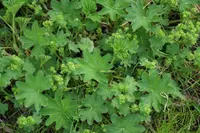
Broadtooth lady's mantle (Alchemilla subcrenata) is a low, clump-forming perennial grown mainly for its rounded, scalloped leaves. The foliage often catches and holds water droplets, creating a beaded effect that makes the plant attractive even when not in flower.
It typically produces airy sprays of small yellow-green blooms above the leaf mound, giving a soft, informal look suited to borders and cottage-style gardens. This species occurs naturally in cooler temperate regions and adapts well to garden conditions.
It is generally easy to grow, as it tolerates a range of soils and light levels if the soil does not stay very dry. Understanding how to care for broadtooth lady's mantle mainly involves providing consistent moisture and some protection from harsh heat.

Care Difficulty
Easy Care

Light Preference
Partial Shade

Water Requirements
Moderate Water

Temperature Preference
Cold Hardy

Hardiness Zone
4–7

Soil Texture
Loamy, Silty, Organic-rich

Soil pH
Acidic (5.5–6.5), Slightly acidic (6.5–7.0)

Soil Drainage
Moist but well-drained

Fertilization
Minimal (feed rarely)
Scan your plant to receive care tips personalized for your specific plant
Available on iOS and Android
This plant prefers cool, gentle light that mimics its natural woodland-edge habitat.
This perennial prefers consistently moist but not waterlogged soil throughout the growing season.
This hardy perennial tolerates cool conditions but grows best in moderate, stable temperatures.
This plant tolerates a wide humidity range and rarely needs special humidity management outdoors.
This species prefers moist, well-drained, loamy soil that stays cool and does not dry out completely.
This species grows reliably in containers when moisture and stability are managed carefully.
This plant grows best in modestly fertile soil, so broadtooth lady's mantle benefits from light feeding rather than heavy applications.
Alchemilla subcrenata responds well to light, timely pruning that keeps the clump compact and encourages fresh foliage.
This species is usually grown in garden beds, so care focuses more on transplanting and dividing clumps than on frequent repotting.
Alchemilla subcrenata is commonly propagated by division and sometimes by seed to expand plantings or refresh older clumps.
This plant is generally cold hardy in temperate climates and needs only minimal winter care in the ground.

Plant Health Check
Not sure what's wrong with your plant? Check your plant's health inside the app.
This species is naturally associated with cool, moist woodland edges and stream banks in parts of Europe, where it forms low, dense colonies in humus-rich soils and light shade.
Its leaves are more sharply and regularly toothed along the margins than many other lady’s mantle species, a feature that helps botanists separate it from the common garden lady’s mantle Alchemilla mollis.
Compared with widely traded ornamental lady’s mantle species, it is less commonly offered in mainstream horticulture and is mainly grown and studied within specialist or regional plant collections.
This species spreads slowly by short rhizomes and self-seeding, but is not usually aggressive. In average garden conditions it forms tidy clumps, though deadheading and lifting unwanted seedlings help prevent it from softening into a loose ground-covering drift.
Keep your plants happy and healthy with plant identification, disease detection, and easy care guidance.