Mounting technique
Grow this species on cork or hardwood bark with a thin pad of long-fiber sphagnum so roots dry quickly between waterings yet stay evenly anchored.

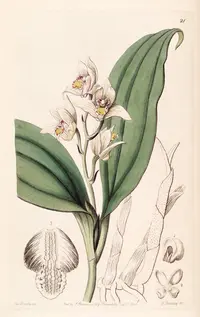
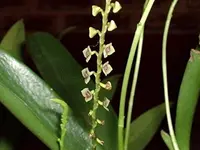
Eria coronaria is a small to medium-sized epiphytic orchid that typically grows on tree branches in humid, montane forests. It produces clustered canes with narrow leaves and fragrant, creamy-white flowers.
This species occurs naturally in parts of Southeast Asia, where it experiences bright filtered light, regular moisture, and good air movement. Its compact growth habit makes it suitable for experienced hobbyists who are comfortable with mounting orchids or using very airy media.
The main challenges are maintaining stable humidity, avoiding root rot, and providing enough light without leaf scorch. Understanding how to care for Eria coronaria usually makes it manageable for intermediate growers.

Care Difficulty
Hard Care

Light Preference
Partial Shade

Water Requirements
Keep Soil Moist

Temperature Preference
Tropical / Frost Sensitive

Hardiness Zone
12–13

Soil Texture
Sandy, Loamy, Organic-rich

Soil pH
Acidic (5.5–6.5)

Soil Drainage
Moist but well-drained

Fertilization
Light (every 4–6 weeks)
Scan your plant to receive care tips personalized for your specific plant
Available on iOS and Android
This orchid prefers bright, indirect light that mimics high, filtered forest canopies.
This species prefers evenly moist conditions with excellent drainage and short drying periods.
This orchid grows best in intermediate to warm temperatures with minimal extremes.
This orchid prefers consistently humid air and reacts quickly to dry indoor conditions.
This epiphytic orchid requires a very airy, fast-draining medium rather than conventional potting soil.
This species is well suited to containers and baskets when its epiphytic growth habit is respected.
This orchid benefits from light, measured feeding to support steady growth and flowering.
Pruning needs for Eria coronaria are minimal and focus on health rather than shaping.
This epiphytic orchid appreciates infrequent but timely repotting to keep the medium fresh and airy.
Eria coronaria is usually propagated by division rather than seed in home and hobby settings.
This orchid is frost sensitive and needs consistent warmth and shelter during winter in temperate climates.

Plant Health Check
Not sure what's wrong with your plant? Check your plant's health inside the app.
This species produces dense clusters of creamy white to yellowish flowers with a noticeable sweet fragrance, which helps attract specific insect pollinators in its native range.
Eria coronaria naturally grows as an epiphyte on tree trunks and branches in humid forests, anchoring to bark while taking moisture and nutrients from rain, debris, and the surrounding air rather than from soil.
The plant forms small, clustered pseudobulbs, which are swollen stem structures that store water and nutrients, allowing it to tolerate short dry periods in the canopy environment.
Lack of flowering usually comes from insufficient light, too-warm or stagnant winter conditions, or depleted nutrients. This orchid needs a distinct cooler, drier rest after growth, plus regular but moderate feeding, to set buds reliably each season.
Keep your plants happy and healthy with plant identification, disease detection, and easy care guidance.