


Encourage Bushy Shape
Pinch back the soft tips of new shoots in late spring and early summer to promote branching and create a fuller, more compact plant that flowers more evenly along the stems.

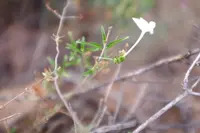
Longflower tube tongue (Justicia longii) is a shrubby perennial from the acanthus family, valued for its long, narrow white tubular flowers. It typically forms a compact clump with upright stems and small, simple leaves, giving a light, airy appearance in bloom.
This species is native to the arid and semi-arid regions of the southwestern United States and northern Mexico, where it grows in rocky or well-drained soils. It tends to be fairly resilient once established, and many gardeners find it moderately easy to grow outdoors in warm climates. Knowing how to care for longflower tube tongue starts with providing bright light, good drainage, and moderate moisture without constant wet soil.

Care Difficulty
Moderate Care

Light Preference
Partial Shade

Water Requirements
Moderate Water

Temperature Preference
Warm Climate

Hardiness Zone
8–10

Soil Texture
Loamy, Sandy, Organic-rich

Soil pH
Acidic (5.5–6.5), Slightly acidic (6.5–7.0)

Soil Drainage
Moist but well-drained

Fertilization
Light (every 4–6 weeks)
Scan your plant to receive care tips personalized for your specific plant
Available on iOS and Android
Justicia longii prefers bright, gentle light that mimics dappled woodland conditions.
This species likes evenly moist but not saturated soil during active growth.
This plant performs best in consistently warm, frost-free conditions.
This species prefers moderately moist air but adapts to typical indoor humidity if kept well watered.
Justicia longii grows best in a loose, airy mix that drains quickly yet holds consistent moisture.
This species is well suited to container growing for patios or sheltered outdoor spots.
Justicia longii responds well to light, consistent feeding during its active growing season.
Judicia longii benefits from thoughtful pruning to maintain shape and encourage flowering.
This species copes well with occasional transplanting when roots become cramped or growth slows.
Justicia longii is commonly propagated from softwood or semi-ripe stem cuttings for consistent plants.
In mild climates this species needs modest winter care, but it is sensitive to hard frost.

Plant Health Check
Not sure what's wrong with your plant? Check your plant's health inside the app.
This species opens its white tubular flowers at night, an adaptation that aligns with the activity patterns of its primary pollinators, such as nocturnal moths.
Justicia longii is naturally found along sandy washes and streambeds in the Sonoran Desert region of the southwestern United States and northern Mexico, where it tolerates episodic flooding and drought.
In its native range, this plant can produce flowers from late spring into fall, providing a long-lasting nectar source for insects in otherwise harsh desert conditions.

Unlike many desert shrubs that rely mainly on wind or daytime insects, this species has evolved pale, night-opening flowers that increase visibility under low light, a trait associated with specialized nocturnal pollination in arid ecosystems.
The tubular white flowers produce nectar that attracts small native bees, butterflies, and sometimes hummingbirds. Planting several together in a sunny, sheltered spot increases floral display and makes the patch more noticeable to pollinators.
Keep your plants happy and healthy with plant identification, disease detection, and easy care guidance.

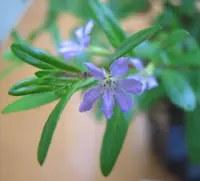
Mexican heather
Cuphea hyssopifolia

Beefsteak Begonia
Begonia 'Erythrophylla'
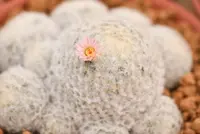
Powderpuff cactus
Mammillaria bocasana
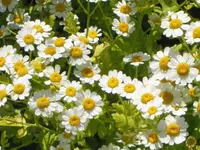
feverfew
Tanacetum parthenium
Pelargonium pseudoglutinosum
Pelargonium pseudoglutinosum
Tephroseris crispa
Tephroseris crispa
Peperomia pecuniifolia
Peperomia pecuniifolia
Grey orchid
Vanda tessellata