Cymbidium devonianum Care

Cymbidium devonianum

About Cymbidium devonianum

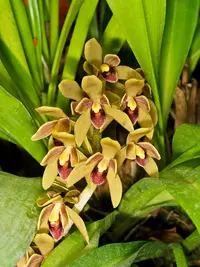
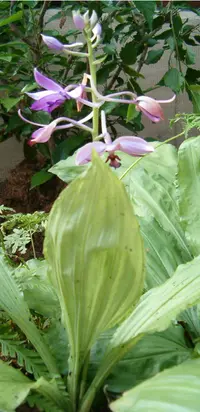
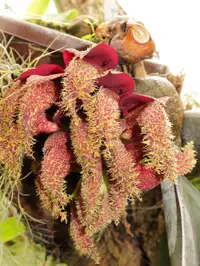
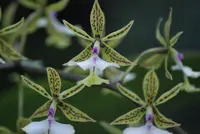
Cymbidium devonianum is an epiphytic orchid, usually found hanging from trees with long, arching spikes of many small, pendulous flowers. Its narrow leaves grow from clustered pseudobulbs that store water and nutrients, giving the plant a graceful, cascading habit.

This species occurs naturally in the eastern Himalayas and parts of Southeast Asia, where it experiences cool to mild temperatures and bright, filtered light. It can be moderately challenging, as it dislikes extremes in temperature, dryness, or stagnant, soggy media.

Understanding how to care for Cymbidium devonianum starts with providing good air movement, consistent moisture without waterlogging, and a loose, fast-draining orchid mix that allows the roots to breathe.


Main Plant Requirements

Care Difficulty

Moderate Care

Light Preference

Partial Shade

Water Requirements

Regular Water

Temperature Preference

Cool Climate

Hardiness Zone

9–11

Soil Texture

Loamy, Peaty, Organic-rich

Soil pH

Acidic (5.5–6.5)

Soil Drainage

Moist but well-drained

Fertilization

Moderate (every 2–4 weeks)

Get Personalized Care Plan

Scan your plant to receive care tips personalized for your specific plant

Available on iOS and Android

How to Care for the Cymbidium devonianum

This orchid prefers bright, gentle light that mimics high, filtered forest conditions.

  • Provide 4–6 hours of bright, filtered light daily, such as under 30–50% shade cloth or dappled shade beneath taller plants.
  • Allow soft morning sun but protect from harsh midday and afternoon sun, which can scorch leaves and cause yellow, sunken patches on Cymbidium devonianum.
  • In winter, increase light exposure by removing some shading, while in summer move to slightly deeper shade to prevent heat and light stress.

Watering should keep the roots moist but never stagnant.

  • Irrigate when the top 2–3 cm of the mix feels just barely dry, using thorough watering that drains freely and never allowing the pot or bed to stand in water.
  • Increase watering frequency in active growth and warm weather, then reduce in late autumn and winter while still preventing complete drying of the root zone for Cymbidium devonianum.
  • Watch for wrinkled or shriveled pseudobulbs as a sign of underwatering, and yellowing, limp leaves or a sour smell in the medium as signs of overwatering and poor drainage.

Temperature swings between warm days and cool nights support healthy growth and flowering.

  • Aim for daytime temperatures of 65–80°F (18–27°C) and nighttime temperatures of 50–60°F (10–16°C) during the growing season.
  • Tolerates brief dips to about 40°F (4–5°C) if dry and sheltered, but prolonged exposure near this level increases risk of tissue damage and rot.
  • In summer, protect from sustained heat above 90°F (32°C) with shade and airflow, and avoid any frost, as freezing conditions can kill leaves, pseudobulbs, and roots.

This orchid prefers moderately moist air and reacts quickly to very dry conditions.

  • Aim for 50–70% humidity, as Cymbidium devonianum comes from relatively humid, montane habitats.
  • Tolerates brief drops to 35–40%, but leaf tips may brown and buds may abort if air stays too dry.
  • Increase humidity with a pebble tray, grouped plants, or a cool‑mist humidifier, while keeping strong air movement to prevent fungal issues.

This species needs a coarse, airy orchid substrate rather than standard potting soil.

  • Use a mix of medium fir bark, perlite, and a little sphagnum moss or coco chips to hold moderate moisture without becoming compacted.
  • Ensure very fast drainage so water runs through in seconds; waterlogged media quickly damage pseudobulbs and roots.
  • Keep pH slightly acidic to neutral, roughly 5.5–7.0, which supports nutrient uptake without causing micronutrient lockout.
  • Improve aeration by using larger bark pieces, adding chunky perlite or pumice, and avoiding fine peat that fills air spaces.

This orchid is well suited to container growing when the pot supports its arching growth and exposed roots.

  • Choose a squat, heavy pot to prevent tipping as long, arching flower spikes shift the plant’s center of gravity outward.
  • Select a pot just 2–3 cm wider than the root mass so the medium dries evenly instead of staying wet in unused corners.
  • Use many side and bottom slits or holes to vent the root zone, which keeps the coarse mix oxygenated even when moisture levels are high.

During active growth, Cymbidium devonianum responds well to light, consistent feeding suited to orchids.

  • Use a balanced NPK orchid fertilizer at 1/4–1/2 label strength, applied to moist media to avoid root burn.
  • Feed every 1–2 weeks in spring and summer, alternating with plain water flushes to reduce salt buildup.
  • Switch to a low-nitrogen formula late summer to support flowering rather than soft leaf growth.
  • In autumn and winter, reduce feeding to monthly at very weak strength, or pause if growth is fully resting.

Pruning on this orchid stays minimal and focuses on hygiene and flower performance.

  • After flowering, cut spent flower spikes near the base with sterilized, sharp snips to direct energy to new growths.
  • Remove yellow, dead, or damaged leaves and old, shriveled pseudobulbs to improve airflow and reduce disease risk.
  • Thin congested clumps only when dividing, keeping healthy pseudobulbs intact to maintain flowering potential.
  • Always disinfect cutting tools before and between plants to limit spread of fungal and bacterial problems.

This species prefers to stay slightly crowded, so repot only when the medium breaks down or roots overflow the pot.

  • Look for roots circling the container, climbing out of drainage holes, or medium that smells sour or stays soggy.
  • Plan to repot every 2–3 years in late winter to early spring, just after flowering and before strong new root growth.
  • Gently tease the root mass apart, trim dead or mushy roots, and keep healthy roots intact to limit stress.
  • Set the plant in fresh, free-draining orchid mix, keep it slightly shaded, and water lightly until new roots establish.

Propagation of this orchid is usually done by division rather than seed in home collections.

  • Divide mature clumps in late winter or early spring, ideally when repotting after flowering.
  • Use a sterile knife to separate sections with at least 3–4 healthy pseudobulbs and an active growth eye.
  • Pot each division into fresh orchid mix, keeping rhizomes just at the surface and pseudobulbs stable.
  • Maintain bright, filtered light, 60–75°F, and slightly higher humidity to support new root and shoot formation.

Cool, bright conditions in winter are important for Cymbidium devonianum to set flower spikes.

  • Keep plants in a cool area around 45–55°F at night and 55–65°F by day, avoiding hard frost or freezing temperatures.
  • If grown outdoors in mild climates, move containers under shelter before frost and avoid waterlogged media.
  • In colder regions, overwinter indoors in an unheated but frost-free room with bright light and good air movement.
  • Reduce watering in winter so the medium dries slightly between waterings, but do not allow complete desiccation.

Care Tips

Mounting orientation

Position hanging baskets or mounts so the long inflorescences can cascade freely over the edge without hitting walls or shelves, which reduces flower damage and encourages straighter, longer spikes when growing Cymbidium devonianum.

Cool-night initiation

From late summer into early autumn, provide a 10–15°F drop between day and night temperatures by moving plants to a cooler, bright outdoor or porch spot in the evening to help trigger reliable flower spike formation.

Crowded-clump management

Allow the clump to become moderately crowded, but every 3–4 years remove only the oldest, leafless backbulbs from the rear of the pot to maintain vigor while preserving the dense growth habit that supports abundant flowering.

Targeted air movement

Use a small oscillating fan set on low to move air gently under and through the arching foliage and hanging spikes, which helps dry leaf axils, limits fungal spotting, and keeps pseudobulbs firmer.

Spike protection

As spikes emerge and elongate, guide them gently over the rim of the basket and secure them loosely with soft ties or clips so they do not kink against pot edges or break under their own weight.

Common Pests and Diseases

Cymbidium mosaic virus

This disease causes dark streaks or mottled patterns on leaves and deformed, streaked flowers, often reducing vigor over time. Symptoms include poor flowering and plants that fail to thrive despite correct care.

Solution

Immediately isolate any suspect plant, then remove and discard heavily affected pseudobulbs or divisions. Disinfect cutting tools with a 10% bleach solution or 70% alcohol between plants, avoid sap contact between orchids, and discard severely infected plants to prevent spread, as viruses cannot be cured.

Fusarium wilt

This disease blocks the vascular tissue, leading to yellowing, leaf drop, and shriveled pseudobulbs even when watering is correct. Symptoms include a pink to purple ring in the rhizome when cut and poor root systems.

Solution

Remove and destroy all affected pseudobulbs and sections of rhizome, cutting well back into healthy tissue and sterilizing tools between cuts. Improve drainage and air movement, avoid overwatering and cold, wet media, and repot into fresh, free-draining orchid mix; in valuable collections, a targeted systemic fungicide labeled for Fusarium on orchids can be used according to label directions.

Soft scale

These insects form flat, oval bumps on leaves, pseudobulbs, and flower spikes and excrete sticky honeydew that can lead to sooty mold. This pest weakens plants, reduces flowering, and is often concentrated along leaf midribs and under leaf sheaths.

Solution

Wipe off visible insects with cotton pads dipped in diluted alcohol, then rinse the plant with lukewarm water. For heavier infestations, use a horticultural oil or insecticidal soap labeled for orchids, focusing on leaf undersides and tight leaf bases, and repeat treatments every 7–10 days until no new scale appears.

Spider mites

These insects thrive in warm, dry conditions and cause fine yellow stippling on leaves, which may become dull and silvery with time. Symptoms include fine webbing, especially along leaf undersides and between narrow Cymbidium leaves.

Solution

Shower the foliage thoroughly, especially the undersides of leaves, to remove mites and increase humidity around the plant to discourage reinfestation. If needed, apply an insecticidal soap or a miticide labeled for ornamental plants, repeating at intervals to break the life cycle and improving air movement to keep foliage healthy.

Bacterial brown spot

This disease starts as water-soaked, translucent lesions on leaves that quickly turn brown to black and can have yellow halos. Symptoms include soft, spreading patches that can emit an unpleasant odor in advanced stages.

Solution

Promptly remove affected leaf areas with a sterile blade, cutting well into healthy tissue, and keep foliage dry, especially in cool conditions. Improve air circulation, water early in the day so leaves dry quickly, and in collections with repeated issues, apply a copper-based or other bactericide labeled for orchids, avoiding overuse to prevent phytotoxicity.

Interesting Facts

Hanging inflorescence habit

This species often produces long, arching to pendulous flowering spikes that hang below the plant, an adaptation to its typical life as an epiphyte on tree branches in Himalayan forests.

Cool-growing Himalayan origin

It is native to higher-elevation regions of the eastern Himalayas and surrounding areas, where it experiences cool, bright conditions with distinct seasonal temperature shifts.

Fragrant spring bloomer

Plants typically flower in late winter to spring, producing many small, often sweetly scented flowers that attract pollinating insects in their native range.

Botan icon

Did you know?

Historical herbarium and field records show that this species was among the early Cymbidium orchids documented from the eastern Himalayas in the 19th century, contributing important material for understanding the diversity and evolution of cool-growing Cymbidium orchids in Asia.

FAQs about Cymbidium devonianum

This species usually blooms in late winter to spring, producing long, arching inflorescences with many dangling flowers. It often flowers once a year, but strong, consistent culture can encourage more reliable and fuller blooming displays.

Grow Healthy Plants with Botan Care

Keep your plants happy and healthy with plant identification, disease detection, and easy care guidance.

Botan plant care app — identify plants on mobile

Explore More Plants