


Mounting strategy
Mount plants on cork or hardwood with a thin pad of long-fiber sphagnum only under the roots so water drains rapidly while the exposed roots dry quickly and stay better aerated.

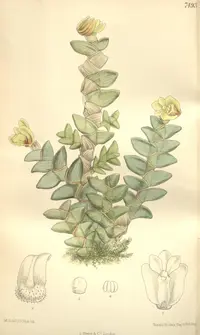
Dendrobium leonis is a compact epiphytic orchid that usually grows on trees, forming tight clumps of short, thick canes and fleshy leaves. It produces fragrant, starry flowers that appear close to the stems, giving a neat, sculptural look.
This species is native to parts of Southeast Asia, where it grows in warm, humid forests with good air movement. It can be moderately challenging, as it dislikes stale air, heavy soil, and prolonged dryness.
Stable warmth, bright filtered light, and evenly moist but fast-draining media are the main points to understand when learning how to care for Dendrobium leonis.

Care Difficulty
Moderate Care

Light Preference
Partial Sun

Water Requirements
Moderate Water

Temperature Preference
Tropical / Frost Sensitive

Hardiness Zone
12–13

Soil Texture
Sandy, Rocky, Organic-rich

Soil pH
Acidic (5.5–6.5)

Soil Drainage
Well-drained

Fertilization
Light (every 4–6 weeks)
Scan your plant to receive care tips personalized for your specific plant
Available on iOS and Android
This orchid prefers bright, filtered light that mimics a lightly shaded tree canopy.
Watering should alternate between thorough soaking and a short, airy dry period around the roots.
This species prefers intermediate to warm temperatures with a noticeable day–night drop.
This orchid needs consistently moist air to stay healthy and flower well.
This epiphytic orchid grows best in a very airy, fast-draining medium rather than standard potting soil.
This species is well suited to container growing when the pot and setup support its epiphytic roots.
This orchid benefits from light, consistent feeding during active growth but is sensitive to excess salts.
Pruning needs are minimal and focus on hygiene and maintaining compact growth.
Repotting focuses on refreshing the orchid medium and managing crowded roots rather than giving a larger pot.
Propagation of this species is usually done vegetatively and requires stable warm, humid conditions.
This warmth-loving orchid is not frost tolerant and needs indoor winter care in most climates.

Plant Health Check
Not sure what's wrong with your plant? Check your plant's health inside the app.
The flowers open pale green to yellow and release a stronger fragrance at night, an adaptation that likely helps attract nocturnal moth pollinators in its native habitats.
This species is a small epiphyte that anchors itself on tree branches with thick roots, allowing it to access moving air, filtered light, and rapid drying after rainfall in lowland to mid-elevation forests of Southeast Asia.
Its short, thick, glossy leaves function as water-storage organs, helping the plant tolerate short dry spells typical of seasonal monsoon climates where growing Dendrobium leonis is naturally adapted.

Dendrobium leonis was described relatively late compared with many other Asian Dendrobium species, and its distinctive lion-like leaf arrangement and growth habit inspired the species epithet leonis, which refers to a lion.
Lack of blooms usually comes from insufficient light, no cooler drier rest in winter, or excess nitrogen fertilizer. Provide bright, filtered light, a defined cooler rest period, and balanced orchid fertilizer to support reliable flowering.
Keep your plants happy and healthy with plant identification, disease detection, and easy care guidance.

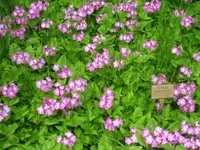
Siebold's primrose
Primula sieboldii
 POPULAR
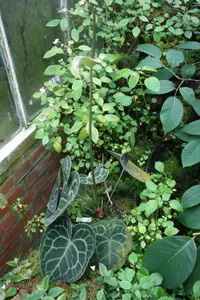
Anthurium clarinervium
Anthurium clarinervium
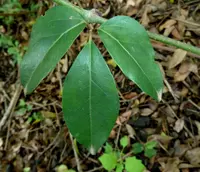
Bushveld Grape
Rhoicissus revoilii
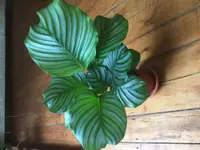
Goeppertia orbifolia
Goeppertia orbifolia
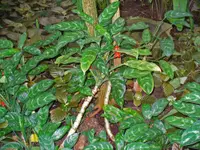
spotted evergreen
Aglaonema costatum

Upright Elephant Ear
Alocasia macrorrhizos 'Stingray'
 POPULAR
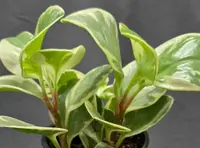
Baby Rubberplant
Peperomia obtusifolia
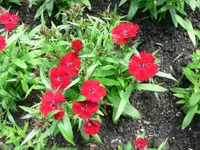
China pink
Dianthus chinensis