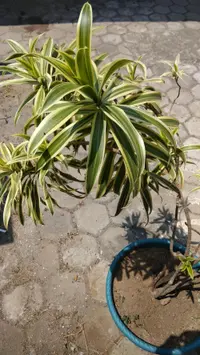
串珠石斛 Care (Dendrobium falconeri)

串珠石斛

About 串珠石斛

串珠石斛 (Dendrobium falconeri) is an epiphytic orchid, usually growing on trees or rocks in warm, humid forests from the Himalayas to Southeast Asia. It forms thin, pendulous canes with bead-like nodes and bears delicate, often fragrant flowers along the stems. In nature, it experiences distinct wet and dry seasons, which strongly influence its growth and flowering pattern. These seasonal needs make it more challenging than common orchids, especially for beginners. To care for 串珠石斛 successfully, growers need stable warmth, high humidity, good air movement, and a very free-draining orchid substrate.

Main Plant Requirements

Care Difficulty

Hard Care

Light Preference

Bright Indirect Light

Water Requirements

Moderate Water

Temperature Preference

Tropical / Frost Sensitive

Hardiness Zone

Unknown

Soil Texture

Organic-rich, Peaty, Rocky

Soil pH

Acidic (5.5–6.5)

Soil Drainage

Well-drained

Fertilization

Moderate (every 2–4 weeks)

Get Personalized Care Plan

Scan your plant to receive care tips personalized for your specific plant

Available on iOS and Android

How to Care for the 串珠石斛

This orchid thrives in bright, gentle light that mimics high-elevation forest conditions.

  • Provide 4–6 hours of bright, filtered light daily, with soft morning sun and protection from harsh midday and afternoon rays.
  • Grow 串珠石斛 where it receives dappled shade, such as under 30–50% shade cloth or beneath open tree canopies.
  • Watch leaves for feedback: yellow, scorched patches indicate too much direct sun, while dark, limp foliage and weak flowering suggest insufficient light.

This epiphytic orchid prefers frequent moisture with excellent drainage and brief drying between waterings.

  • During active growth, water when the outer roots or medium surface feel nearly dry, avoiding constant saturation that can cause root rot.
  • Ensure very free-draining bark or mount, letting excess water run off completely; standing water or a sour smell signals overwatering in Dendrobium falconeri.
  • In late autumn and winter, reduce watering, allowing a longer dry interval while monitoring for wrinkling canes, which indicate the plant needs water.

This species prefers intermediate to cool-intermediate temperatures with a noticeable day–night drop.

  • Aim for 65–75°F (18–24°C) by day and 55–60°F (13–16°C) at night during the growing season for steady growth and flowering.
  • Protect from cold; avoid temperatures below 45°F (7°C), and never expose the plant to frost, which can damage roots and canes.
  • In hot weather above 85°F (29°C), increase air movement and shade, since prolonged heat combined with strong sun stresses the plant.

This orchid needs consistently high humidity to grow well in most homes.

  • Aim for 60–80% humidity; lower levels slow growth and cause wrinkled canes.
  • Dry indoor air leads to limp leaves, shriveling pseudobulbs, and bud blast, especially in串珠石斛.
  • Increase humidity with a room humidifier, grouped plants, and a pebble tray, but keep leaves well ventilated to prevent fungal problems.

This species prefers a very airy, fast-draining epiphytic mix rather than regular potting soil.

  • Use a coarse mix of medium bark, chopped sphagnum moss, and perlite to balance moisture retention and airflow.
  • Keep structure open so roots dry within 1 day; compact or waterlogged media quickly cause root rot in Dendrobium falconeri.
  • Maintain a slightly acidic reaction around pH 5.5–6.5, which supports nutrient uptake for this orchid.
  • Replace dense fines with larger bark pieces or additional perlite to improve aeration and prevent suffocation of the roots.

This orchid is well suited to container culture, especially in small pots or mounted baskets.

  • Choose a narrow, shallow pot that keeps roots snug to stabilize long canes without allowing excess substrate volume to stay wet.
  • Use slotted orchid pots or mesh baskets so water drains within seconds and air reaches roots from the sides.
  • Select heavier clay or ceramic if tall canes make the plant top-heavy, reducing tipping when the medium is dry.

This orchid benefits from light, consistent feeding during its active growth period.

  • Use a balanced orchid fertilizer (around 20-20-20) or similar NPK, diluted to 1/4–1/2 strength at each feeding.
  • Apply every 2–3 weeks in spring and summer while new canes and roots of 串珠石斛 are developing.
  • Reduce feeding to once a month and at very weak strength in fall; stop or nearly stop in winter dormancy.
  • Flush the pot with plain water monthly to prevent salt buildup and avoid burning sensitive roots.

Dendrobium falconeri needs only light pruning to maintain plant health and encourage flowering.

  • Best time is after flowering, when new growths are visible but still short.
  • Remove dead, shriveled, or clearly damaged canes at the base using sharp, disinfected scissors or pruners.
  • Trim only spent flower spikes, not green, plump canes, since these store water and nutrients for future blooms.
  • Occasionally thin very crowded, weak canes to improve air flow and reduce risk of fungal problems.

This species prefers tight quarters and dislikes frequent disturbance, so repot only when clearly necessary.

  • Repot every 2–3 years, or when roots circle the pot, medium decomposes, or growth slows despite good care.
  • Choose late winter to early spring, just before new roots start, to minimize stress and encourage quick recovery.
  • Gently loosen the root mass, remove rotted roots, and place the plant in a slightly larger pot with fresh, coarse orchid mix.
  • Keep roots snug, water lightly for the first 1–2 weeks, and maintain high humidity to support recovery and new root growth.

This orchid is usually propagated vegetatively rather than from seed in home conditions.

  • Use division in late winter or early spring, when repotting and new root growth begins.
  • Separate clumps so each division has at least 3–4 healthy canes and a good root system.
  • Plant divisions in a fine, airy orchid mix, then keep humidity high and light bright but indirect for rooting.
  • Seed propagation requires sterile laboratory conditions and is not practical for most home growers.

This species is frost-sensitive and needs careful winter management in most temperate climates.

  • Keep plants above 50°F; avoid any exposure to frost or freezing temperatures.
  • For container plants outdoors, move indoors to a bright, cool room before night temperatures drop below 55°F.
  • Provide a cool, drier rest in winter with much reduced watering, but do not allow canes to shrivel severely.
  • Ensure good air movement indoors to limit fungal issues during the cool, low-light season.

Care Tips

Mounting Technique

Mount plants on cork or hardwood with a thin pad of long-fiber sphagnum so roots dry quickly yet stay evenly humid, which better mimics the natural epiphytic habit and improves long-term vigor.

Cool-Night Trigger

Provide a consistent 10–15°F drop between day and night in late summer and autumn using a cool room, shaded porch, or screened window to encourage reliable flowering rather than just leafy growth.

Rest-Period Handling

During the dry rest, avoid repotting, dividing, or heavy feeding and only mist roots lightly in the morning if canes start to shrivel, which prevents stress and bud blast.

Airflow Management

Use a small oscillating fan on low to keep air moving around the canes and roots, reducing fungal problems and helping thin roots dry rapidly after each watering.

Support And Training

Secure new canes loosely to a vertical slab or stake with soft ties as they elongate so they hang neatly once mature, making inspections easier and simplifying caring for 串珠石斛 over time.

Common Pests and Diseases

Spider mites

This pest thrives on Dendrobium falconeri in warm, dry, still air and often spins fine webbing along the thin canes and leaf undersides. Symptoms include pale stippling on leaves, slow growth, and eventual leaf drop if the infestation is heavy.

Solution

Increase humidity and airflow, then rinse canes and leaves thoroughly with lukewarm water, including the undersides. For persistent cases, use repeated applications of insecticidal soap or neem oil at 5–7 day intervals, taking care to protect the roots and avoid spraying during strong light or high heat.

Scale insects

These insects attach firmly along canes and under leaf sheaths, appearing as small brown or off‑white bumps that excrete sticky honeydew. Symptoms include yellowing leaves, weakened canes, and sooty mold growing on the honeydew in humid conditions.

Solution

Manually remove visible insects with a cotton swab dipped in isopropyl alcohol, paying special attention to leaf joints and older canes. Follow with several rounds of horticultural oil or neem oil spray, and isolate the plant from others until no new scale appear.

Soft brown rot (Erwinia)

This disease causes rapid, watery, foul‑smelling rot on canes and leaf bases, which is favored by high humidity combined with poor air circulation and water sitting in crevices. Symptoms include translucent, collapsing tissue that spreads quickly along the pseudobulbs.

Solution

Immediately cut away all affected tissue with a sterile blade, dust fresh cuts with a dry fungicide or ground cinnamon, and allow the plant to dry in bright, airy conditions. Reduce overhead watering, keep water out of leaf axils, and improve ventilation around hanging plants to prevent recurrence.

Anthracnose leaf spots

This disease produces small, sunken, dark spots on leaves that may merge into larger irregular patches, especially under cool, wet, and stagnant air conditions typical of poorly ventilated growing spaces. Symptoms include premature leaf yellowing and drop along the canes.

Solution

Remove and discard affected leaves, then improve air movement and avoid wetting foliage during watering. Apply a copper‑based or other orchid‑safe fungicide according to label directions and maintain moderate humidity with strong airflow as part of Dendrobium falconeri care instructions.

Interesting Facts

Moss-covered host preference

In nature this species most often grows as an epiphyte on mossy trunks and branches of humid montane forests, where constant fine moisture around the roots is balanced by strong air movement.

Dramatic seasonal leaf drop

The plant is semi-deciduous and frequently sheds many or all of its narrow leaves before flowering, an adaptation linked to a distinct dry, cooler season in its native Himalayan habitat.

Scented pendulous blooms

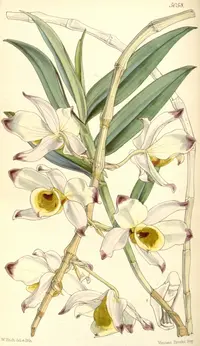
Its long, thin, pendulous canes produce relatively large, pale flowers with a contrasting darker lip that are reported to have a noticeable fragrance during the blooming period.

Botan icon

Did you know?

This species is considered challenging even among experienced orchid growers because it demands a precise combination of cool nights, high humidity, very bright but filtered light, and a marked seasonal shift in watering to flower reliably, so many collections have healthy plants that rarely bloom.

FAQs about 串珠石斛

Lack of blooming usually comes from insufficient day–night temperature difference, inadequate light, or skipping a cool, slightly drier winter rest. Overfeeding with nitrogen fertilizer can also suppress flower buds, favoring leafy growth instead of blooms.

Grow Healthy Plants with Botan Care

Keep your plants happy and healthy with plant identification, disease detection, and easy care guidance.

Botan plant care app — identify plants on mobile

Explore More Plants