


Pinch Early Shoots
Pinch back the top 2–3 cm of new stems in late spring to encourage bushier plants with more flowering stems and better air circulation.

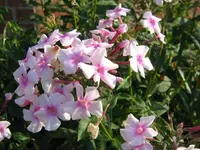
Garden phlox, Phlox paniculata, is a herbaceous perennial valued for its long-lasting summer flower clusters and upright, bushy habit. Stems are topped with dense heads of pink, white, purple, or bi-colored blooms that attract butterflies and hummingbirds.
This species is native to eastern North America, where it grows in meadows, open woodlands, and along stream banks. It adapts well to garden borders and cottage-style plantings and is often used as a mid-border accent.
Garden phlox is moderately easy to grow when given sun, consistent moisture, and well-drained, fertile soil, but it can be prone to powdery mildew in crowded or poorly ventilated sites. Understanding how to care for Garden phlox helps maintain strong growth and healthy foliage over many seasons.

Care Difficulty
Moderate Care

Light Preference
Full Sun

Water Requirements
Regular Water

Temperature Preference
Cold Hardy

Hardiness Zone
3–8

Soil Texture
Loamy, Sandy, Organic-rich

Soil pH
Acidic (5.5–6.5), Slightly acidic (6.5–7.0)

Soil Drainage
Moist but well-drained

Fertilization
Light (every 4–6 weeks)
Scan your plant to receive care tips personalized for your specific plant
Available on iOS and Android
This sun-loving perennial flowers best with strong, direct light in most climates.
Moist but not saturated soil supports healthy Phlox paniculata growth and flowering.
This hardy perennial tolerates a wide temperature range but grows best in moderate conditions.
This species grows reliably in typical outdoor humidity but benefits from moderate moisture in the air during hot spells.
Phlox paniculata performs best in deep, moisture-retentive but well-drained soil with plenty of organic matter.
This species can be grown successfully in containers if the pot is prepared for its deep, fibrous root system.
Healthy flowering of Garden phlox responds well to modest, targeted feeding.
Thoughtful pruning supports strong growth and abundant blooms in Phlox paniculata.
Garden phlox is usually grown in-ground and benefits more from periodic lifting and division than true repotting.
Phlox paniculata is commonly propagated by division, stem cuttings, or seeds to renew plantings and expand beds.
This perennial is cold hardy in many temperate regions and usually needs only basic winter preparation.

Plant Health Check
Not sure what's wrong with your plant? Check your plant's health inside the app.
This species releases its strongest fragrance in the late afternoon and evening, which helps attract crepuscular moths that act as important pollinators in its native range.
It is native to eastern and central North America, where it naturally occurs in moist meadows, open woods, and along stream banks, forming part of tallgrass prairie and woodland edge communities.
Wild populations show noticeable differences in susceptibility to powdery mildew, and plant breeders have used this natural variation to develop modern mildew-resistant garden cultivars.

In the late 19th and early 20th centuries, European breeders created hundreds of ornamental cultivars from this single species, making it one of the foundational perennials in traditional cottage gardens and a key ancestor of many modern phlox hybrids.
Poor flowering usually comes from too much shade, depleted soil, or overcrowded stems. Check that the clump is not rootbound, feed with a balanced fertilizer, divide every few years, and deadhead spent blooms to encourage new buds.
Keep your plants happy and healthy with plant identification, disease detection, and easy care guidance.

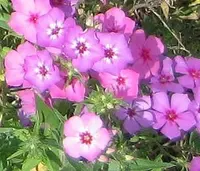
annual phlox
Phlox drummondii
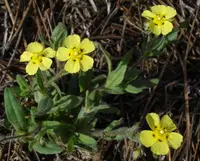
spotted rock-rose
Tuberaria guttata
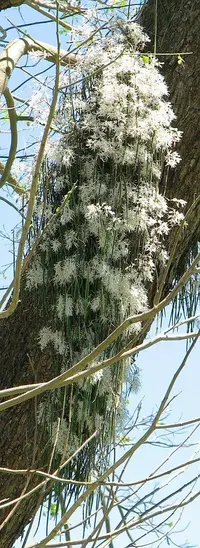
Thin Pencil Orchid
Dendrobium teretifolium
 POPULAR
Amorphophallus henryi
Amorphophallus henryi
creeping phlox
Phlox stolonifera
Dendrobium fractiflexum
Dendrobium fractiflexum
round-headed Himalayan primrose
Primula capitata
 POPULAR
Japanese camellia
Camellia japonica