Edge Containment
Install shallow edging (5–8 cm deep) around beds in early spring to keep stems from creeping into lawns or paths while still allowing the plant to form a dense mat.

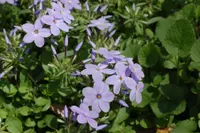
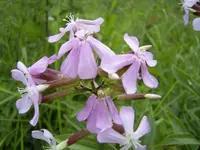
Creeping phlox, Phlox stolonifera, is a low, spreading perennial often used as a flowering groundcover. It forms dense mats of foliage topped with starry blooms in spring. Flowers usually appear in shades of pink, lavender, blue, or white and attract bees and butterflies. The plant spreads by stolons, which are horizontal stems that root as they creep over the soil. Native to woodland edges and rocky slopes in eastern North America, it is adapted to partial shade and cool, moist conditions. It tends to be easy to grow in well-drained, humus-rich soil, which simplifies how to care for creeping phlox in many temperate gardens.

Care Difficulty
Easy Care

Light Preference
Partial Shade

Water Requirements
Moderate Water

Temperature Preference
Cold Hardy

Hardiness Zone
3–8

Soil Texture
Sandy, Loamy, Organic-rich

Soil pH
Acidic (5.5–6.5), Slightly acidic (6.5–7.0)

Soil Drainage
Moist but well-drained

Fertilization
Minimal (feed rarely)
Scan your plant to receive care tips personalized for your specific plant
Available on iOS and Android
This low-growing woodland phlox thrives in bright conditions with some protection from intense midday sun.
Phlox stolonifera prefers consistently moist, well-drained soil rather than extremes of dryness or saturation.
This hardy groundcover handles a wide temperature range but grows best in moderate conditions.
Humidity is rarely a concern for this hardy groundcover.
Phlox stolonifera prefers loose, humus-rich soil that drains freely yet retains some moisture.
This species is suitable for container growing outdoors if moisture and root spread are managed carefully.
This low-maintenance groundcover benefits from light, targeted feeding rather than heavy fertilization.
Thoughtful pruning keeps Phlox stolonifera dense, flowering well, and within bounds.
This species is usually grown in the ground, so care focuses on dividing and transplanting crowded clumps.
Phlox stolonifera is commonly propagated by division and short stem or stolon cuttings.
This phlox is cold hardy in much of the US and usually needs minimal winter care in the ground.

Plant Health Check
Not sure what's wrong with your plant? Check your plant's health inside the app.
This species flowers early in spring and provides nectar for emerging native bees, bee-flies, and small butterflies at a time when few other woodland plants are in bloom.
In many climates it behaves as a semi-evergreen to evergreen groundcover, keeping a living leaf layer that helps stabilize soil and protect it from erosion through winter.
It is naturally distributed in moist, rocky woodlands and stream banks of the eastern United States, where it often forms low mats along slopes and at forest edges.

Phlox stolonifera is one of the few North American woodland phlox species that spreads primarily via above-ground creeping stems (stolons), allowing it to form dense carpets even in shallow, rocky soils where deeper-rooted plants struggle to establish.
Poor flowering often comes from too little sun, nutrient-poor or overly rich soil, old woody stems, or heavy competition from weeds. Light pruning after flowering and division every few years support better blooming and overall Phlox stolonifera plant care.
Keep your plants happy and healthy with plant identification, disease detection, and easy care guidance.