Thin Pencil Orchid Care (Dendrobium teretifolium)

Also known as: Bridal Veil Orchid
Thin Pencil Orchid

About Thin Pencil Orchid

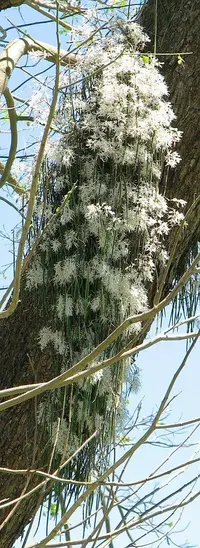
Thin pencil orchid, Dendrobium teretifolium, is an epiphytic orchid that naturally clings to trees and rocks in eastern Australia’s coastal forests. It forms dense, hanging clumps of very thin, pencil-like canes with small, pale cream to yellow flowers that appear in clusters along the stems.

This species prefers bright, filtered light, good air movement, and quick-drying conditions around its roots. It can be long-lived but needs stable conditions and regular observation, so learning how to care for Thin Pencil Orchid is important for success.

For indoor or greenhouse growers, its compact size and distinctive growth habit make it suitable for mounts or small baskets where its cascading form can be displayed clearly.

Main Plant Requirements

Care Difficulty

Moderate Care

Light Preference

Partial Shade

Water Requirements

Moderate Water

Temperature Preference

Tropical / Frost Sensitive

Hardiness Zone

11–12

Soil Texture

Rocky, Organic-rich

Soil pH

Acidic (5.5–6.5)

Soil Drainage

Well-drained

Fertilization

Light (every 4–6 weeks)

Get Personalized Care Plan

Scan your plant to receive care tips personalized for your specific plant

Available on iOS and Android

How to Care for the Thin Pencil Orchid

This species prefers bright conditions that mimic lightly shaded open forest edges.

  • Provide 4–6 hours of bright, filtered light daily, with gentle morning sun and protection from harsh midday and late-afternoon rays.
  • Allow light dappled shade under trees or 30–50% shade cloth outdoors; Thin Pencil Orchid tolerates brief stronger sun if air movement is good.
  • Watch the leaves: yellowing or scorched patches indicate too much direct sun, while dark, floppy growth and poor flowering suggest insufficient light.

Watering should balance regular moisture with fast drainage to protect the fine roots.

  • Water when the top 2–3 cm of the mix or mounting material feels dry, then soak thoroughly so water drains away without pooling.
  • In active growth, increase frequency so roots do not stay dry for more than 1–2 days; in cooler months, let the plant stay dry slightly longer between waterings.
  • Wrinkling canes and dry, brittle roots indicate underwatering, while black, mushy roots or a sour smell show Dendrobium teretifolium is overwatered or poorly drained.

This orchid prefers mild, frost-free conditions with a distinct but gentle temperature drop at night.

  • Aim for 65–80°F (18–27°C) by day and 55–65°F (13–18°C) at night during active growth for best root and cane development.
  • Protect from cold; brief drops to 40–45°F (4–7°C) may be tolerated if dry, but repeated exposure near freezing or any frost can damage canes and buds.
  • In hot spells above 90°F (32°C), increase shade and air movement, and avoid placing the plant against heat-retaining walls that create excessive localized temperatures.

This species prefers moderate to high humidity and reacts noticeably to very dry air.

  • Aim for 50–70% humidity, with the upper end helpful during warm, bright growth periods.
  • Tolerates brief dips to 35–40%, but prolonged dry air causes wrinkled canes and slower new root growth in Thin Pencil Orchid.
  • Increase humidity with a nearby humidifier, grouped plants, or a water tray under (not touching) the pot, while keeping air movement gentle.

This epiphytic orchid needs a very open, fast-draining, air-filled medium rather than typical potting soil.

  • Use a mix based on medium to large orchid bark with added perlite and a little sphagnum moss for moisture retention without clogging air spaces.
  • Ensure water drains through in a few seconds; the mix should feel springy and coarse, not compact or muddy.
  • Aim for slightly acidic conditions around pH 5.5–6.5, which suits Dendrobium teretifolium roots and nutrient uptake.
  • Avoid dense garden soil, peat-heavy mixes, or fine compost that stay wet, as these quickly cause root suffocation and rot.

This orchid is well suited to container growing when mounted-like airflow around the roots is maintained.

  • Choose slatted orchid baskets or ventilated plastic pots that keep the medium airy while still holding the fine roots securely.
  • Select a pot only slightly larger than the root mass to avoid excess wet medium that stays cold and stagnant.
  • Use heavier pots or place baskets in stable cachepots outdoors to prevent tall, cane-laden plants from tipping in wind.

This epiphytic orchid benefits from light, consistent feeding during active growth but is sensitive to excess salts.

  • Use a balanced orchid fertilizer (such as 20-20-20) diluted to 1/4–1/2 strength for caring for Thin Pencil Orchid.
  • Feed every 2–3 weeks in spring and summer, applying to already-moist bark or mount.
  • Reduce feeding to once a month or stop entirely in late fall and winter when growth slows.
  • Flush the medium with plain water monthly to remove built-up fertilizer salts and prevent root burn.

Pruning Dendrobium teretifolium focuses on hygiene and preserving future flowering canes rather than shaping.

  • Prune after flowering, allowing spent blooms to fade completely before any cutting.
  • Remove only dead, shriveled, or clearly damaged canes; keep firm green or yellow-green canes for future flowers.
  • Use sharp, disinfected scissors or pruners, cutting just above a node or at the base of dead canes.
  • Trim dry, brown leaf tips sparingly to tidy appearance without cutting into healthy tissue.

This species prefers to stay slightly root-bound and dislikes frequent disturbance of its root system.

  • Repot every 2–3 years, or when roots circle the pot, crowd drainage holes, or growth noticeably slows.
  • Plan repotting for late winter to early spring, just before new roots and shoots start to grow.
  • Use a small, snug pot or mount with very free-draining orchid bark and some coarse material for airflow.
  • Handle roots gently, removing only rotten or mushy sections and keeping healthy roots intact to reduce stress.

Dendrobium teretifolium is most practically propagated by division when mature clumps develop multiple healthy canes.

  • Divide in late winter or early spring as new growth begins, when the plant is most resilient.
  • Unpot the clump, gently tease roots apart, and create divisions with at least 3–4 healthy canes each.
  • Plant divisions into fresh, free-draining orchid mix, keeping the base of canes just above the medium.
  • Provide bright, filtered light, high humidity (60–70%), and slightly warmer temperatures to encourage new roots.

This orchid is not frost tolerant and needs protection from cold conditions in most climates.

  • Keep temperatures above 50°F, ideally 55–65°F at night, with good air movement but no cold drafts.
  • Move container plants indoors or into a heated greenhouse before the first frost risk.
  • Maintain bright, indirect light and slightly drier conditions, allowing the medium to approach dryness between waterings.
  • Avoid heavy winter feeding; support a mild rest period while monitoring for shriveling canes.

Care Tips

Mounting strategy

Use a hardwood slab or cork mount with a thin layer of sphagnum only around the roots, leaving canes exposed so they dry quickly and reduce rot risk when growing Thin Pencil Orchid.

Airflow management

Place a small fan on a low, indirect setting to keep air moving around the fine canes, which helps prevent fungal spots and encourages faster drying after watering or misting.

Support for canes

Guide long, wiry canes along horizontal wires or a mesh backing using soft ties, which keeps growth tidy, improves light exposure, and reduces breakage during handling.

Seasonal rest shift

In late autumn, gradually reduce watering frequency and stop nitrogen-heavy fertilizer while still providing bright light, which supports flower spike formation on mature canes.

Water-quality control

Use rainwater, distilled, or low-mineral tap water where possible and flush the mount or pot thoroughly once a month to prevent salt buildup that can damage the very fine roots.

Common Pests and Diseases

Scale insects

This pest feeds on sap along the thin, pencil-like canes and leaf bases, often appearing as small brown or tan bumps. Symptoms include sticky honeydew, black sooty mold, and gradual decline in vigor.

Solution

Isolate the plant, then wipe canes and leaves with cotton pads dipped in isopropyl alcohol to remove adults and nymphs, repeating weekly until clean. Improve air movement, avoid overfertilizing with nitrogen, and if the infestation is heavy, use a labeled horticultural oil spray applied thoroughly to all plant surfaces, including crevices around the canes.

Spider mites

These insects thrive on thin terete leaves in warm, dry conditions, causing fine stippling, loss of green color, and webbing between canes. Symptoms include dull, grayish foliage and a generally dusty appearance, especially in indoor collections or heated greenhouses.

Solution

Increase humidity around the plant, rinse foliage and canes under a gentle shower or hose to physically remove mites, and repeat every few days. For persistent issues, apply an insecticidal soap or a miticide labeled for orchids, ensuring good coverage on the undersides of leaves and along the entire length of the canes.

Orchid aphids

These insects colonize new growths and flower spikes, sucking sap and distorting the narrow leaves and delicate inflorescences. Symptoms include sticky honeydew, curling growth, and reduced flowering, especially on plants grown in sheltered, humid areas.

Solution

Rinse affected areas under a gentle stream of water to dislodge aphids, then treat remaining clusters with insecticidal soap or neem oil, repeating at 5–7 day intervals until no live insects remain. Remove heavily infested buds or spikes and maintain good air movement to reduce reinfestation when caring for Thin Pencil Orchid.

Bacterial soft rot

This disease causes rapidly spreading, water-soaked lesions at the base of canes or in tight leaf sheaths, often with a foul odor. Symptoms include soft, collapsing tissues, yellowing canes, and sudden plant collapse in warm, wet conditions.

Solution

Immediately cut out all affected tissue with a sterile blade, extending well into healthy, firm tissue, and discard contaminated material. Keep the plant drier on the foliage, increase airflow, avoid water sitting in the narrow leaf axils, and apply a bactericide labeled for orchids to remaining healthy tissue as a preventative measure.

Fusarium wilt

This disease infects through wounds in the narrow canes and rhizome, blocking water transport and leading to slow yellowing and shriveling despite adequate watering. Symptoms include purple staining in the vascular tissue when a cane is cut and progressive dieback of pseudobulbs and roots.

Solution

Remove and discard all suspect canes and divisions, sterilizing tools between cuts, and do not reuse contaminated pots or media. Improve hygiene by avoiding shared water trays, maintain moderate watering with a free-draining mount or medium, and consider applying a systemic fungicide labeled for Fusarium on remaining, apparently healthy divisions.

Interesting Facts

Extreme drought tolerance

This thin pencil orchid has very narrow, cylindrical leaves that greatly reduce surface area, helping the plant resist water loss while exposed on sun-baked rock faces and tree branches in its native eastern Australia.

Rock and tree specialist

In the wild it grows both as an epiphyte on trees and as a lithophyte on rocks, where its roots anchor tightly into crevices that collect small amounts of organic debris and moisture.

Night-scented flowers

The cream to pale yellow flowers are lightly fragrant, with scent strongest in the evening and at night, which aligns with the activity patterns of its natural pollinators in open forest habitats.

Botan icon

Did you know?

Some forms of this species naturally develop long, hanging canes that can reach well over 1 m, creating dense, curtain-like clumps on cliff faces and high tree branches in coastal forests of eastern Australia.

FAQs about Thin Pencil Orchid

Lack of flowers often comes from insufficient light, too-warm nights, or skipping a slight winter rest. Provide bright, indirect light, cooler nights, and a short drier period to trigger bud formation.

Grow Healthy Plants with Botan Care

Keep your plants happy and healthy with plant identification, disease detection, and easy care guidance.

Botan plant care app — identify plants on mobile

Explore More Plants