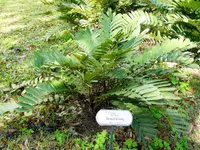
Wax Plant Care (Hoya pubicalyx 'Pink Silver')

Also known as: Porcelain Flower
Wax Plant

About Wax Plant

Hoya pubicalyx 'Pink Silver' is a tropical evergreen vine grown mainly as a trailing or climbing houseplant. It is part of the wax plant group, known for thick, glossy leaves and star-shaped flowers.

This cultivar has narrow, speckled green leaves with silvery splashes, and may develop pinkish tones in strong light. Mature plants can form clusters of fragrant flowers on long, thin stems.

In nature, Hoya species often grow as epiphytes on trees in Southeast Asian forests, where they receive bright but filtered light and good air movement. Understanding this natural habitat helps guide how to care for Wax Plant in typical homes.

It is generally considered a forgiving plant if given bright indirect light, a well-drained mix, and moderate watering that allows the roots to breathe.

Main Plant Requirements

Care Difficulty

Moderate Care

Light Preference

Bright Indirect Light

Water Requirements

Low Water

Temperature Preference

Tropical / Frost Sensitive

Hardiness Zone

11–12

Soil Texture

Sandy, Loamy, Organic-rich

Soil pH

Acidic (5.5–6.5), Slightly acidic (6.5–7.0)

Soil Drainage

Well-drained

Fertilization

Light (every 4–6 weeks)

Get Personalized Care Plan

Scan your plant to receive care tips personalized for your specific plant

Available on iOS and Android

How to Care for the Wax Plant

Hoya pubicalyx 'Pink Silver' grows best in bright, indirect light that mimics dappled forest canopy.

  • Provide 6–8 hours of bright, filtered light each day, such as near an east or bright north window, or under sheer curtains by a south window.
  • Allow gentle morning sun but protect from strong midday or late afternoon sun, which can scorch leaves or fade variegation on this Wax Plant.
  • In winter, move the plant closer to the light source or use a grow light if days are very short, as very low light slows growth and flowering.

Hoya pubicalyx 'Pink Silver' prefers thorough but infrequent watering that lets the roots breathe between soakings.

  • Water only when the top 3–5 cm of soil feels dry, then soak until water drains freely, ensuring the potting mix is coarse and fast draining.
  • Reduce watering in fall and winter as growth slows, letting the soil dry a bit deeper while avoiding complete, long-term dryness that causes leaf wrinkling.
  • Watch for yellowing, mushy leaves as a sign of overwatering and root stress, while limp, thin, or puckered leaves usually indicate underwatering.

This hoya prefers warm, stable temperatures similar to a tropical understory environment.

  • Aim for 65–80°F (18–27°C) for steady growth, with a slight drop at night that stays within this range.
  • Protect the plant from temperatures below 50°F (10°C); brief dips may be tolerated, but frost or near-freezing conditions can cause tissue damage.
  • In hot spells above 85°F (29°C), keep the plant shaded from intense sun, ensure good air movement, and avoid placing it near hot, reflective windows.

This Hoya prefers moderate to moderately high humidity but adapts to typical indoor levels.

  • Aim for 40–60% humidity to support steady growth and reliable flowering.
  • The plant tolerates short periods of drier air, but prolonged humidity below 30% can slow growth and crisp leaf tips on Wax Plant.
  • Increase humidity with a nearby tray of damp pebbles, grouping plants, or a small humidifier rather than misting leaves directly.

This species needs a very airy, fast-draining mix that mimics loose tropical forest substrate.

  • Use a chunky mix such as 40% fine bark, 30% perlite or pumice, and 30% peat-based or coco coir potting medium.
  • Ensure water drains through in seconds and the mix never compacts into a solid mass around the roots.
  • Slightly acidic to neutral pH around 6.0–7.0 helps Hoya pubicalyx 'Pink Silver' absorb nutrients efficiently.
  • Avoid heavy garden soil, pure peat, or mixes dominated by fine compost that hold water and reduce aeration.

This climbing species is very suitable for container growing.

  • Choose a stable, relatively heavy pot so the plant does not tip when vines and supports become top-heavy.
  • Select a container that is wider than it is deep to give the shallow root system lateral space without excess wet substrate below.
  • Terracotta helps the mix dry faster in humid climates, while plastic can be useful in very dry homes to slow evaporation.

Hoya pubicalyx 'Pink Silver' benefits from light, consistent feeding during its active growing season.

  • Use a balanced liquid fertilizer (around 10-10-10 or 20-20-20) diluted to 1/4–1/2 strength for Wax Plant in well-draining mix.
  • Feed every 4–6 weeks in spring and summer when growth is active, after watering the plant first.
  • Hold fertilizer in fall, and feed at most once in winter if growth continues under strong light.
  • Avoid heavy organic compost in pots; use a slow-release fertilizer sparingly if you prefer granular products.

Hoya pubicalyx 'Pink Silver' responds well to light structural pruning to manage size and encourage fuller growth.

  • Time most pruning for late winter or early spring before active growth starts.
  • Remove dead, yellowing, or damaged leaves and stems using clean, sharp scissors or pruning shears.
  • Thin crowded vines to improve airflow and light penetration, shaping the plant to the desired length and density.
  • Do not cut off old flower spurs; leave these short stubs, as they often rebloom from the same points.

This hoya prefers slightly snug pots and only needs repotting when clearly root-bound or growth slows without other cause.

  • Check for roots circling the pot, pushing through drainage holes, or water running straight through as signs it needs more space.
  • Plan to repot every 2–3 years in late spring, using a slightly larger pot with a chunky, fast-draining mix.
  • Water lightly a day before repotting, then gently loosen the root ball and trim only dead or mushy roots.
  • After repotting, keep in bright, indirect light, maintain slightly drier soil for 1–2 weeks, and avoid fertilizing until new growth appears.

Hoya pubicalyx 'Pink Silver' is most commonly propagated from stem cuttings taken during the warm growing season.

  • Take 7–12 cm cuttings in late spring or summer, each with 2–3 nodes and at least 1–2 leaves.
  • Remove lower leaves, then place the cut node in water or a moist, airy mix such as perlite and bark.
  • Maintain bright, indirect light, high humidity, and temperatures around 70–80°F for faster rooting.
  • Pot up once roots reach 2–5 cm, then transition gradually to normal watering and light conditions.

This tropical hoya is frost-sensitive and needs indoor or protected conditions in climates with cold winters.

  • Keep plants above 55°F; aim for 60–75°F indoors during winter months for stable growth.
  • Move outdoor containers inside before night temperatures drop below 50°F, placing them in bright, indirect light.
  • Reduce watering, allowing the top 3–5 cm of mix to dry, and avoid feeding in low light and cool conditions.
  • Keep away from cold drafts, single-pane windows, and heating vents that cause rapid temperature swings.

Care Tips

Support Vining Stems

Provide a narrow trellis, hoop, or horizontal wires and gently tie the vines with soft plant ties, which encourages fuller growth and keeps the plant from putting stress on its own stems by hanging heavily from the pot edge.

Encourage Flowering Cycles

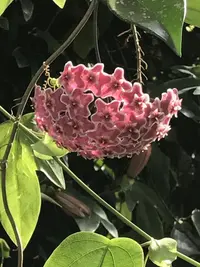
Once the plant is mature and well-rooted, maintain slightly tighter potting (do not upsize the container too often) and avoid removing spent flower spurs, as new umbels often form repeatedly from the same points.

Strategic Spring Repotting

If roots are circling the pot or pushing up from drainage holes, repot in late spring into a container only 2–3 cm wider, which reduces transplant shock and lets the plant redirect energy into new vining and bloom production.

Targeted Pest Monitoring

Inspect leaf undersides, petioles, and tight node areas every few weeks with a hand lens, since mealybugs and spider mites often hide in the crevices of waxy leaves where they are easy to miss during casual checks.

Clean Leaves Correctly

Wipe foliage every 1–2 months with a barely damp, soft cloth instead of leaf-shine products so light reaches the mottled surface evenly, which supports healthy photosynthesis when caring for Wax Plant indoors.

Common Pests and Diseases

Mealybugs

This pest commonly hides in leaf nodes and along vines, sucking sap and causing stunted growth, leaf yellowing, and sticky honeydew. Symptoms include cottony white clusters, especially on new growth and around the base of leaves.

Solution

Isolate the plant, then dab visible mealybugs with cotton swabs dipped in 70% isopropyl alcohol and wipe affected areas. Follow with a thorough wash of the foliage and treat all leaf axils and stems with a mild insecticidal soap or horticultural oil every 7–10 days until no new pests appear, while keeping the plant in bright, stable conditions to reduce stress.

Spider mites

These insects thrive on Hoya foliage in warm, dry indoor air and cause fine stippling on leaves, loss of variegation contrast, and delicate webbing between leaves and stems. Symptoms include dull, rough-textured leaves and very fine threads when the plant is backlit.

Solution

Rinse the plant under a gentle shower or sink spray, focusing on the undersides of leaves, then apply insecticidal soap or a light horticultural oil, repeating weekly until new growth looks clean. Increase humidity to around 50–60%, avoid placing the plant near heating vents, and check nearby plants, since spider mites spread easily in collections.

Soft scale

This pest appears as smooth, dome-shaped bumps on stems and leaf midribs and produces honeydew that can lead to sooty mold on the waxy leaves. This pest weakens vines over time, reduces flowering, and can cause sticky residue on nearby surfaces.

Solution

Manually remove scale with a soft cloth or toothbrush moistened with 70% isopropyl alcohol, working along each stem and leaf midrib. After mechanical removal, apply horticultural oil or insecticidal soap to all plant surfaces every 10–14 days for several cycles, and keep the plant in bright, indirect light to support recovery while monitoring any clustered or older woody stems closely.

Sooty mold

This disease grows on the sugary honeydew left by sap-sucking insects, forming black, soot-like patches on the thick, glossy leaves. Symptoms include dark coating that dulls leaf shine and can slightly reduce photosynthesis but does not directly attack plant tissue.

Solution

First address the underlying pest issue such as mealybugs, scale, or aphids, then gently wash leaves with lukewarm water and a small amount of mild, unscented soap to remove the mold film. Improve air movement around the plant and avoid crowded placements, since good airflow and regular inspection of leaf undersides help prevent honeydew buildup and recurring sooty mold.

Botrytis blight

This disease can affect densely clustered Hoya flower umbels and older leaves under cool, humid, low-airflow conditions, causing soft brown spots and gray fuzzy mold on petals and sometimes on succulent foliage. Symptoms include prematurely dropping buds and mushy, discolored flowers that fail to open normally.

Solution

Remove and discard all affected blooms and leaves, then improve conditions by increasing airflow, reducing overcrowding, and avoiding water sitting on flowers or foliage, especially in cool rooms. Allow the top of the potting mix to dry between waterings, keep humidity moderate (around 40–50%), and if the problem recurs, use a targeted fungicide labeled for ornamental houseplants, applied according to the product instructions.

Interesting Facts

Natural hybrid diversity

Many cultivated forms of this plant, including 'Pink Silver', are thought to descend from naturally occurring hybrids of Philippine Hoya pubicalyx populations, which explains the wide variation in leaf speckling and flower color across different clones sold under the same name.

Silver variegation pattern

The pale, silvery patches on the leaves are areas with reduced chlorophyll, creating a mottled pattern that is genetically stable in 'Pink Silver' and tends to become more pronounced under higher light compared with standard green pubicalyx forms.

Strongly scented umbels

The star-shaped flowers are produced in tight clusters called umbels and release a strong, sweet fragrance mainly in the evening and at night, which in the wild is associated with attracting nocturnal pollinators such as moths.

FAQs about Wax Plant

This species usually needs to be root-bound, mature, and kept in stable conditions before flowering well. Do not remove older leafless spurs, as these structures repeatedly produce clusters of blooms over many seasons.

Grow Healthy Plants with Botan Care

Keep your plants happy and healthy with plant identification, disease detection, and easy care guidance.

Botan plant care app — identify plants on mobile

Explore More Plants